
Leather Drying and Conditioning: The Science Behind Supple Leather

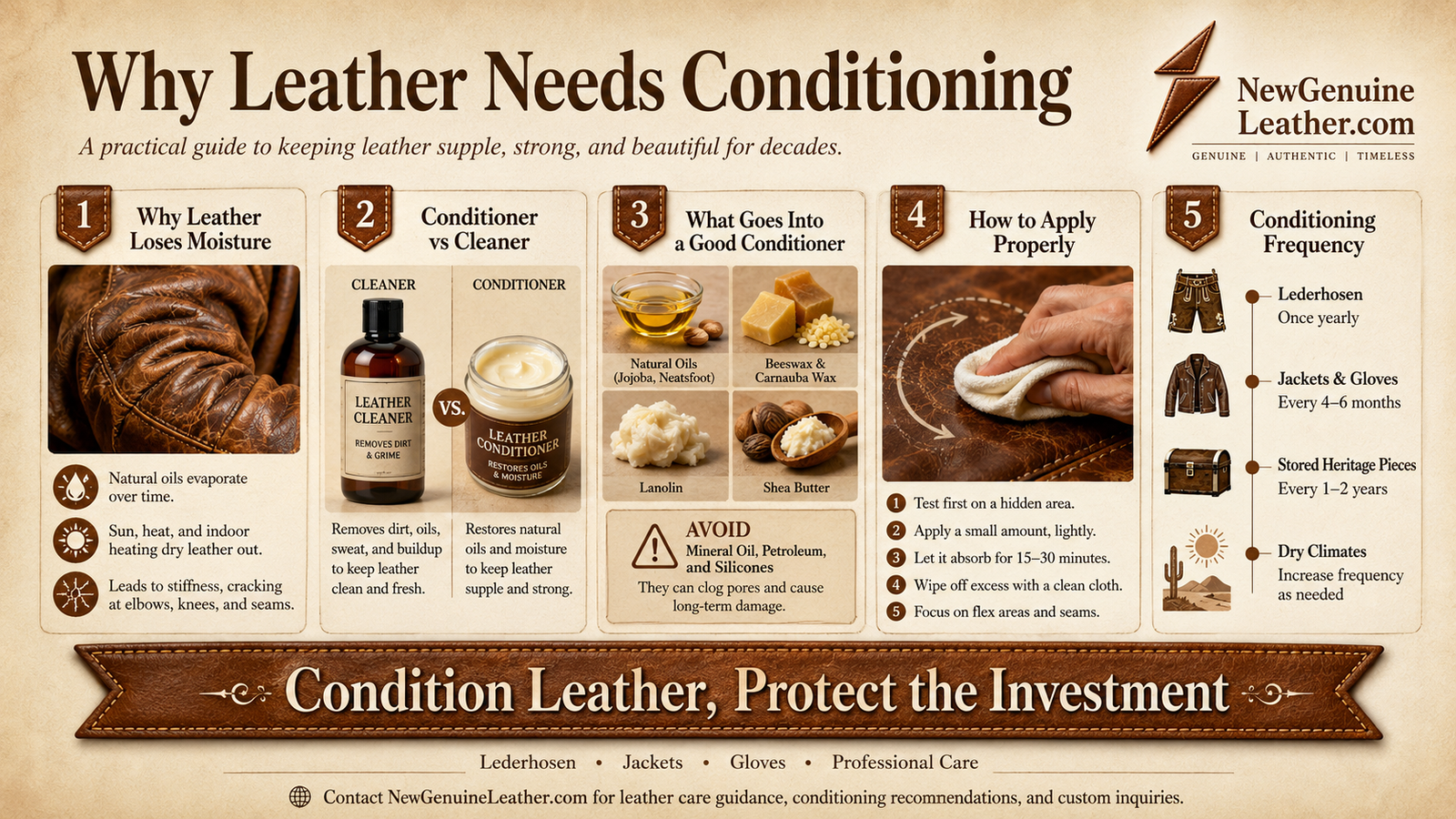
Leather is, fundamentally, preserved animal skin. Like skin, it needs moisture and natural oils to remain supple, strong, and beautiful. Without proper conditioning, even the finest leather will dry, crack, and fail. Understanding why and how to condition your leather goods will transform their longevity from years to decades.
Why Leather Loses Moisture
Tanned leather contains a delicate balance of natural oils and structural proteins. Over time, these oils evaporate, are absorbed by the wearer’s skin, or are stripped away by environmental factors — sun exposure, dry indoor heating, water contact, and even repeated wearing. Without periodic replenishment, leather becomes increasingly stiff and prone to cracking, especially at flex points like elbows, knees, and seams.
The Difference Between Conditioners and Cleaners
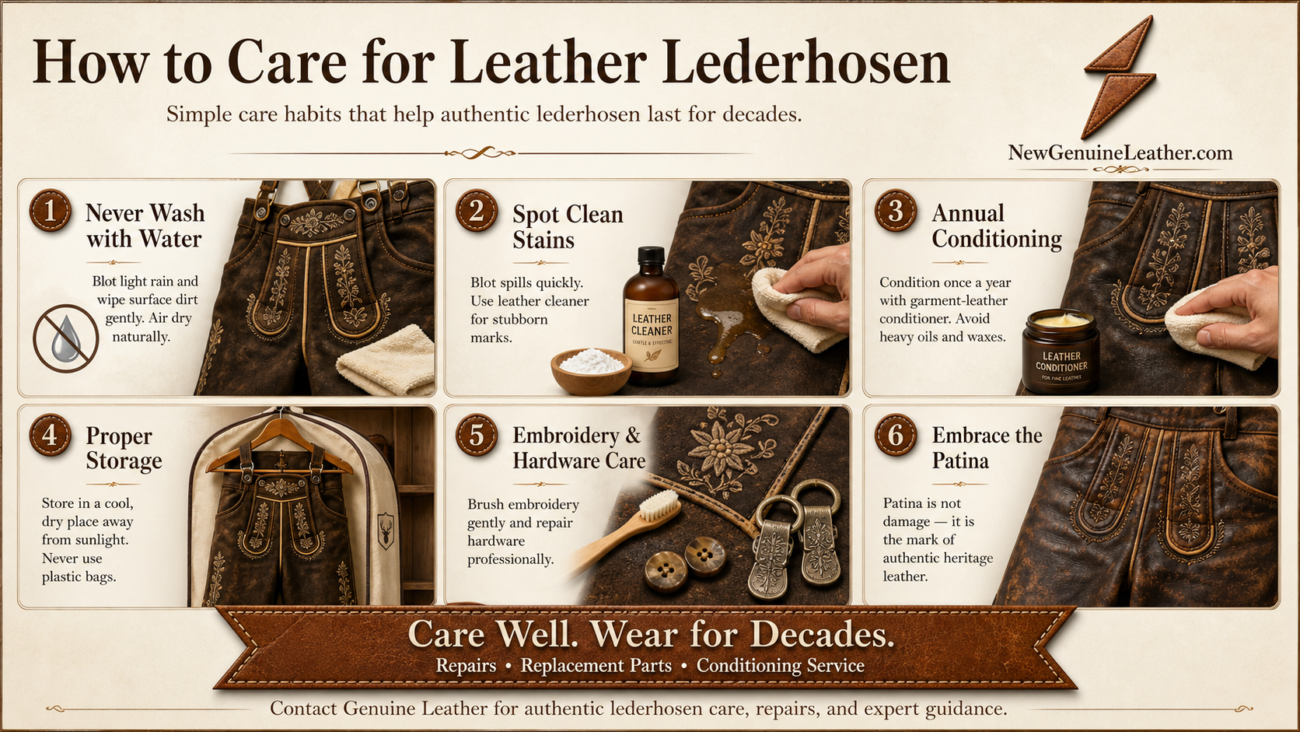
Leather cleaners remove dirt and surface contaminants. Leather conditioners replace lost oils and moisture. They serve different purposes and should not be substituted for each other. A clean leather garment may still need conditioning, and a freshly conditioned garment will eventually need cleaning. Most well-cared-for leather goods are conditioned 1-2 times per year and cleaned only when visibly soiled.
What Goes Into a Good Conditioner
Quality leather conditioners contain natural oils (often neatsfoot, coconut, or vegetable oils), waxes (such as beeswax or carnauba), and sometimes lanolin. They penetrate the leather without leaving heavy surface residue. Avoid conditioners that contain mineral oil, petroleum derivatives, or synthetic silicones — these can damage leather over time by clogging pores and breaking down natural fibers.
How to Apply Conditioner Properly
Always test in an inconspicuous spot first, as some conditioners darken leather. Apply a small amount to a soft cloth, work it in gently using circular motions, and let it absorb for several hours before wiping off any excess. Less is more — multiple light applications are better than one heavy treatment. For lederhosen, pay particular attention to flex zones at the knees, seat, and waistband.
Conditioning Frequency by Use Pattern
Lederhosen worn 2-5 times per year need conditioning once annually. Frequently worn leather jackets and gloves benefit from conditioning every 4-6 months. Heritage pieces stored long-term should be conditioned before storage and again every 1-2 years even if unworn. In dry climates or homes with strong indoor heating, increase frequency by 25-50%.
Order from Genuine Leather
Need a quality leather conditioner or professional conditioning service for your Genuine Leather garment? Contact us for product recommendations and care guidance. Contact our team for inquiries, custom orders, and wholesale pricing.