Leather Jacket vs Leather Coat: 7 Best Expert Tips

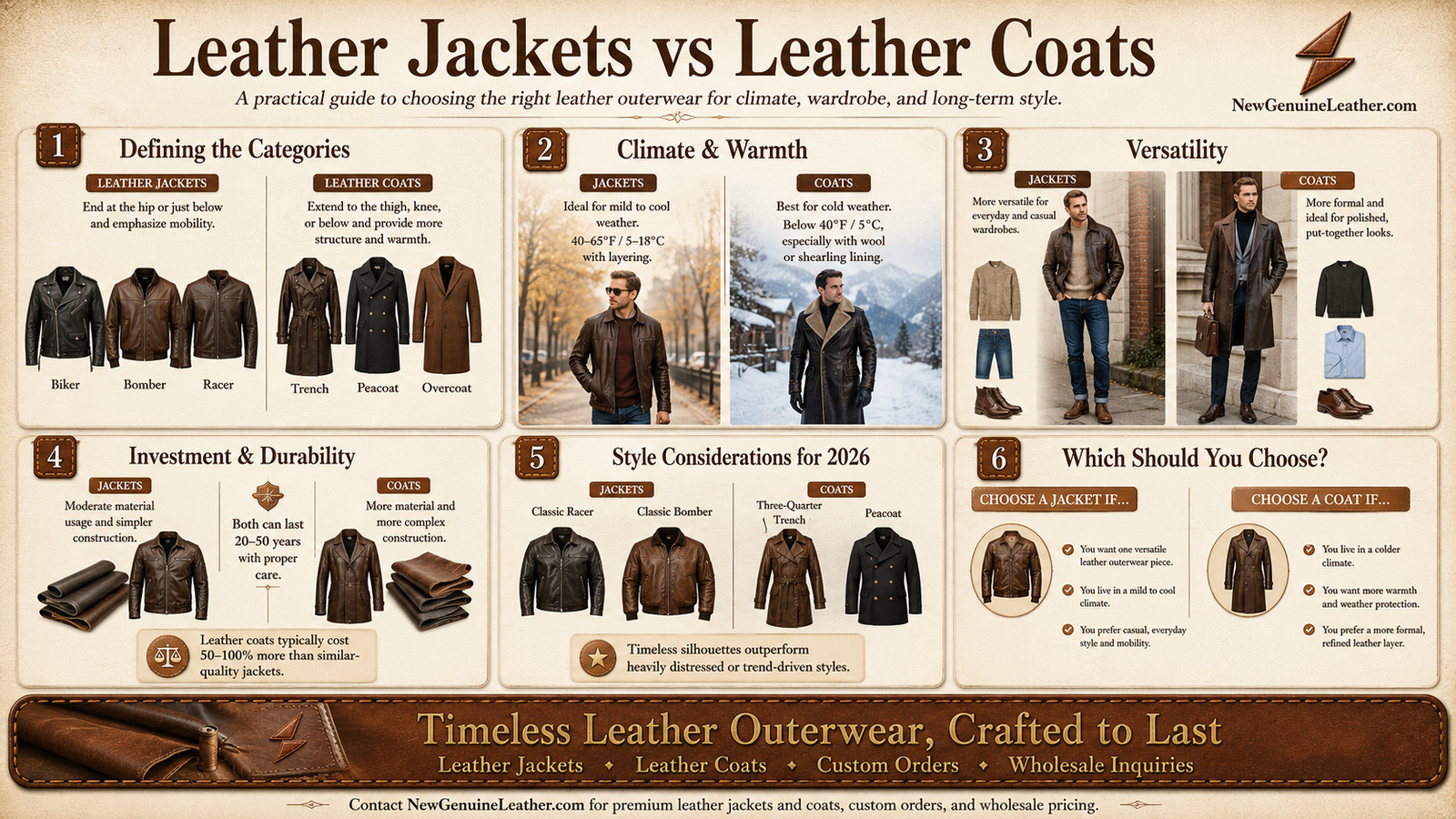
Choosing between a leather jacket and a leather coat is not only about fashion. The right option depends on climate, body coverage, comfort, movement, styling, and how frequently the garment will be worn. This Leather Jacket vs Leather Coat guide explains the key differences so consumers, retailers, distributors, and private-label buyers can make an informed decision.
At New Genuine Leather (NGL), we manufacture genuine leather jackets and coats for international wholesale, OEM, and private-label customers. Our buyers can customize leather type, color, lining, garment length, hardware, sizing, labels, packaging, and other production details.
What Is the Main Leather Jacket vs Leather Coat Difference?
The most obvious difference is garment length. A leather jacket usually ends around the waist or hips, while a leather coat extends below the hips and may reach the mid-thigh, knee, or lower leg.
This difference affects more than appearance. Jackets are generally lighter, easier to move in, and suitable for casual daily wear. Coats provide greater body coverage and are often preferred for colder weather, formal clothing, and winter collections.
Fashion brands sometimes use the words “jacket” and “coat” loosely. Wholesale buyers should therefore confirm the actual garment measurements rather than relying only on the product name.
1. Length and Body Coverage
Leather jackets protect the upper body while leaving the hips and legs relatively unrestricted. Common designs include biker jackets, bomber jackets, café racer jackets, trucker jackets, varsity styles, and leather blazers.
Leather coats cover more of the torso and upper legs. Popular designs include trench coats, car coats, overcoats, long belted coats, shearling coats, and full-length fashion coats.
When comparing Leather Jacket vs Leather Coat products, consider the climate and daily routine of the intended customer. Someone who drives frequently may prefer a waist-length jacket, while a customer who walks or commutes in cold weather may benefit from the additional protection of a longer coat.
The intended outfit also matters. Jackets pair naturally with jeans, trousers, casual shirts, and streetwear. Coats are usually more suitable for layering over suits, dresses, knitwear, and formal clothing.
2. Warmth and Seasonal Performance
Leather provides useful wind protection, but warmth depends on several construction details. These include garment length, leather thickness, lining material, collar design, cuffs, pockets, and front closure.
A shorter leather jacket can still be warm when it is made from substantial leather and fitted with quilted, fleece, wool-blend, or shearling lining. However, it leaves more of the lower body exposed.
A leather coat generally offers better cold-weather coverage because it protects the hips and upper legs. High collars, storm flaps, adjustable cuffs, secure closures, and insulated linings can increase warmth further.
Lightweight lambskin and goatskin jackets work well for spring and autumn collections. Heavier cowhide, sheepskin, and insulated long coats are usually more appropriate for colder regions and winter retail ranges.
Buyers should not assume that every long coat is warmer than every short jacket. A thin, unlined fashion coat may offer less warmth than a heavily insulated leather jacket.
3. Style and Overall Appearance
Leather jackets usually create a casual, sporty, youthful, or rugged appearance. A biker jacket provides a bold look, a bomber jacket feels relaxed, and a clean café racer creates a modern minimalist style.
Leather coats often appear more formal, sophisticated, or dramatic. A black leather trench coat can create a strong fashion statement, while a brown leather car coat offers a classic smart-casual appearance.
Customers wanting one versatile garment for jeans, chinos, boots, and casual shirts may prefer a jacket. Buyers who want leather outerwear for business clothing, formal outfits, or winter layering may find a coat more suitable.
Color also influences the overall style. Black leather usually appears sharper and more modern. Brown, tan, and distressed leather create a warmer, more traditional look. Fashion brands can also develop burgundy, navy, grey, olive, or custom-colored leather collections.
4. Comfort, Weight, and Movement
A shorter leather jacket normally uses less material and therefore feels lighter. It also provides greater freedom around the hips and legs, making it practical for driving, travelling, motorcycling, and active everyday use.
A long leather coat uses larger leather panels and may feel heavier, especially when made from thick cowhide or fitted with substantial winter lining. Proper pattern development is therefore essential.
The shoulders, armholes, sleeves, back vent, waist, and hem must allow natural movement. A poorly designed long coat may pull across the back, restrict walking, or become uncomfortable when sitting.
During a Leather Jacket vs Leather Coat fitting, the garment should be tested with the type of clothing normally worn underneath. A fitted jacket may only need room for a shirt or lightweight sweater. A winter coat should allow comfortable layering without appearing excessively loose.
Wholesale buyers should approve both standing and seated fitting photographs before bulk production.
5. Leather Types and Construction Quality
Jackets and coats can be manufactured from several leather types, with each material producing a different appearance and level of performance.
Lambskin is soft, lightweight, and suitable for premium fashion garments. It creates a smooth, refined finish but normally requires more careful handling than heavier hides.
Goatskin offers a practical balance between flexibility, texture, and durability. It can be used for casual jackets, military-inspired designs, and medium-weight coats.
Cowhide is stronger and more structured. It is commonly selected for motorcycle jackets, rugged outerwear, workwear, and coats that require a firm silhouette.
Sheepskin and shearling are popular for warm winter outerwear because the natural wool can remain attached to the hide.
Construction quality matters as much as leather selection. Buyers should inspect seam strength, panel matching, zipper performance, button attachment, pocket reinforcement, lining quality, stitching consistency, and edge finishing.
The Leather Working Group provides useful information about leather manufacturing and environmental auditing. Buyers can consult such independent resources when preparing questions for potential leather suppliers.
6. Care and Long-Term Durability
A well-made leather garment can remain attractive for many years when it is maintained correctly. Surface dust should be removed with a soft, dry cloth, and the garment should be protected from prolonged exposure to sunlight, radiators, high heat, and excessive moisture.
A suitable leather conditioner can help prevent dryness, but it should first be tested on a hidden section. Different finishes may react differently to cleaning and conditioning products.
Leather jackets and coats should be stored on wide, supportive hangers so the shoulders retain their shape. Long coats require enough wardrobe space to hang freely without folding or crushing the lower hem.
Jackets commonly develop natural creases around the elbows, shoulders, and waist. Coats may show wear around the belt, pockets, cuffs, and lower hem. These changes can add character, but regular maintenance helps prevent cracking and premature deterioration.
For general education about leather properties and care, readers can also visit Leather Naturally.
7. Price, Value, and Buying Purpose
Leather coats generally cost more because they require larger quantities of hide, lining, cutting time, and stitching. Features such as belts, storm flaps, oversized collars, detachable linings, and longer zippers may increase the production cost further.
However, length alone does not determine quality or value. A premium full-grain leather jacket with complicated construction and high-quality hardware may cost more than a simple coat manufactured from a lower leather grade.
Buyers should compare the complete product specification, including:
- Leather type and thickness
- Surface finish and color
- Lining material
- Zippers, buttons, and buckles
- Stitching and reinforcement
- Size grading and fit
- Branding and packaging
- Intended season and end use
Leather jackets often appeal to a broader year-round market. Leather coats can achieve higher retail prices and create stronger visual impact in autumn and winter collections.
Leather Jacket vs Leather Coat for Wholesale Buyers
Wholesale and private-label buyers should define their target customer before selecting a design. Climate, age group, styling preference, retail price, and intended use should influence every product decision.
Important customization options include garment length, leather type, thickness, lining weight, fit, size range, colors, pocket layout, closure type, hardware, and branding.
Sampling is particularly important for long coats because small pattern problems become more noticeable across a larger garment. Buyers should test walking, sitting, arm movement, belt placement, pocket access, sleeve length, and hem balance before approving production.
At New Genuine Leather, OEM customers can request:
- Custom leather colors and finishes
- Lightweight or insulated linings
- Branded zippers and buttons
- Embroidery and embossed logos
- Woven labels and swing tags
- Custom size grading
- Retail-ready packaging
- Men’s, women’s, and unisex patterns
We manufacture leather outerwear for retailers, distributors, fashion brands, uniform suppliers, online stores, and private-label businesses worldwide.
Which One Should You Choose?
Choose a leather jacket when you want lighter weight, easy movement, casual styling, and versatility across several seasons. Jackets are practical for travel, driving, streetwear, motorcycling, and everyday use.
Choose a leather coat when you need greater coverage, stronger winter protection, a formal silhouette, or a more dramatic fashion appearance. Coats are ideal for cold-weather collections and customers who regularly wear layered clothing.
The final Leather Jacket vs Leather Coat decision should be based on climate, fit, purpose, construction, and customer expectations—not appearance alone.
Frequently Asked Questions
Is a leather coat warmer than a leather jacket?
Usually, yes, because it covers more of the body. However, leather thickness, lining, collar construction, cuffs, and front closure also affect warmth.
Can a leather jacket be worn during winter?
Yes. A leather jacket with an insulated lining and enough space for layering can work in winter. A longer coat may provide better protection in severe cold.
Which option works better with business clothing?
A leather overcoat or car coat normally fits formal clothing more naturally. Minimalist jackets and leather blazers can also work in smart-casual environments.
Which product is better for wholesale selling?
Jackets usually serve a broader year-round market, while coats are valuable higher-priced products for autumn and winter. A balanced wholesale collection can include both.
Final Thoughts
Understanding the Leather Jacket vs Leather Coat comparison makes it easier to select outerwear for weather protection, mobility, styling, and commercial demand. Jackets provide everyday flexibility, while coats deliver extended coverage and a more formal presence.
New Genuine Leather manufactures custom leather jackets and coats for wholesale, OEM, and private-label buyers worldwide.
Discuss samples, custom branding, leather selection, sizing, and bulk production through
Follow Us
Instagram: https://www.instagram.com/newgenuineleather/
WhatsApp: https://wa.me/+923008758207
