

How a Single Pair of Lederhosen Is Made: Best Lederhosen: 9 Powerful Tips for a Perfect Pair

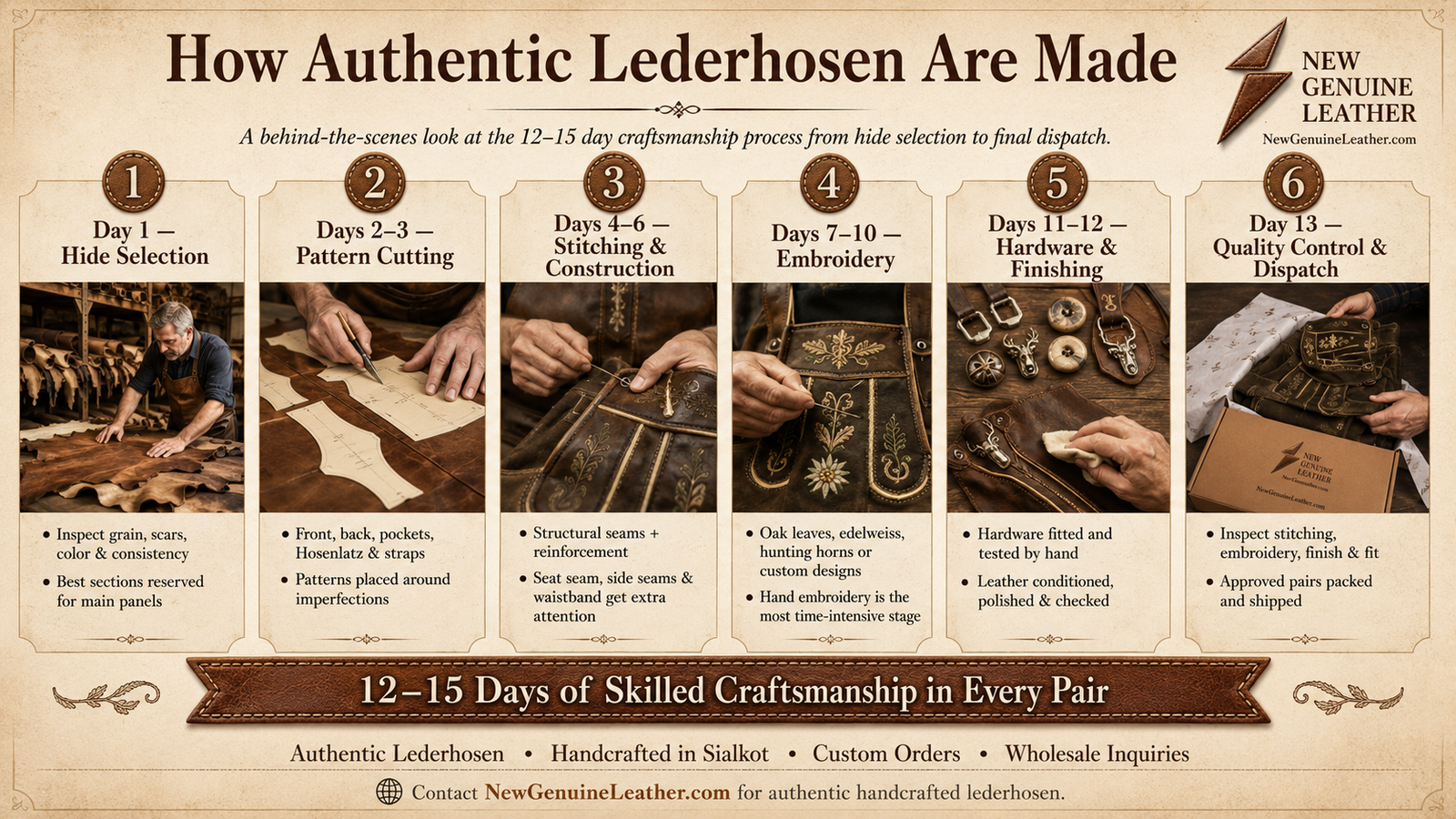
Choosing the best lederhosen requires more than finding traditional-looking leather shorts. A quality pair should combine authentic styling, comfortable construction, genuine leather, attractive embroidery, dependable hardware, and accurate sizing.
These details are especially important for Oktoberfest retailers, costume suppliers, rental companies, distributors, and private-label buyers. Poor stitching or inaccurate sizing can quickly turn an attractive product into a customer complaint.
At New Genuine Leather (NGL), we manufacture customizable leather garments for wholesale, OEM, and private-label clients worldwide. This guide explains what to examine before buying or ordering lederhosen in bulk.
What Defines the Best Lederhosen?
The best lederhosen should feel like a durable garment rather than a temporary festival costume. The leather should have natural character, the embroidery should be clean, and the garment should permit comfortable movement.
Strong seams, adjustable suspenders, securely attached buttons, practical pockets, and a properly shaped waistband are equally important. Every visible and hidden detail contributes to the finished product.
Lederhosen are closely associated with Bavarian traditional clothing and Oktoberfest culture. The official Oktoberfest website describes them as functional clothing with a long cultural history, making construction and appropriate styling important considerations. Read the official Oktoberfest guide to lederhosen.
1. Choose the Right Leather best lederhosen
Leather quality has a major influence on appearance, comfort, and durability. Genuine leather should feel substantial without being excessively stiff. Small variations in texture, grain, and shade are normal characteristics of natural material.
Suede leather is popular for a softer and more traditional appearance. Smooth finished leather provides a cleaner, more polished style suited to contemporary collections.
Full-grain and top-grain leather are often selected for premium products, while properly finished genuine leather can provide a practical balance between quality and wholesale pricing.
Do not judge leather only by its thickness. Extremely thick material may restrict movement, while very thin leather may lose its shape around the waistband, pockets, thighs, and seat.
Wholesale buyers should request leather swatches and approve a physical sample before starting mass production.
2. Inspect the Stitching and Reinforcement best lederhosen
The best lederhosen require strong stitching in areas exposed to regular tension. Important points include the crotch, waistband, pocket corners, side closures, front flap, suspender buttons, and buckle attachments.
Stitching should appear straight, dense, and evenly tensioned. Loose threads, skipped stitches, or widely spaced seams can be signs of rushed manufacturing.
Reinforcement is particularly valuable for rental businesses and event suppliers because their garments may be worn, transported, cleaned, and stored repeatedly throughout the season.
Ask whether the manufacturer adds backing material around the buttons and suspender attachment points. These hidden construction details often determine how well a pair performs after repeated wear.
3. Examine the Embroidery best lederhosen
Embroidery gives lederhosen much of their visual identity. Floral patterns, leaves, deer, vines, and Alpine-inspired motifs remain popular across traditional and modern collections.
The most complicated embroidery is not automatically the best. Look for smooth curves, balanced placement, secure thread ends, even density, and symmetry across both legs.
The embroidery color should complement the leather. Cream, beige, muted gold, green, and dark brown threads are frequently used because they work well with traditional leather tones.
For OEM and private-label orders, embroidery can be adjusted to match a retailer’s identity. New Genuine Leather can produce custom motifs, decorative patterns, and buyer-supplied artwork.
Always approve the embroidery layout and physical sample before authorizing a bulk order.
4. Select the Correct Length best lederhosen
Lederhosen are generally produced in short, knee-length, and longer traditional cuts. Each style serves a slightly different customer and market.
Short lederhosen are suitable for festivals, warmer weather, and modern fashion collections. Knee-length styles create a more traditional silhouette and work naturally with Bavarian socks or calf warmers.
The right length depends on the intended customer, climate, event, and retail positioning. A contemporary clothing store may prefer a shorter cut, while a traditional costume supplier may need knee-length designs with decorative side closures.
Retailers can also offer two lengths using the same leather and embroidery theme. This creates more variety without requiring an entirely separate product collection.
5. Check the Suspenders, Buttons, and Buckles best lederhosen
Suspenders should support the garment without pulling uncomfortably on the waistband. Adjustable straps are essential, particularly when producing a wide wholesale size range.
The front chest panel should sit flat, while the back straps should remain comfortable during walking, sitting, and dancing.
Buttons must be firmly attached and appropriately sized. Horn-look, wood-look, and antique metal finishes can all produce an attractive result when they coordinate with the leather.
Buckles should close securely and have smooth edges. Rough or poorly finished buckles may scratch the leather or damage the suspender straps.
Hardware represents a relatively small part of the garment, but weak hardware can make otherwise excellent lederhosen feel inexpensive.
6. Prioritize Accurate Sizing and Fit best lederhosen
Premium leather and detailed embroidery cannot compensate for poor fit. The waistband should feel secure without creating excessive pressure.
The thighs, rise, and seat should allow the wearer to sit, walk, and move comfortably. Lederhosen should look fitted, but they should not feel painfully restrictive.
Retailers should use an accurate size chart based on actual garment measurements. Important measurements include:
- Waist
- Hip
- Thigh
- Front and back rise
- Inseam
- Total length
Depending only on general labels such as small, medium, or large can create sizing problems, particularly across international markets.
The best lederhosen provide a traditional fitted appearance while allowing enough room for comfortable movement.
7. Match the Color and Finish best lederhosen
Classic lederhosen colors include tan, light brown, medium brown, dark brown, and black. Each tone creates a different style.
Distressed leather offers an aged and rustic appearance. Smooth leather appears cleaner and more formal, while suede provides a soft traditional texture.
The leather color should coordinate with the embroidery, shirts, socks, footwear, and accessories used in the complete outfit.
Tan leather works well with dark brown or green embroidery. Dark brown leather pairs beautifully with cream, beige, or muted gold thread.
Bulk buyers should request color swatches and retain an approved reference sample. Natural leather may display minor variations, but the overall production run should remain visually consistent.
8. Review the Interior Construction best lederhosen
Buyers often concentrate on the front appearance and forget to inspect the interior. However, the inside of the garment strongly affects comfort.
Check for rough seams, loose threads, bulky seam allowances, excessive adhesive, or labels that may irritate the wearer.
The pockets should be securely attached and deep enough for practical use. The waistband should have a neat finish, and the internal edges should not feel sharp or unfinished.
For private-label orders, woven brand labels, size labels, care instructions, and country-of-origin labels should be positioned consistently.
A clean interior is usually a strong sign of careful manufacturing.
9. Consider OEM and Private-Label Options best lederhosen
For retailers and distributors, the best lederhosen may be a custom product developed for a specific market.
OEM and private-label options may include:
- Leather type and finish
- Custom colors
- Short or knee-length cuts
- Original embroidery patterns
- Suspender configurations
- Buttons and buckle finishes
- Market-specific sizing
- Woven labels and hangtags
- Barcodes and retail packaging
New Genuine Leather (NGL) supports wholesale and private-label development for international buyers.
The process should begin with measurements, reference images, branding files, material preferences, and expected order quantities. A physical sample can then be reviewed before mass production.
Buyers should confirm the approved sample, measurement tolerances, packaging requirements, lead time, inspection process, and shipping instructions in writing.
How to Style the Best Lederhosen
For a classic Oktoberfest outfit, combine lederhosen with a white or checked Bavarian shirt, traditional socks or Loferl, and sturdy leather footwear.
Loferl are calf warmers rather than ordinary socks and are traditionally worn with short lederhosen. View the official Oktoberfest Loferl styling guide.
For a modern outfit, pair lederhosen with a plain fitted shirt, casual boots, and minimal accessories. Keeping the shirt simple allows the embroidery and natural leather texture to remain the main visual features.
A leather vest or traditional jacket can be added in cooler weather.
How to Care for Lederhosen
Allow lederhosen to air naturally after wearing them. Remove light dust with a soft cloth or a suitable suede brush, depending on the finish.
Avoid soaking the leather, washing it in a conventional machine, or placing it near direct heat. Heat can make natural leather dry and stiff.
Use only care products intended for the specific leather type. Test any cleaner or conditioner on a hidden area before applying it across the complete garment.
Store lederhosen in a cool, dry, ventilated place. Use a padded hanger or lay them flat without creating sharp folds.
Wholesale buyers interested in tannery assessment and responsible sourcing can consult the Leather Working Group. Its standards address areas including traceability, chemical management, energy, water, waste, and environmental performance.
Wholesale Buying Checklist
Before confirming an order, review:
- Approved leather type, thickness, color, and finish
- Complete measurement chart and tolerances
- Reinforcement at high-stress points
- Embroidery artwork and thread colors
- Suspender, button, and buckle quality
- Private labels and retail packaging
- Physical sample approval
- Production and inspection schedule
- Shipping marks and export documentation
A detailed specification sheet helps both the buyer and manufacturer maintain consistency across first-time and repeat orders.
Frequently Asked Questions
What leather is best for lederhosen?
The ideal choice depends on the intended price, finish, and use. Full-grain and top-grain leather suit premium collections, while high-quality finished genuine leather can work well for commercial wholesale ranges.
Should lederhosen fit tightly?
They should feel fitted and secure but still allow comfortable movement. Accurate waist, hip, rise, and thigh measurements are more reliable than choosing only by a standard size label.
Can lederhosen carry private branding?
Yes. Private-label production can include custom embroidery, woven labels, care labels, hangtags, barcodes, packaging, colors, and market-specific sizing.
Final Thoughts
Finding the best lederhosen means balancing traditional appearance, quality leather, accurate sizing, strong stitching, detailed embroidery, comfortable construction, and suitable pricing.
For wholesale, OEM, and private-label development, New Genuine Leather manufactures customizable lederhosen for retailers, distributors, Oktoberfest suppliers, costume companies, and rental businesses worldwide.
Website: New Genuine Leather
Follow Us
Instagram: https://www.instagram.com/newgenuineleather/
WhatsApp: https://wa.me/+923008758207
