Introduction
Leather production becomes truly meaningful at the tanning process. Before tanning, a hide is still a natural animal skin that can decay, shrink, harden, or lose its structure. After tanning, it becomes stable, durable, flexible, and ready to be transformed into leather products.
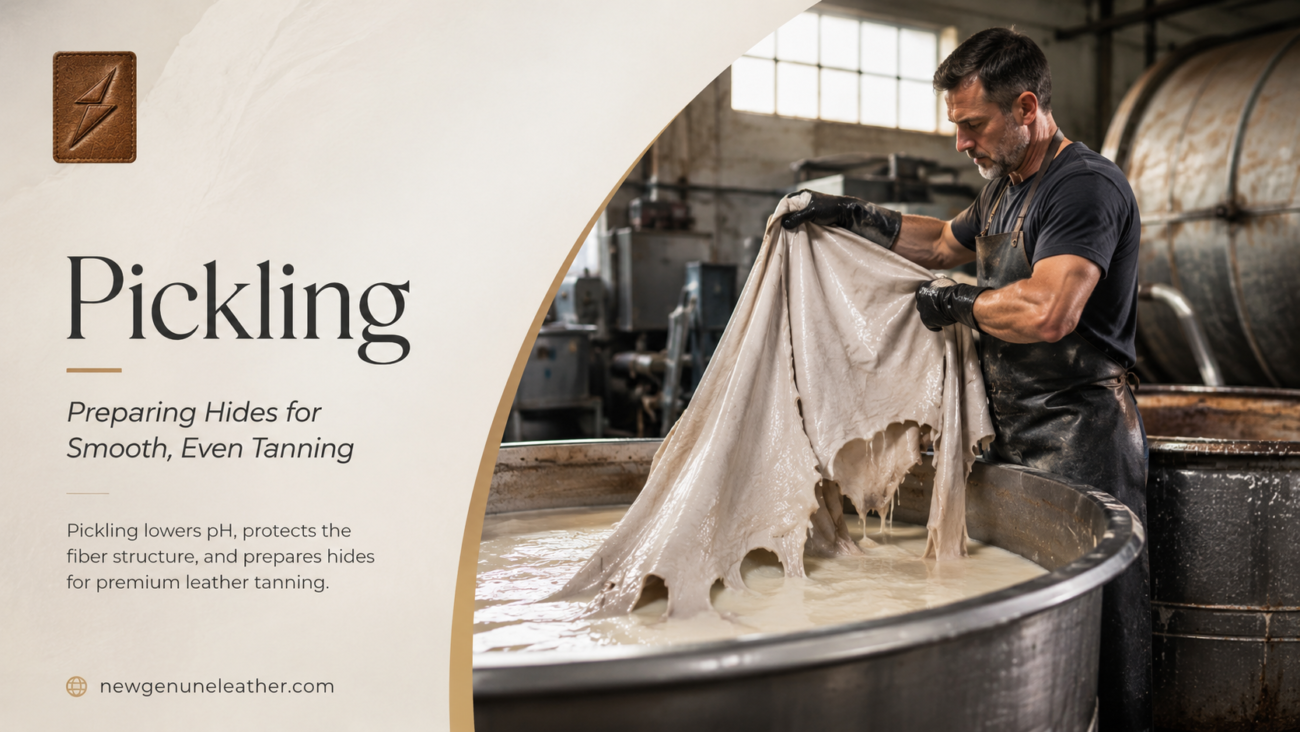
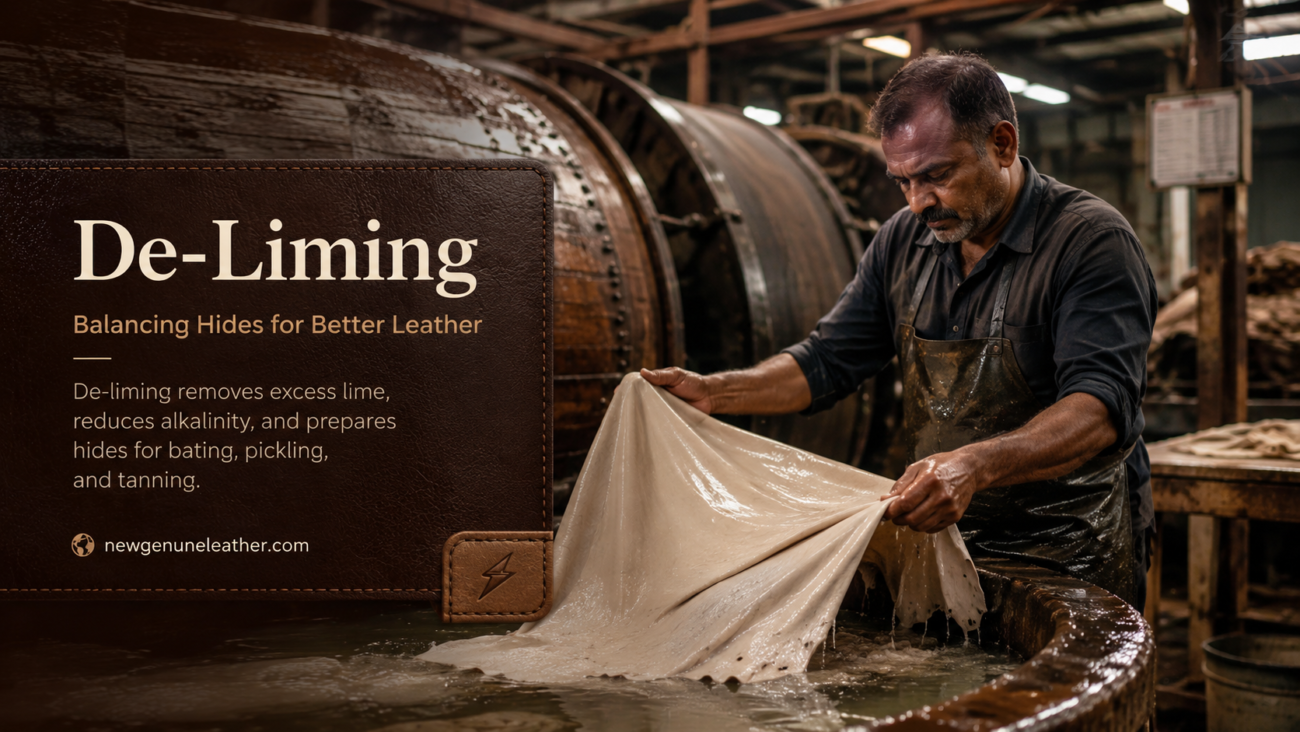
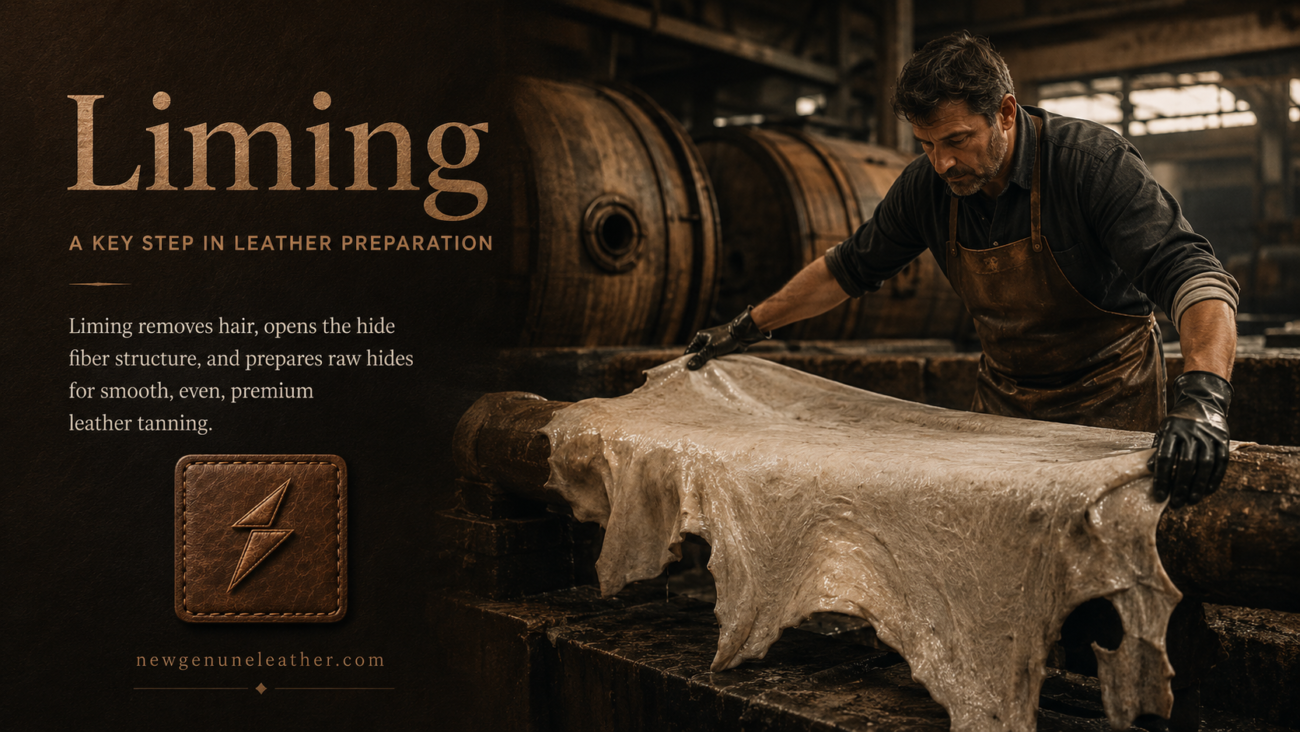
The previous stages such as soaking, fleshing, liming, de-liming, bating, and pickling all prepare the hide for this important step. Tanning is the stage where the prepared hide is converted into leather.
At newgenuneleather.com, we believe that genuine leather quality depends on proper tanning. This process gives leather its strength, stability, softness, and long-lasting character.
What Is Tanning in Leather Processing?
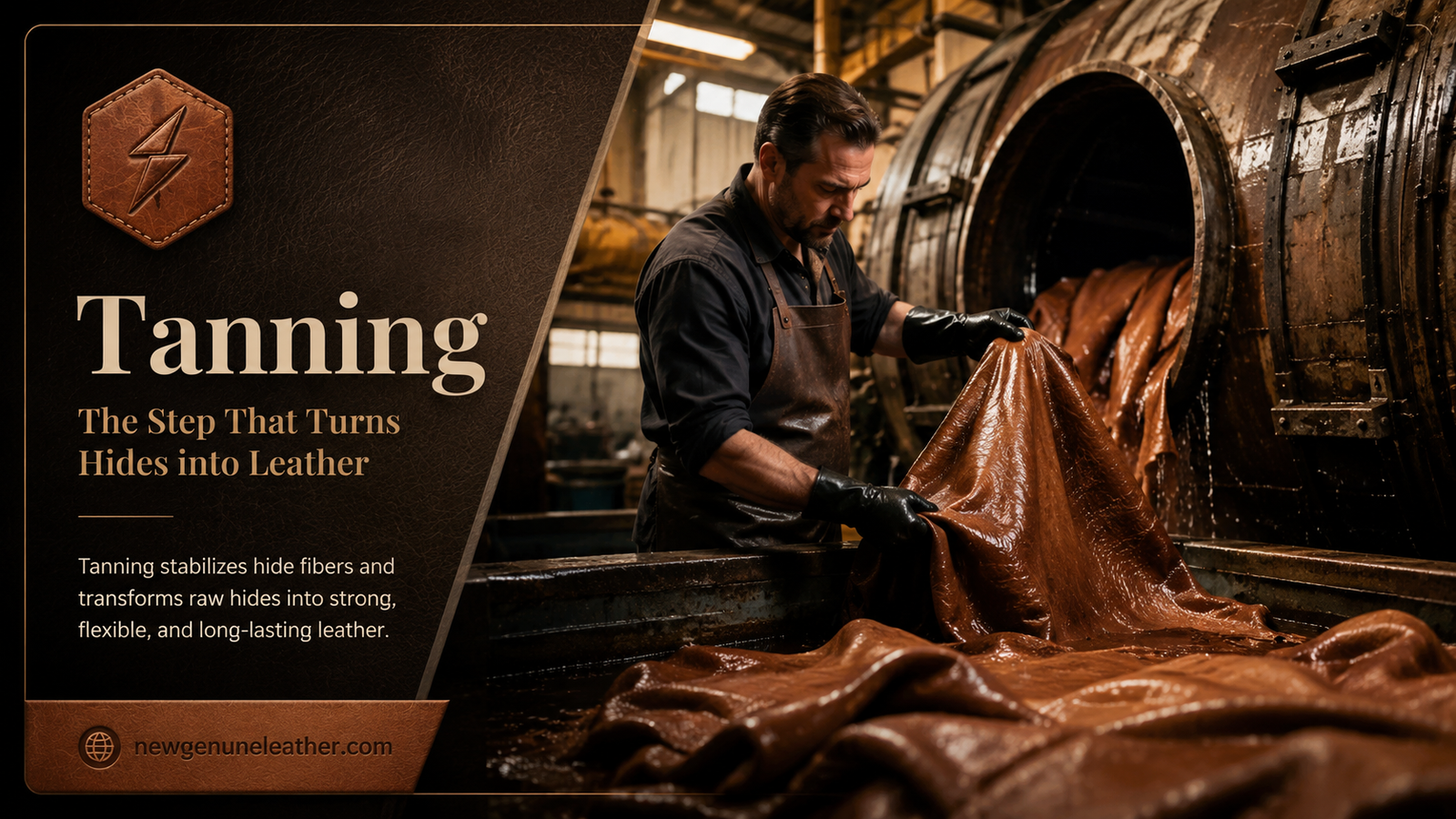
Tanning is the process of treating prepared hides with tanning agents to stabilize the collagen fibers inside the hide. Collagen is the natural protein structure that gives the hide its strength. Without tanning, this structure can break down over time.
During tanning, the tanning agents bond with the hide fibers and make them resistant to decay, heat, moisture, and bacterial damage. This changes the hide from a raw material into leather.
In simple words, tanning is the process that preserves the hide and turns it into usable leather.
Why Is Tanning Needed?
1. Converts Raw Hide into Leather
The most important purpose of tanning is transformation. A raw hide is not yet leather. It is unstable and can rot if it is not properly treated. Tanning stabilizes the hide and makes it suitable for long-term use.
This is why tanning is considered the central step in leather production.
2. Prevents Decay and Bacterial Damage
Natural hides contain proteins that can decompose if they are left untreated. Tanning protects these proteins by stabilizing the fiber structure. This reduces the risk of bacterial damage, bad odor, and decay.
A properly tanned hide becomes more durable and easier to store, process, and use.
3. Improves Strength and Durability
Tanning strengthens the internal structure of the hide. It helps the fibers resist damage from moisture, heat, and regular wear. This is one reason leather is valued for products that need long life and reliable performance.
Shoes, belts, bags, jackets, wallets, gloves, and upholstery all depend on well-tanned leather for durability.
4. Gives Leather Flexibility
Good tanning helps the leather remain flexible instead of becoming hard or brittle. The tanning process allows the fibers to stay stable while still moving naturally.
This balance of strength and flexibility is one of the main reasons genuine leather is used in premium fashion, footwear, accessories, and furniture.
5. Prepares Leather for Dyeing and Finishing
After tanning, the leather can move into post-tanning, dyeing, fatliquoring, drying, and finishing. These later steps improve color, softness, fullness, shine, and surface protection.
If tanning is not done correctly, the leather may not absorb dyes evenly or may show defects during finishing.
Main Types of Leather Tanning
1. Chrome Tanning
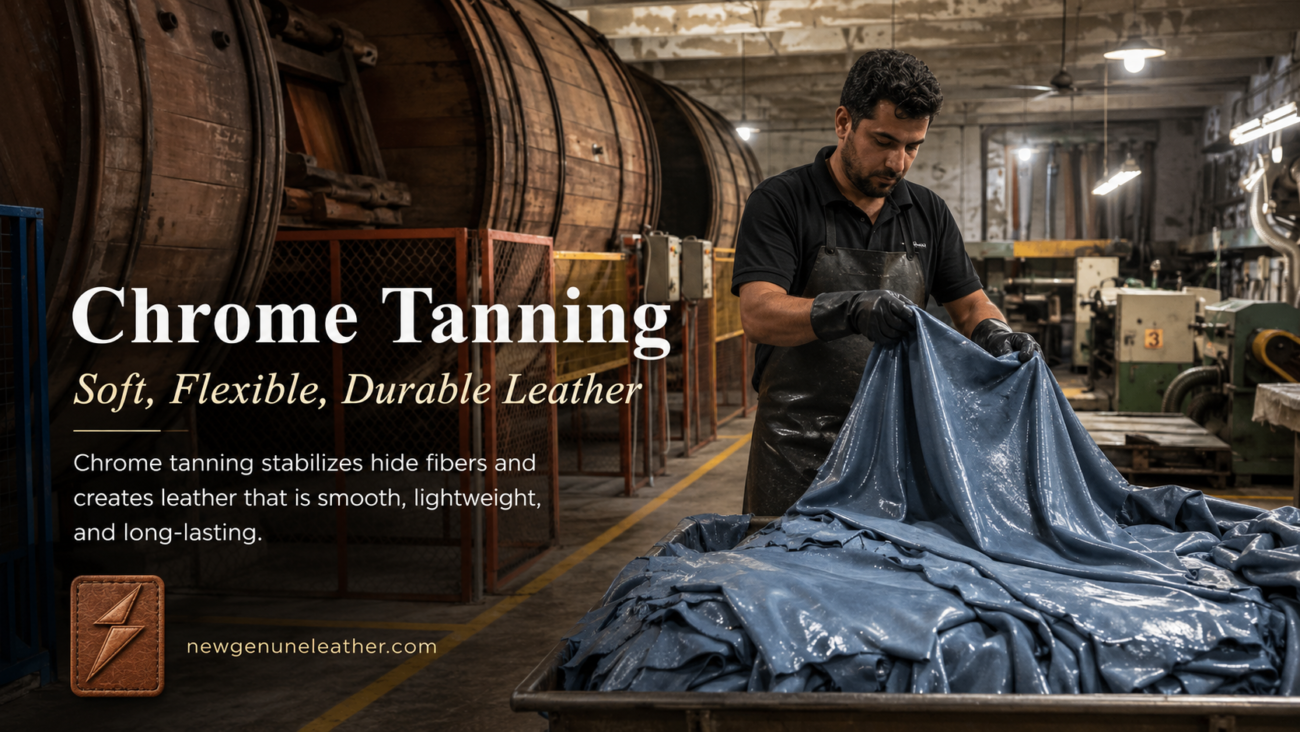
Chrome tanning is one of the most widely used tanning methods in modern leather production. It uses chromium salts to produce leather that is soft, flexible, light, and resistant to heat and moisture.
Chrome-tanned leather is commonly used for shoes, garments, bags, upholstery, and many everyday leather products.
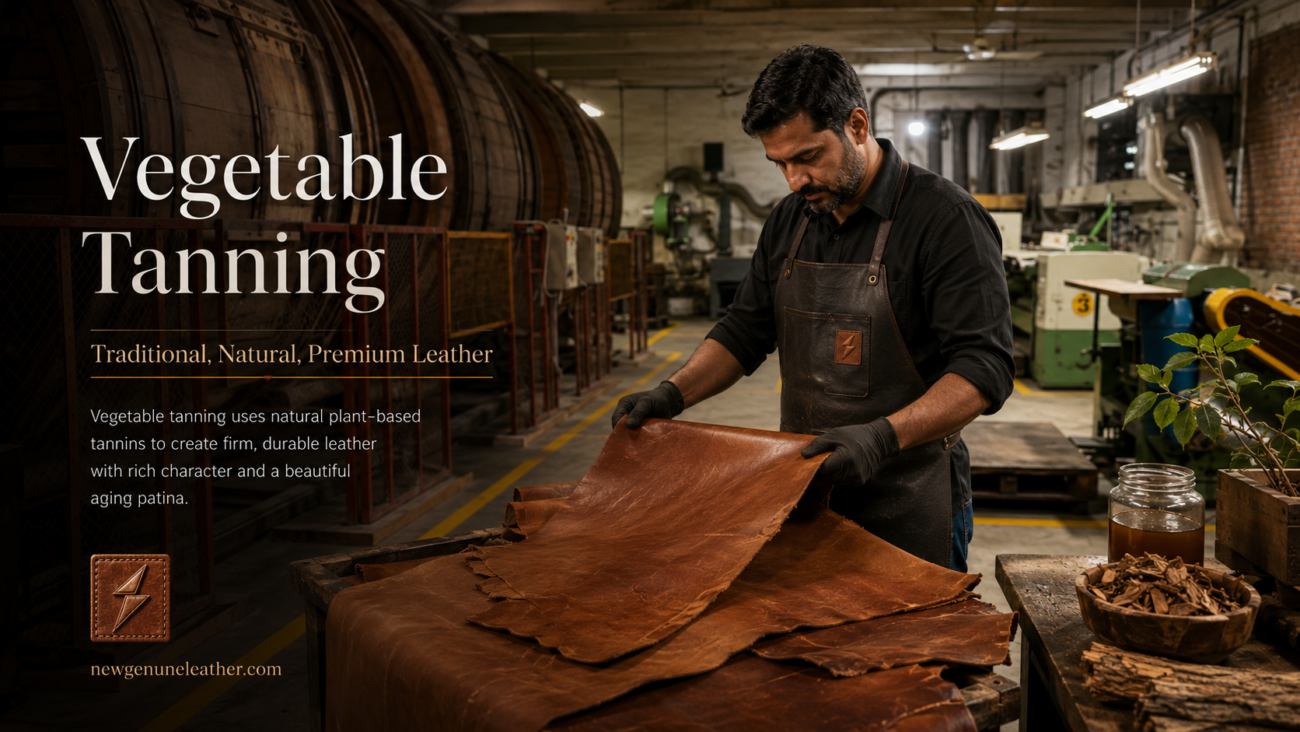
2. Vegetable Tanning
Vegetable tanning uses natural tannins obtained from plant sources such as bark, leaves, and wood. This method is traditional and produces leather with a firm feel, rich natural character, and beautiful aging behavior.
Vegetable-tanned leather is often used for belts, wallets, saddlery, bags, and handcrafted leather goods.
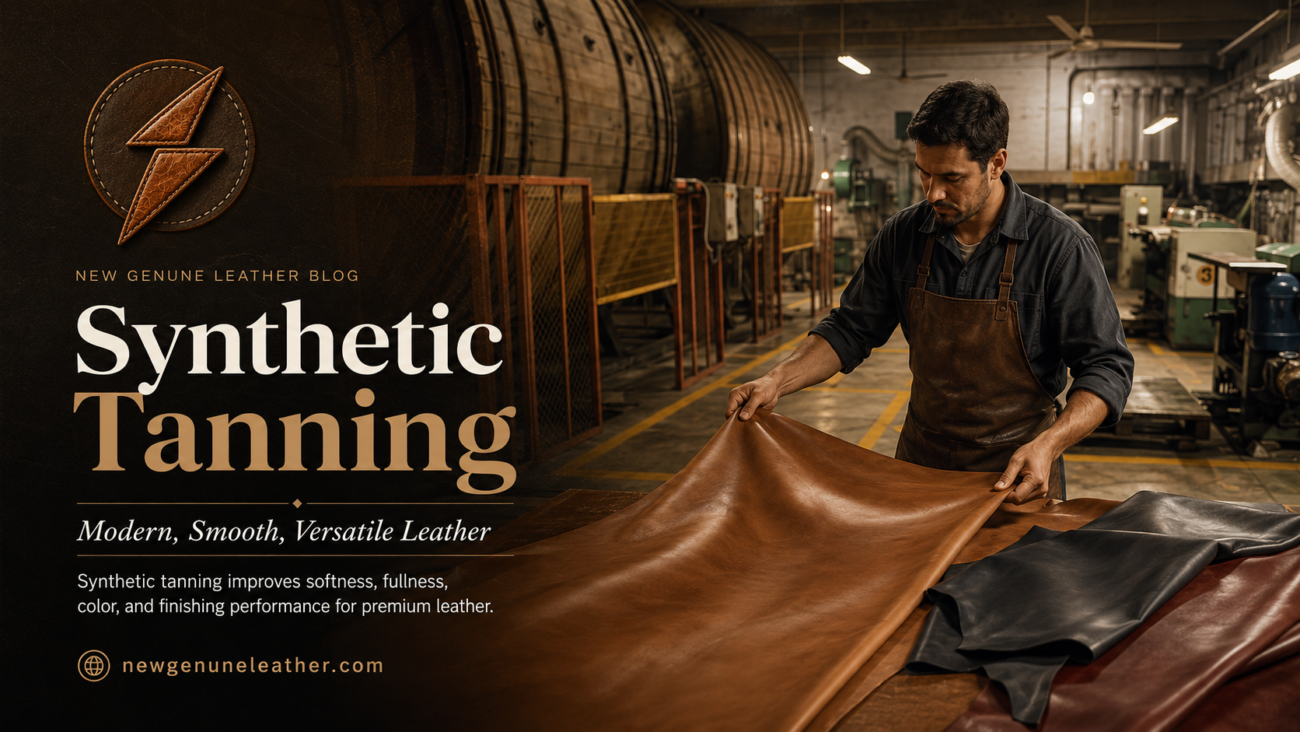
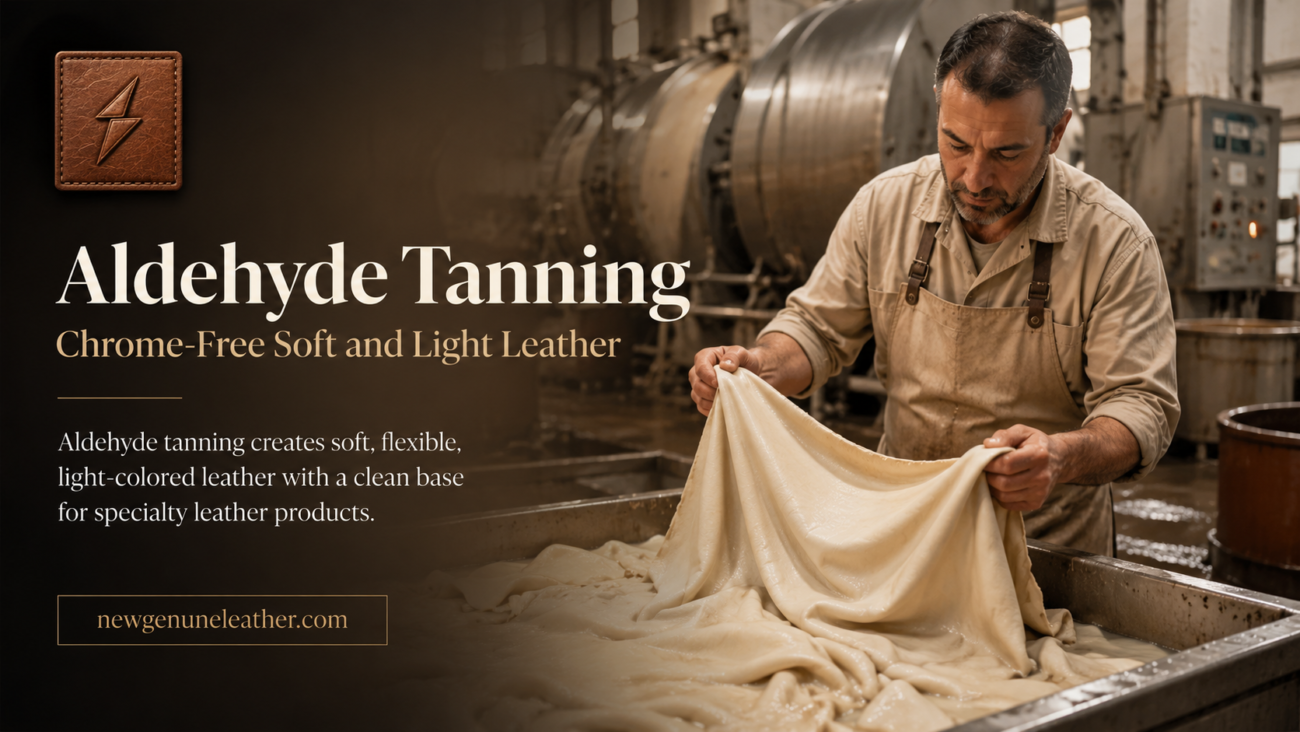
3. Aldehyde and Synthetic Tanning
Some leather is tanned using aldehyde-based or synthetic tanning agents. These methods can produce soft, light-colored, and specialized leather for particular applications.
Different tanning methods are selected depending on the final product, required softness, color, durability, and appearance.
How Is the Tanning Process Done?
After pickling, hides are placed into drums or processing vessels with tanning agents and water. The drum rotates slowly so the tanning solution can penetrate the hide evenly. The process is carefully controlled through time, temperature, pH, and chemical concentration.
The goal is to make sure the tanning agents reach the entire hide structure. Proper penetration produces leather that is strong, uniform, and stable.
Skilled technicians monitor the process closely because under-tanning or uneven tanning can reduce leather quality.
What Happens After Tanning?
Once tanning is complete, the leather is usually called wet blue in chrome tanning or wet white in some alternative tanning systems. After this stage, leather moves into post-tanning operations.
These may include:
Splitting: Adjusts leather thickness.
Shaving: Makes the leather more even.
Neutralization: Adjusts the leather condition for further treatment.
Dyeing: Adds the required color.
Fatliquoring: Improves softness and flexibility.
Drying: Removes excess moisture.
Finishing: Gives the leather its final surface, shine, protection, and appearance.
Tanning is therefore not the final step, but it is the step that makes all later finishing possible.
What Happens If Tanning Is Not Done Properly?
Poor tanning can cause serious leather quality problems. If tanning agents do not penetrate evenly, the leather may become weak, stiff, uneven, or unstable. It may also show poor dye absorption, rough texture, hard spots, or reduced durability.
Under-tanned leather may decay or lose strength over time. Over-processing can also affect softness and natural feel.
This is why tanning must be controlled carefully by experienced leather professionals.
Tanning and Premium Leather Quality
Premium leather depends on the right balance of strength, softness, flexibility, and appearance. Tanning creates this foundation by stabilizing the hide fibers and preparing the material for post-tanning and finishing.
When tanning is done correctly, leather becomes durable, smooth, flexible, and suitable for high-quality products. It also develops better color, better texture, and better long-term performance.
At newgenuneleather.com, we understand that tanning is the heart of leather production. It is the stage where raw hide becomes genuine leather with lasting value.
Conclusion
Tanning is one of the most important stages in leather processing. It transforms raw hides into stable leather, prevents decay, improves strength, supports flexibility, and prepares the leather for dyeing and finishing.
Without proper tanning, leather cannot achieve the durability, softness, and premium quality expected from genuine leather products.
At newgenuneleather.com, quality leather begins with expert processing, and tanning is the key step that gives leather its strength, beauty, and long-lasting performance.