

Leather Conditioning: 7 Rules for Keeping Leather Soft and Strong

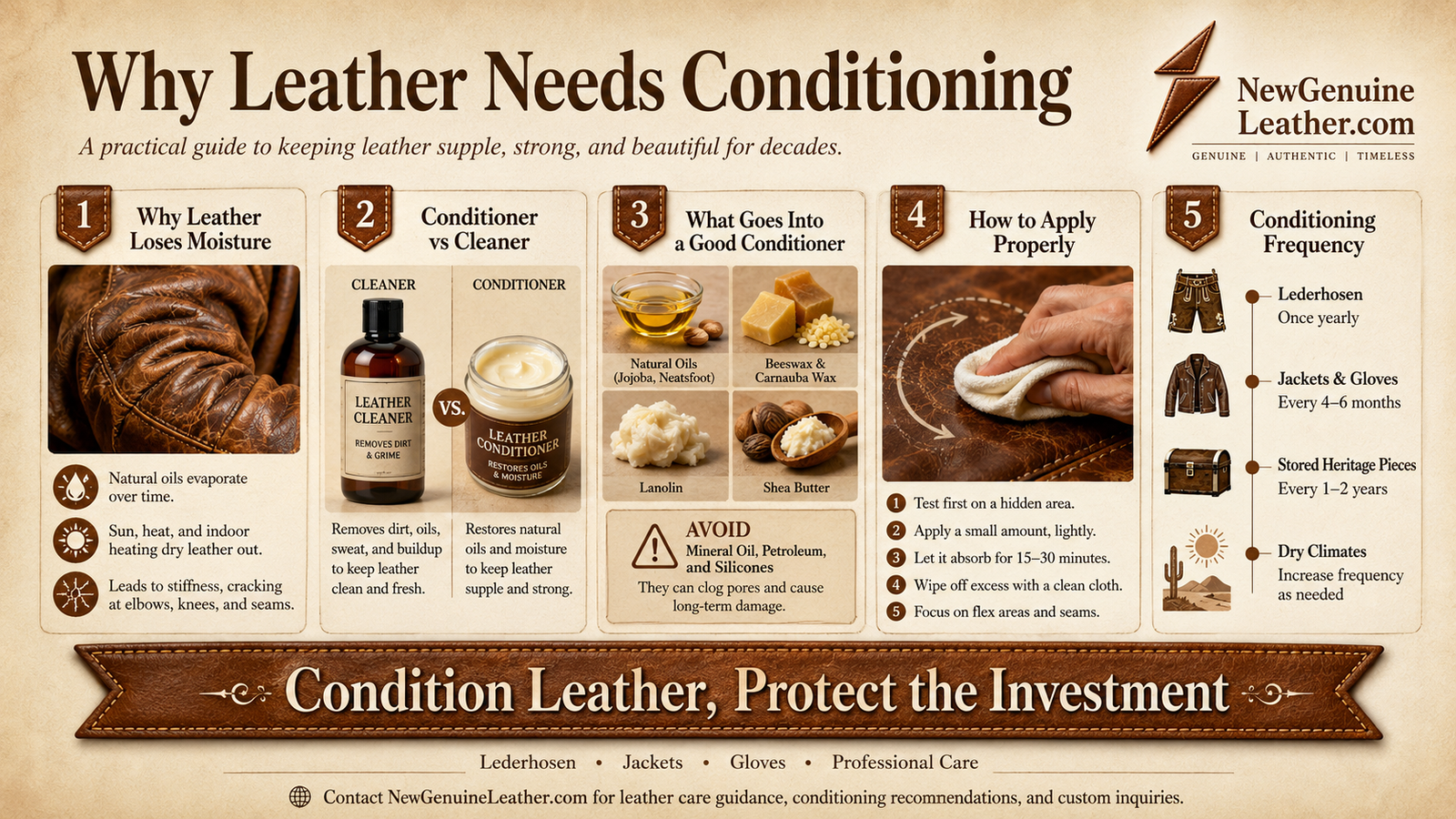
Leather conditioning is the single most overlooked step in leather care — and one of the most important. Even the highest quality leather goods will eventually dry out, stiffen, and crack without it. Whether you’re maintaining a personal jacket, gloves, or lederhosen, or managing inventory care standards as a retailer, understanding leather properly makes the difference between products that last for years and ones that fail early.
This guide covers exactly what conditioning does, how often to do it, and the rules that keep leather goods soft, flexible, and durable for the long term.
What Leather Conditioning Actually Does
Leather conditioning replaces the natural oils that leather gradually loses through wear, cleaning, and everyday environmental exposure — sunlight, heat, and dryness all draw moisture out of leather over time. Without regular leather the fibers that give leather its flexibility begin to stiffen, and eventually crack under normal use.
Think of leather conditioning as similar to moisturizing skin — leather is, after all, a natural organic material, and it behaves accordingly. Skip it for too long, and the damage becomes far harder to reverse than simple maintenance would have prevented.
Why Leather Conditioning Matters More Than Most People Think
Many buyers assume that because leather is durable, it doesn’t need active care. In reality, durability and dryness resistance are two different things. A genuine leather jacket can be structurally strong and still crack at the elbows within a year or two if it’s never conditioned — the fibers simply lose the flexibility that prevents cracking under repeated movement.
For retailers and rental businesses, leather conditioning isn’t just a customer care tip — it directly affects the lifespan of inventory. Products that are properly conditioned throughout their use cycle hold resale and rental value far longer than neglected pieces.
7 Rules for Effective Leather Conditioning
1. Always Clean Before You Condition Never apply conditioner over dirt, dust, or surface grime. Leather conditioning works by absorbing into the material — trapped debris blocks that absorption and can grind into the surface during application.
2. Spot-Test Every Time Even if you’ve used a product before, spot-test on a hidden area first. Leather conditioning products can react differently depending on the specific tanning and finishing process used on that particular item.
3. Use Less Than You Think You Need One of the most common leather conditioning mistakes is over-application. A small amount worked in thoroughly is far more effective than a heavy coat left sitting on the surface.
4. Apply in Circular Motions, Not Straight Lines Circular application during leather conditioning helps the product work evenly into the grain, avoiding streaky, uneven absorption that straight-line wiping tends to cause.
5. Let It Absorb Fully Before Buffing Rushing the leather conditioning process by buffing too soon leaves excess product on the surface rather than allowing it to penetrate where it’s actually needed.
6. Match the Conditioner to the Leather Grade Full-grain, top-grain, and genuine leather all respond differently to conditioning products. Heavier oil-based conditioners suit full-grain leather well, while lighter, cream-based formulas are often better suited to genuine leather’s finished, corrected surface.
7. Stick to a Consistent Schedule Leather conditioning works best as routine maintenance, not emergency intervention. Waiting until leather already feels dry or stiff means you’re repairing damage rather than preventing it.
How Often Should You Condition Leather?
For leather goods in regular use — jackets, bags, gloves worn several times a week — leather conditioning every three to six months is typically sufficient. Items exposed to drier climates, frequent sun exposure, or heavier use may benefit from more frequent conditioning, closer to every two to three months.
For items in storage or worn only occasionally, conditioning once or twice a year is usually enough to prevent the material from drying out between uses. The key is consistency — a light, regular leather conditioning routine outperforms infrequent heavy treatments every time.
Signs Your Leather Needs Conditioning
- Stiffness that wasn’t there when the item was newer
- A dull, faded appearance rather than a healthy, slightly matte sheen
- Small surface cracks, especially at flex points like elbows, knuckles, or knees
- A dry, almost papery feel when you run your hand across the surface
- Visible white or gray discoloration in deep creases, a sign the leather is losing its natural oils
Catching these signs early makes leather conditioning far more effective — once cracking has actually started, conditioning can slow further damage but can’t fully reverse it.
What to Avoid During Leather Conditioning
Household oils and lotions. Products not formulated specifically for leather conditioning — like olive oil or body lotion — can darken leather unevenly, clog pores, or leave a sticky residue that attracts dirt.
Heat-assisted drying. Never use a hairdryer or heater to speed up absorption during leather conditioning. Rapid heat exposure is one of the most common causes of unexpected cracking.
Conditioning over stains. Treat stains first, following proper cleaning steps, before conditioning — sealing a stain under conditioner often makes it significantly harder to remove later.
Skipping the patch test. Even trusted leather conditioning products can occasionally cause discoloration on certain finishes, so a quick test in a hidden spot takes seconds and prevents costly mistakes.
Leather Conditioning for Different Product Types
Jackets and Vests — Focus conditioning on high-flex areas like elbows, shoulders, and side seams, where cracking typically starts first.
Gloves — Apply leather conditioning sparingly, since gloves are thinner and can become overly soft or lose shape if over-conditioned.
Lederhosen — Given the crotch and waistband stress points, leather conditioning should prioritize these high-movement areas, especially for rental-grade pieces in repeated seasonal use.
Bags and Belts — These items often benefit from slightly more frequent leather conditioning due to constant handling and exposure to varying environmental conditions.
Leather Conditioning as Part of a Retail Care Program
For retailers selling genuine leather goods, including basic leather conditioning guidance with every purchase adds real value for customers and reduces return or complaint rates tied to premature wear. Simple printed care cards or product page guidance covering leather conditioning frequency and technique can meaningfully extend how long customers keep and enjoy their purchase — which, in turn, builds brand trust and repeat business.
For documented leather care standards referenced across the industry, the Leather Working Group publishes guidance worth reviewing when developing customer-facing care recommendations.
Frequently Asked Questions
How often should leather be conditioned? Most regularly used leather goods benefit from conditioning every three to six months, while occasionally worn items typically only need conditioning once or twice a year.
Can over-conditioning damage leather? Yes. Applying too much conditioner too often can oversaturate leather, leading to a soft, sagging feel and a duller overall finish.
Does leather conditioning work on genuine leather with a finished surface? Yes, though lighter, cream-based conditioners are generally better suited to genuine leather’s corrected, finished surface than heavier oil-based products designed for full-grain leather.
Final Thoughts
Leather conditioning is a simple, low-effort habit that determines whether leather goods last for years or start showing damage within months. Cleaning first, using the right amount and type of conditioner, and sticking to a consistent schedule are the core rules that keep leather soft, flexible, and crack-resistant over time. For both individual owners and retailers managing inventory, treating leather conditioning as routine maintenance — rather than an occasional afterthought — protects the value of every leather product long after it leaves the shelf.
Sourcing genuine leather goods and want care guidance your customers can trust? New Genuine Leather (NGL) manufactures durable leather jackets, gloves, and lederhosen — and we’re happy to share leather conditioning guidance for your retail packaging.
