

Leather Vests: 7 Styles That Belong in Every Collection

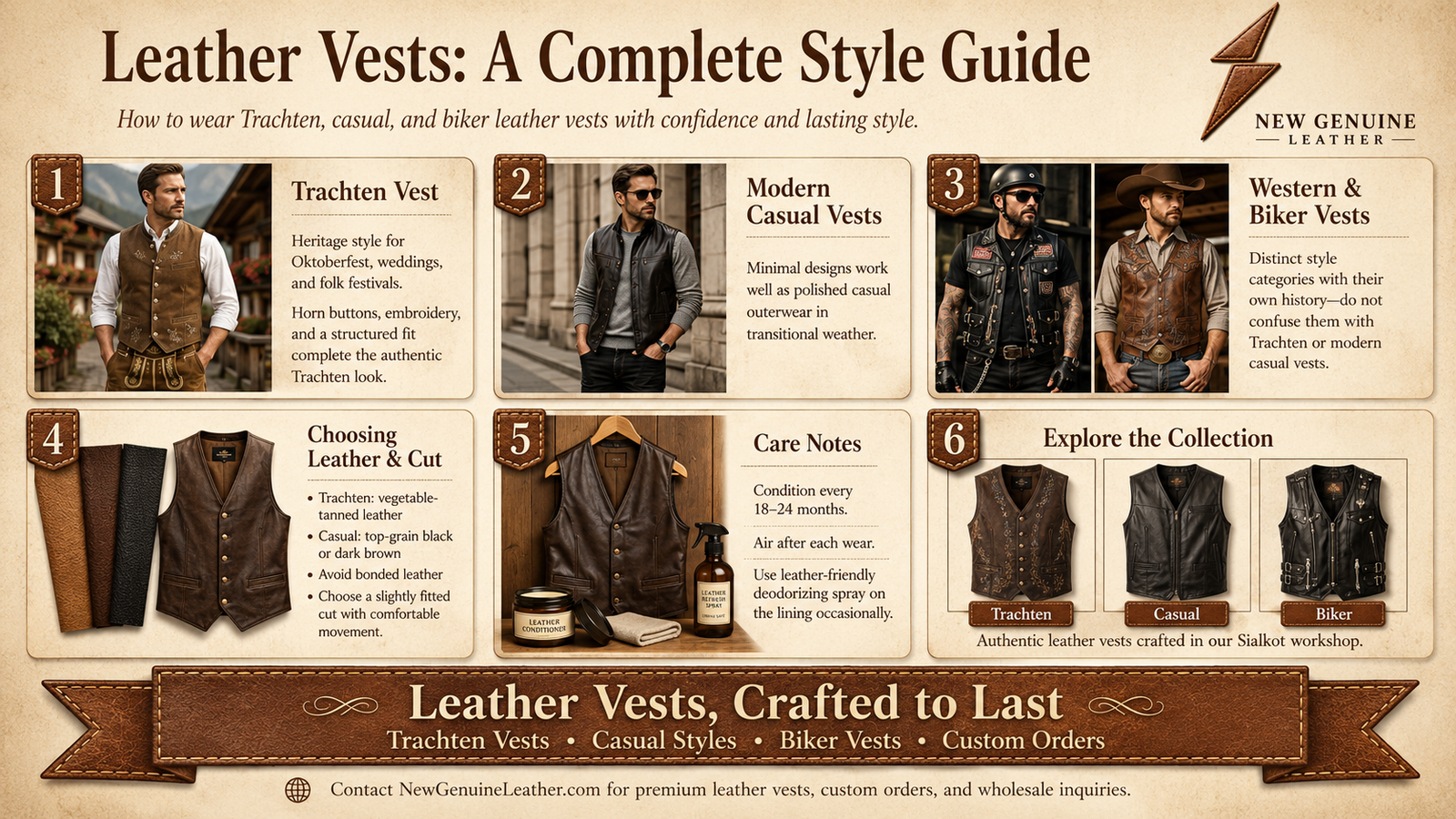
Leather vests have carried an outlaw edge for decades, but they’ve quietly become one of the most versatile pieces in modern leather apparel. From biker culture to streetwear layering to workwear-inspired fashion, leather vests now show up across a much wider range of style categories than most buyers expect. If you’re considering adding leather vests to your personal wardrobe or your retail lineup, this guide covers exactly what to look for, which styles matter most, and how to buy or manufacture with confidence.
Why Leather Vests Remain a Wardrobe Staple
Vests have stayed relevant because they solve a styling problem few other pieces can: structure and edge without the bulk of a full jacket. A well-made vest layers easily over shirts, hoodies, and thermal wear, making it a genuinely versatile piece across seasons rather than a strictly cold-weather item.
There’s also a durability factor driving continued demand. Vests made from real hide hold their shape and structure for years, resisting the sagging and wear that fabric vests typically show within a single season of regular use.
What Makes Quality Leather Vests
Not all Vests are built the same, and buyers should know which construction details separate a well-made piece from a poorly finished one before committing to a purchase or wholesale order.
Material grade matters. Vests made from genuine or full-grain leather offer far better structure, durability, and drape than synthetic imitations. Quality leather should hold its shape without feeling stiff or overly rigid.
Stitching and seam reinforcement. Reinforced seams at the shoulders and side panels are essential — these are the highest-stress points on any leather vest, particularly for styles worn daily or layered frequently.
Lining quality. Fully lined vests improve comfort against the skin and help the garment hold its shape across repeated wears, especially important for structured or fitted cuts.
Hardware finish. Zippers, snaps, and buckles should be sturdy and smooth-operating, particularly important for vests intended for regular, long-term use rather than occasional wear.
7 Leather Vest Styles Worth Knowing
1. The Classic Biker Vest A cut-off, front-zip style rooted in motorcycle culture, often featuring patch space on the back panel — a foundational style in most leather vest collections.
2. The Quilted Vest Combines structure with a padded, textured finish, offering a slightly softer silhouette while still delivering leather’s signature durability.
3. The Fitted Leather Vest A tailored, close-cut style designed to layer cleanly under jackets or coats without adding bulk — popular in fashion-forward retail lines.
4. The Utility Leather Vest Featuring multiple pockets and a more rugged construction, this style leans functional and appeals to buyers seeking workwear-inspired pieces.
5. The Shearling-Lined Leather Vest Adds a warm, textured lining for cold-weather wear, making it one of the more versatile options for retailers targeting seasonal collections.
6. The Sleeveless Leather Blazer Vest A more polished, structured cut designed to mimic tailored blazer styling, suited to elevated or business-casual leather apparel lines.
7. The Distressed Leather Vest Featuring a worn-in, vintage finish, this style appeals to buyers seeking a rugged, lived-in aesthetic straight off the shelf.
How to Style Leather Vests
Leather vests are more versatile than most buyers expect. For a casual, everyday look, pair a classic biker vest with a plain t-shirt and denim. For a more polished look, a fitted or blazer-style vest works well layered over a button-down shirt.
In colder months, leather vests layer effectively under coats or over thick sweaters and thermal wear, adding structure without excess bulk. In warmer seasons, a lightweight leather vest over a simple tee offers texture and edge without overheating.
Caring for Leather Vests
Like all genuine leather goods, leather vests need routine care to hold up across repeated wear. Wipe leather vests down with a soft, dry cloth regularly to remove surface dust, and avoid prolonged direct sunlight, which can fade color and dry out the leather over time.
Condition leather vests every few months with a leather-specific conditioner to prevent stiffness and cracking, particularly around the shoulder seams, where movement is most frequent. Store leather vests on padded hangers in a breathable garment bag rather than folding them, which helps prevent permanent creasing.
For documented leather care and sourcing standards recognized across the industry, the Leather Working Group publishes guidance worth referencing when evaluating a manufacturing partner’s practices.
Leather Vests for Wholesale and Private Label Buyers
For retailers and distributors, leather vests represent a strong opportunity to diversify a leather product line beyond jackets and full outerwear. Because leather vests span biker, workwear, and fashion-forward categories, they give retailers access to multiple customer segments through a single product line.
When sourcing leather vests at scale, buyers should prioritize manufacturers who can maintain consistent sizing, stitching quality, and color matching across a full production run. Inconsistency across a bulk order is one of the most common issues retailers face when switching leather vest suppliers.
Material certification is also worth confirming. Standards maintained by bodies like the International Council of Tanners offer a useful reference point for evaluating hide quality and processing standards when vetting a new manufacturing partner for leather vest production.
OEM and Customization Options
Leather vests are well suited to private label and OEM programs. Common customization requests include:
- Cut and fit adjustments, from fitted to relaxed silhouettes
- Color and finish options, from classic black to brown and distressed finishes
- Hardware customization, including zippers, snaps, and branded buckles
- Lining options, from unlined to shearling or quilted linings
- Patch or embroidery space, particularly for biker and club-style leather vests
- Expanded sizing ranges to serve a broader customer base
Buyers working on private label leather vests should request physical samples before committing to bulk production, and confirm turnaround times early, since leather cutting and lining typically require longer lead times than standard fabric vests.
Frequently Asked Questions
Are leather vests still in style? Yes. Leather vests have expanded well beyond their original biker roots and now appear consistently across workwear, streetwear, and fashion-forward retail collections.
What should I look for when buying leather vests? Focus on leather grade, reinforced stitching at the shoulders and seams, proper lining, and sturdy hardware — these factors determine how well a leather vest performs over years of wear.
Can leather vests be worn year-round? Yes. Leather vests layer well under coats in colder months and pair easily with simple tops in warmer weather, making them a genuinely multi-season product.
Final Thoughts
Leather vests have earned a lasting place across multiple style categories, offering structure and durability that few other layering pieces can match. From classic biker cuts to tailored blazer-style vests, there’s a version suited to nearly every body type, use case, and styling preference. For retailers and private label buyers, leather vests offer a genuine opportunity to expand a product line into a category with broad, multi-segment demand.
Looking to source or private-label leather vests for your retail line?
Follow Us
Instagram: https://www.instagram.com/newgenuineleather/
WhatsApp: https://wa.me/+923008758207
