

Leather Neutralization, Retanning and Dyeing: 7 Powerful Steps

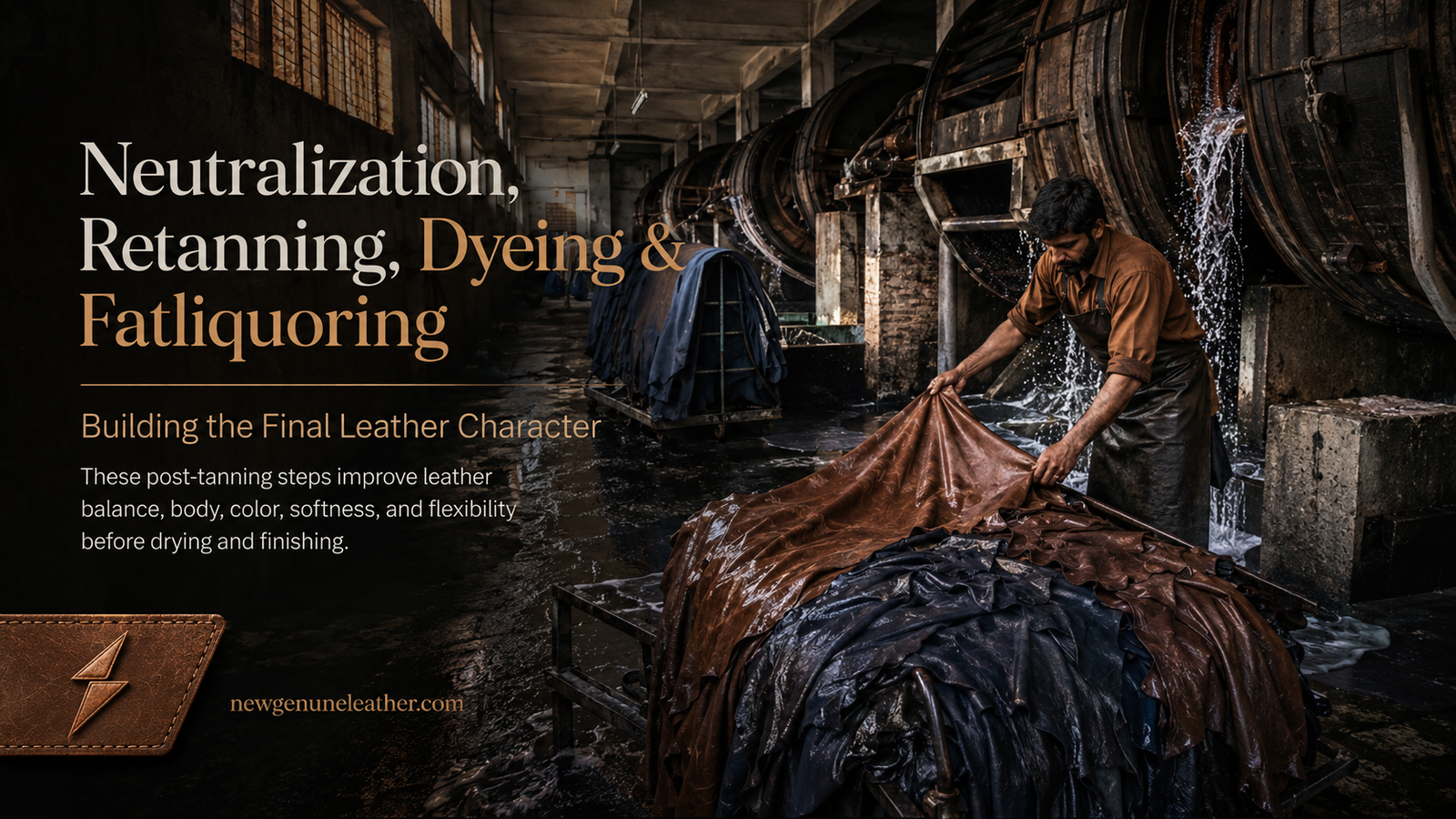
Leather neutralization retanning and dyeing are three closely connected stages that help determine how finished leather looks, feels, performs, and ages. After the primary tanning process stabilizes the hide, these wet-end operations allow manufacturers to adjust acidity, improve physical characteristics, and introduce the required color.
For international buyers, these processes matter because two hides made from the same raw material can perform very differently depending on how they are neutralized, retanned, and dyed.
At New Genuine Leather (NGL), careful material preparation supports the production of leather jackets, custom lederhosen, gloves, trousers, skirts, bags, and private-label accessories. Every leather selection is evaluated according to the buyer’s required softness, shade, thickness, texture, and end use.
What Are Neutralization, Retanning and Dyeing?
Neutralization adjusts the acidity of tanned leather so that later chemicals can penetrate and distribute more evenly. Leather coming from chrome tanning is generally acidic, so its chemical condition must be carefully modified before further processing.
Retanning adds selected properties to the leather. Depending on the chemicals and method used, retanning can improve fullness, softness, firmness, grain tightness, embossing performance, color response, and resistance to wear.
Dyeing introduces color into the leather structure. Unlike a surface-only coating, drum dyeing allows colorants to penetrate the material to a controlled depth.
Together, leather neutralization retanning and dyeing create the foundation for the final finishing stage. Poor control during these operations can result in uneven color, weak grain, stiffness, loose structure, poor coating adhesion, or inconsistent performance across a production batch.
Why These Wet-End Processes Matter Leather Neutralization, Retanning
Leather is a natural material, so every hide has variations in fiber structure, thickness, grain, and absorption. Wet-end processing helps manufacturers reduce unwanted inconsistency while preserving the natural qualities required for the final product.
A leather jacket may require a soft, flexible handle and deep color penetration. Lederhosen may need a fuller, stronger structure that supports embroidery. Gloves require softness and movement, while bags need body, shape retention, and resistance to repeated handling.
The processing recipe must therefore match the product.
Important factors include:
- Type of original tanning
- Hide species and grade
- Leather thickness
- Required softness or firmness
- Final color
- Surface finish
- Product category
- Performance requirements
A single standard recipe cannot produce ideal leather for every application.
1. Sorting and Preparing the Tanned Leather Neutralization, Retanning
The first stage is sorting the tanned hides according to thickness, quality, weight, grain condition, and intended use. This helps reduce variation during drum processing.
At this stage, leather may be referred to as wet blue when chrome-tanned or wet white when produced using certain chrome-free tanning systems. The material is stable, but it does not yet have the final color, softness, or surface character required for manufacturing.
The hides may also undergo splitting or shaving to achieve a more consistent thickness. Accurate thickness control is important because thin and thick areas absorb chemicals at different rates.
For bulk orders, grouping similar hides improves consistency. It also makes it easier to reproduce the approved sample across jackets, trousers, skirts, lederhosen, and other finished products.
At New Genuine Leather, the intended cutting pattern is considered during material selection so that highly visible panels can maintain a balanced appearance.
2. Washing and Initial Drum Preparation Leather Neutralization, Retanning
Before neutralization begins, the leather is generally washed to remove loose residues and prepare it for controlled chemical treatment.
Water quantity, temperature, drum speed, processing time, and chemical concentration all affect the result. Leather manufacturing is therefore not simply a matter of adding chemicals to a drum. Each variable must be controlled according to the leather type.
The wash stage helps create a cleaner and more predictable starting condition. It may also reduce excess acidity near the surface before the main neutralization agents are introduced.
If washing is inadequate, remaining residues can interfere with penetration and lead to inconsistent results during later stages.
3. Leather Neutralization for Balanced pH Leather Neutralization, Retanning
Neutralization is one of the most sensitive stages of leather neutralization retanning and dyeing. Its purpose is to reduce excessive acidity and prepare the leather for retanning agents, dyes, and lubricating materials.
This does not mean making the leather completely neutral in the everyday sense. The target condition depends on the leather type, tanning system, and final processing recipe.
Neutralizing agents must penetrate gradually. If the surface changes too quickly while the inner structure remains highly acidic, the leather may develop uneven chemical distribution. This can affect dye penetration, grain quality, and long-term stability.
Correct neutralization helps:
- Improve penetration of retanning materials
- Support more even dyeing
- Reduce surface-only color concentration
- Improve softness and handle
- Prepare the leather for fatliquoring
- Improve batch consistency
Technicians may monitor processing time and acidity to confirm that the leather is ready for the next stage.
4. Retanning to Build the Required Character
Retanning allows the tannery to modify the character of previously tanned leather. Different retanning materials can create different combinations of softness, firmness, fullness, stretch, grain tightness, and color response.
Leather intended for structured bags may receive a recipe that creates firmness and shape retention. Garment leather may require a softer and lighter result. Lederhosen leather must remain comfortable while supporting traditional embroidery, seams, pockets, and suspenders.
Retanning agents may include mineral, vegetable, synthetic, resin-based, or polymer-based materials. The exact combination depends on the performance target and manufacturing standard.
Professional retanning can improve:
- Fullness in loose or empty areas
- Grain tightness
- Embossing definition
- Shape retention
- Softness and flexibility
- Resistance to stretching
- Color uniformity
- Cutting performance
The goal is not to load the leather with unnecessary chemicals. The goal is to produce the physical qualities required for the product.
5. Dye Selection and Color Development Leather Neutralization, Retanning
Dyeing gives the leather its internal color. Manufacturers select dyes according to shade, penetration, compatibility, lightfastness, rubbing performance, and final finish.
Leather dyes are commonly applied in rotating drums, where movement helps distribute the color through the material. Water temperature, acidity, drum time, dye concentration, and the condition of the leather all affect the final shade.
Dark brown, black, tan, burgundy, navy, and fashion colors may require different recipes. Even small changes in hide condition can influence the result.
During leather neutralization retanning and dyeing, technicians must consider both visual color and functional performance. A shade may look correct while wet but change after drying, conditioning, buffing, or application of the top finish.
For this reason, color approval should be based on fully processed leather rather than wet drum material alone.
6. Achieving Levelness and Penetration Leather Neutralization, Retanning
Levelness means that the color appears consistent across the leather without patches, streaks, or areas of excessive concentration. Penetration describes how deeply the dye enters the leather structure.
Some products require full-through dyeing, where the cross-section carries color throughout most or all of the material. Others may use controlled penetration because the final surface will receive a pigmented finish.
Good penetration is especially valuable for products exposed to visible edge wear. When the internal color is close to the surface shade, scratches and cut edges are less noticeable.
Uneven dyeing may be caused by:
- Poor neutralization
- Mixed leather thicknesses
- Insufficient drum movement
- Incorrect temperature
- Rapid chemical addition
- Incompatible retanning materials
- Inadequate processing time
Manufacturers should inspect sample cuts from different areas before approving the batch.
7. Fixation, Washing and Final Inspection Leather Neutralization, Retanning
After the required shade has developed, the dyes and other processing materials must be fixed within the leather. Fixation helps improve color stability and prepares the material for washing, drying, and further finishing.
The leather may then be washed to remove unfixed residues. This stage must be controlled carefully because excessive washing can affect shade, while insufficient washing may contribute to color transfer or surface contamination.
Quality-control staff examine:
- Shade consistency
- Dye penetration
- Grain tightness
- Softness and fullness
- Surface cleanliness
- Color transfer
- Flexibility
- Thickness consistency
The leather is also compared against the approved color standard. For international wholesale production, color assessment should ideally take place under controlled lighting because brown, tan, gray, navy, and black shades can appear different under different light sources.
The Role of Fatliquoring Leather Neutralization, Retanning
Fatliquoring is commonly connected with retanning and dyeing, although it is a separate technical operation. It introduces selected oils and lubricating materials into the leather fiber structure.
Without appropriate lubrication, dried leather may become stiff and less flexible. Fatliquoring helps fibers move against each other, improving softness, tear behavior, comfort, and handle.
The amount and type of fatliquor depend on the end product. Glove leather generally requires greater softness than structured bag leather. Garment leather must drape naturally, while belt leather requires more firmness.
Balanced fatliquoring supports the results created during leather neutralization retanning and dyeing and helps prevent undesirable stiffness after drying.
Common Production Problems
One common problem is over-neutralization. When acidity is adjusted too aggressively, later materials may penetrate incorrectly or remain near the surface.
Under-neutralization can also cause problems. The leather may resist even penetration, producing dark surface color with a lighter internal section.
Uneven retanning can create areas that feel loose, hard, empty, or excessively firm. Poor dye selection may result in weak lightfastness or color transfer during rubbing.
Another issue is batch inconsistency. Buyers may approve one sample but receive bulk production with noticeable shade variation because the manufacturer mixed different hide grades or failed to standardize processing conditions.
Sample approval, recipe control, batch records, and final inspection are therefore essential.
Leather Neutralization Retanning and Dyeing for Different Products
Different leather goods require different wet-end characteristics.
Leather jackets need softness, flexibility, drape, and resistance to surface cracking. Deep color penetration can improve the appearance of seams and worn edges.
Custom lederhosen require durable leather with controlled fullness and a surface that supports decorative embroidery. The leather should remain comfortable during movement without losing shape.
Leather gloves require a soft handle and consistent thickness. Poor processing may create stiffness or restrict finger movement.
Leather skirts and trousers need balanced drape, color consistency, and flexibility across large visible panels.
Leather bags often require greater firmness, structure, and resistance to stretching.
At New Genuine Leather, leather characteristics are matched with the intended design before cutting and stitching begin.
Responsible Leather Processing
Buyers increasingly ask manufacturers about chemical management, water use, worker safety, traceability, and environmental performance.
The Leather Working Group provides audit standards and information connected with responsible leather manufacturing. Buyers can also review educational resources from Leather Naturally to understand leather production, use, and material characteristics.
These external resources can support supplier evaluation, but buyers should still request current documentation directly from their manufacturing partner.
New Genuine Leather Manufacturing Services
New Genuine Leather (NGL) manufactures customized leather apparel and accessories for wholesale, OEM, and private-label buyers worldwide.
Our product categories include:
- Leather jackets
- Custom lederhosen
- Leather trousers and skirts
- Motorcycle and safety gloves
- Fashion gloves
- Leather bags and accessories
- Custom private-label collections
We work with buyers on leather type, thickness, color matching, embroidery, hardware, sizing, labels, packaging, and product development.
Carefully controlled leather neutralization retanning and dyeing help us produce leather with the required shade, softness, strength, and surface character before it moves into cutting, stitching, and final finishing.
Contact New Genuine Leather
Website: New Genuine Leather
Instagram: Follow New Genuine Leather
WhatsApp: Discuss Your Wholesale Order
Final Thoughts
Neutralization, retanning, and dyeing are not merely background tannery operations. They directly influence color depth, softness, structure, grain quality, flexibility, and long-term product performance.
Correct neutralization prepares the leather for balanced chemical penetration. Retanning builds the physical character required for the final product. Dyeing develops the approved shade and internal color.
For wholesale and private-label buyers, understanding leather neutralization retanning and dyeing makes it easier to evaluate samples, compare suppliers, and communicate material expectations clearly.
New Genuine Leather combines material selection, controlled processing, product development, and quality inspection to manufacture customized leather goods for international buyers.
