

Leather Curing Process: What It Is and Why It Is Needed

What Is Leather Curing?
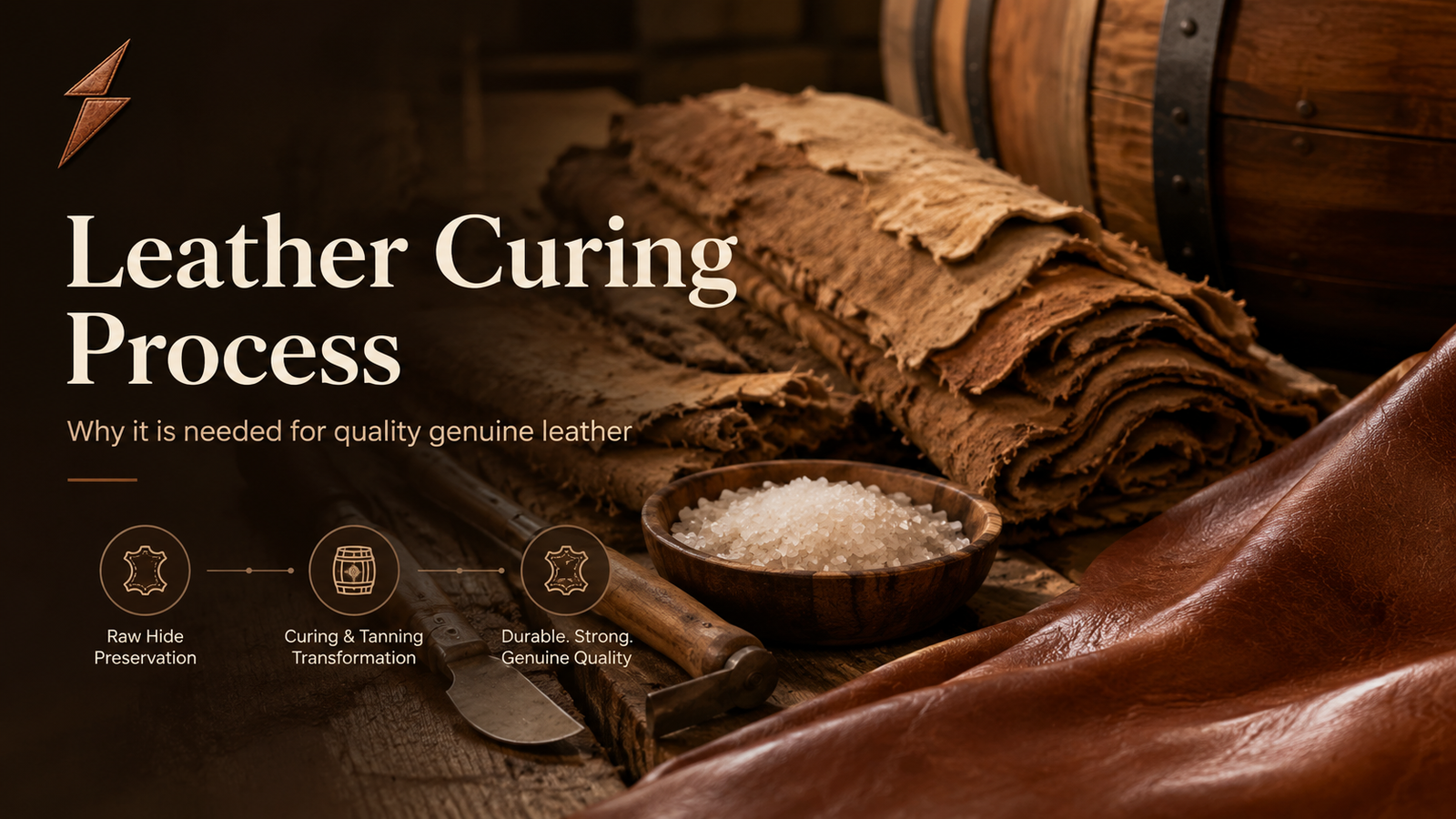
Leather curing is a preservation process used on raw animal hides to prevent bacterial growth and decomposition. Fresh hides contain moisture, proteins, fats, and natural fibres, which can easily break down if they are not treated quickly. Curing removes or controls moisture so the hide remains stable until it is ready for tanning.
In simple words, curing protects the raw hide from rotting. It keeps the leather fibre structure safe and prepares it for the next stage of leather making.
The curing process is usually done soon after the hide is removed. If this step is delayed or done poorly, the final leather may become weak, damaged, uneven, or low in quality.
Why Is Curing Needed in Leather Processing?
Curing is needed because raw hide is a natural material and can spoil very quickly. Just like fresh food needs preservation, raw hides also need protection before further processing. Proper curing helps maintain the quality, strength, and appearance of genuine leather.
Here are the main reasons why curing is important.
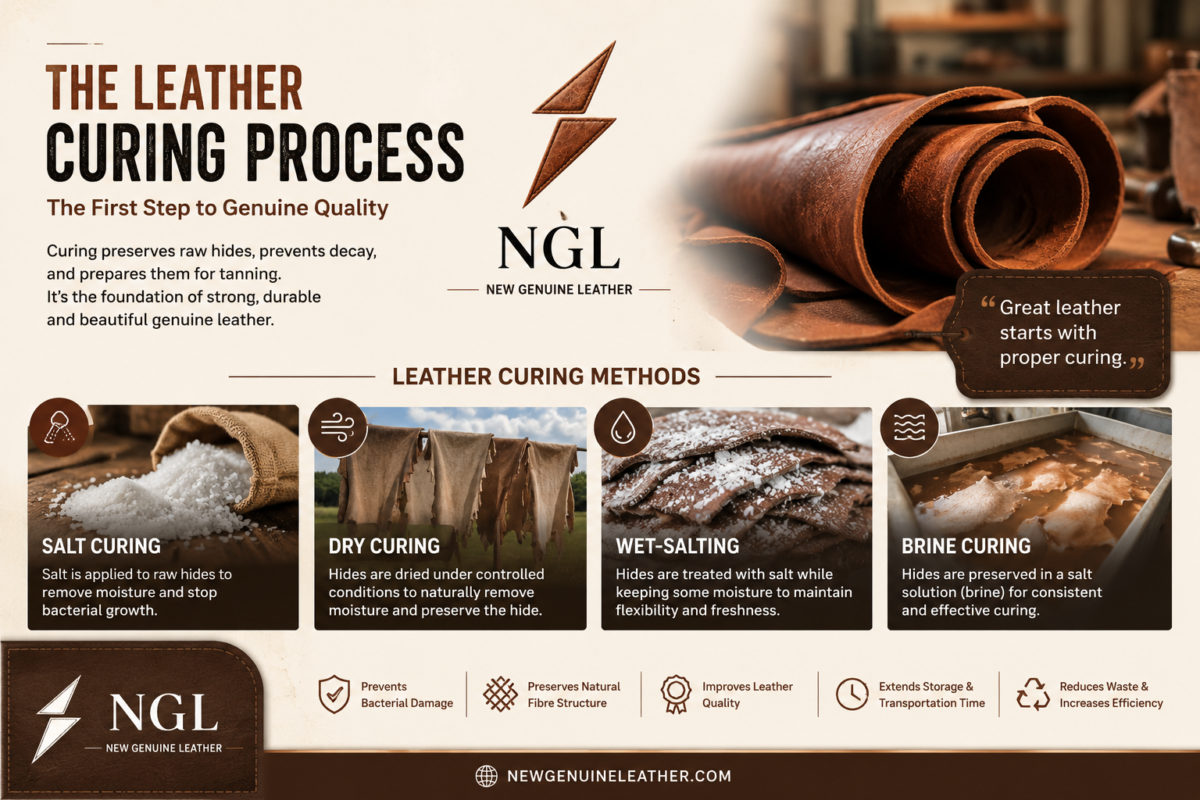
1. It Prevents Bacterial Damage
Raw hides naturally contain moisture, making them a perfect environment for bacteria. If bacteria begin to grow, they break down the fibres of the hide. This can cause weak spots, bad smell, stains, and permanent damage.
Curing slows down or stops bacterial activity by reducing moisture. This keeps the hide safe and suitable for tanning.
2. It Preserves the Natural Fibre Structure
The strength of genuine leather comes from its fibre network. If this structure is damaged before tanning, the final leather product will not be strong or long-lasting.
Proper curing protects the natural fibres of the hide. This helps produce leather that is durable, flexible, and reliable for products such as leather jackets, bags, shoes, wallets, and belts.
3. It Improves Leather Quality
High-quality leather begins with proper preservation. A well-cured hide gives better results during tanning, dyeing, softening, and finishing.
If curing is done correctly, the leather surface becomes more uniform, cleaner, and easier to process. This improves the final look, feel, and performance of the leather.
4. It Extends Storage and Transportation Time
Fresh hides cannot always be tanned immediately. Sometimes they need to be stored or transported from one place to another before processing. Without curing, the hides may spoil during this time.
Curing allows hides to be stored safely for a longer period. This is especially important for leather manufacturers, exporters, and suppliers who handle hides in large quantities.
5. It Reduces Waste
Poorly preserved hides often become unusable. This creates waste and increases production cost. Proper curing reduces the risk of damage and helps manufacturers use more of the available material.
By protecting the hide at an early stage, curing supports better resource use and improves the efficiency of leather production.
Common Methods of Leather Curing
Different methods are used for curing hides, depending on climate, production scale, and leather industry requirements. The most common methods include salting, drying, wet-salting, and brine curing.
1. Salt Curing
Salt curing is one of the most widely used methods. In this process, salt is applied to the raw hide to draw out moisture. Since bacteria need moisture to grow, removing water helps preserve the hide.
Salt curing is popular because it is effective, simple, and suitable for large-scale leather production.
2. Dry Curing
In dry curing, hides are dried under controlled conditions. This method removes moisture naturally and helps preserve the hide. However, drying must be done carefully because excessive heat or poor handling can make the hide stiff, cracked, or damaged.
Dry curing is more common in areas with suitable weather conditions.
3. Wet-Salting
Wet-salting is another common curing method. The hide is treated with salt but remains slightly moist. This method keeps the hide flexible while still preventing bacterial damage.
Wet-salted hides are easier to handle and are commonly used in commercial leather processing.
4. Brine Curing
Brine curing uses a saltwater solution to preserve the hide. The hide is soaked in a controlled brine solution, allowing salt to penetrate evenly. This method gives consistent preservation and is often used in industrial leather processing.
What Happens After Curing?
After curing, the hide is ready for further processing. The next major step is tanning. Tanning changes the preserved hide into leather by making it more stable, durable, and resistant to decay.
After tanning, the leather goes through additional steps such as dyeing, drying, softening, conditioning, polishing, and finishing. These steps give leather its final colour, texture, shine, softness, and appearance.
So, curing is not the final step. It is the first major protective step that makes the rest of the leather-making process possible.
Difference Between Curing and Tanning
Many people confuse curing with tanning, but they are not the same.
Curing is the preservation of raw hide before tanning. Its main purpose is to stop decay and protect the hide.
Tanning is the process that turns preserved hide into usable leather. It makes leather durable, flexible, and suitable for finished products.
Both steps are important, but curing comes first. If curing is not done properly, even the best tanning process cannot fully recover the quality of the hide.
How Proper Curing Affects Genuine Leather Products
When leather is properly cured, the final products become stronger and more attractive. Good curing supports better texture, better finishing, better durability, and longer product life.
For customers, this means leather products feel premium, last longer, and maintain their beauty with proper care.
Whether you are buying a genuine leather jacket, wallet, handbag, belt, shoes, or furniture, the quality of the leather depends on how well the hide was treated from the beginning.
Why Customers Should Understand Leather Curing
Understanding the leather curing process helps customers appreciate the value of genuine leather. Real leather is not just a material. It is the result of careful selection, preservation, tanning, finishing, and craftsmanship.
When you choose genuine leather, you are choosing a material that has gone through a detailed process to achieve strength, beauty, and long-lasting performance.
At New Genuine Leather, we believe that quality starts from the foundation. Properly processed leather provides better durability, richer texture, and a premium feel that synthetic materials cannot match.
Final Thoughts
The curing process is one of the most important steps in leather production. It protects raw hides from bacterial damage, preserves their natural fibre structure, improves leather quality, and prepares the material for tanning.
Without curing, genuine leather cannot achieve the durability, softness, and premium finish that customers expect. This is why curing is not just a technical step. It is the beginning of quality leather making.
When buying leather products, always choose genuine leather from trusted sources. Properly processed leather offers long-lasting value, natural beauty, and timeless style.
Frequently Asked Questions
What is leather curing?
Leather curing is the process of preserving raw animal hides before tanning. It prevents decay, controls moisture, and protects the hide from bacterial damage.
Is curing the same as tanning?
No. Curing preserves the raw hide, while tanning transforms the preserved hide into usable leather.
Why is salt used in leather curing?
Salt removes moisture from the hide and helps stop bacterial growth. This keeps the hide safe before tanning.
Does curing affect leather quality?
Yes. Proper curing helps produce stronger, cleaner, and better-quality leather. Poor curing can damage the hide and reduce the quality of the final product.
Why is genuine leather more durable?
Genuine leather is made from natural hide that has been properly preserved, tanned, and finished. This process gives it strength, flexibility, and long-lasting performance.
