
Combination Tanning Process: 7 Powerful Benefits

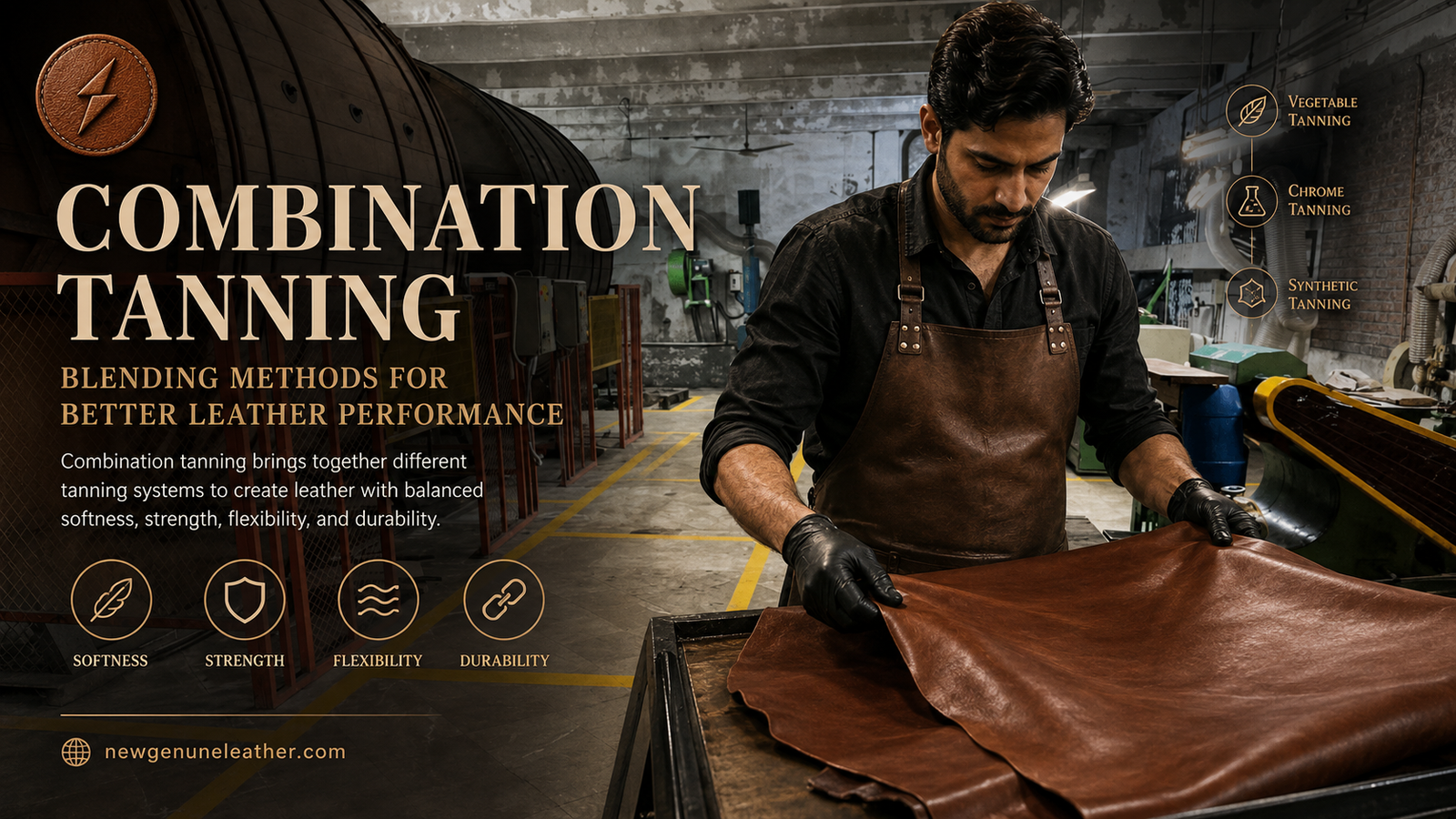
The combination tanning process is used to create leather that balances durability, softness, appearance, and performance. Instead of relying on only one tanning agent, manufacturers apply two or more tanning systems in a carefully controlled sequence.
This approach allows leather technicians to adjust the final characteristics of the material according to its intended use. Leather for jackets may require softness and flexibility, while leather for bags, lederhosen, gloves, belts, or protective garments may need greater structure and resistance to repeated wear.
At New Genuine Leather (NGL), leather selection and finishing requirements are matched with the intended product, buyer specifications, and approved samples. For wholesale, OEM, and private-label buyers, understanding how leather is tanned makes it easier to evaluate quality and communicate the desired result to a manufacturing partner.
What Is the Combination Tanning Process?
The combination tanning process is a method in which two or more tanning systems are used to stabilize an animal hide and develop particular performance characteristics.
A hide may first be tanned with mineral tanning agents and then treated with vegetable tannins. Another leather may combine vegetable tanning with synthetic tanning agents, commonly known as syntans. Aldehyde, mineral, vegetable, oil, and synthetic systems can also be combined depending on the required leather type.
The exact sequence is important. The first tanning stage creates the primary stabilization of the hide, while the second stage modifies properties such as fullness, softness, grain firmness, color response, water behavior, or heat resistance.
Combination tanning is related to retanning, but the terms are not always identical. Retanning usually refers to additional treatment after the primary tanning stage. In many modern leather-production systems, retanning forms an important part of the overall combination method.
Why Manufacturers Combine Tanning Methods
No single tanning system provides every possible leather characteristic.
Vegetable-tanned leather can offer firmness, fullness, molding ability, and a traditional appearance. Chrome-tanned leather is generally known for softness, flexibility, and efficient production. Synthetic tanning agents can help control color, grain, and consistency.
By combining selected methods, manufacturers can create leather with a more balanced set of qualities.
For example, a buyer may want leather that feels soft enough for a jacket but has enough body to maintain its shape. Another buyer may require lederhosen leather with a traditional surface, dependable embroidery support, and comfort during movement.
The tanning recipe should therefore be developed around the final application rather than selected only on the basis of price.
How the Combination Tanning Process Works
The production sequence may differ between tanneries, leather types, and customer requirements. However, most combination systems include several controlled stages.
Hide Preparation
Before tanning begins, hides are cleaned and prepared. Depending on the required leather, preparation may include soaking, liming, fleshing, splitting, deliming, bating, and pickling.
These stages remove unwanted material and prepare the collagen structure to receive tanning agents evenly.
Poor preparation can cause uneven penetration, loose grain, inconsistent color, or weaknesses that become visible during finishing.
Primary Tanning
The first tanning system stabilizes the hide and prevents it from decomposing.
Mineral tanning, vegetable tanning, aldehyde tanning, or another approved system may be used as the primary stage. The choice depends on the intended softness, thickness, color, and performance of the final leather.
Temperature, drum speed, pH, chemical concentration, and processing time must be carefully monitored.
Secondary Tanning or Retanning
After the primary stage, a second tanning system is introduced to modify the leather.
This stage may add firmness, softness, fullness, grain tightness, or improved dye response. It can also help produce greater consistency between hides that naturally have slightly different structures.
The combination tanning process must be balanced carefully because excessive treatment can make leather heavy, stiff, or difficult to finish.
Dyeing and Fatliquoring
Once tanning and retanning are complete, the leather may be dyed to achieve the required color.
Fatliquoring introduces selected oils and lubricating materials into the leather fibers. This helps prevent the fibers from sticking together during drying and contributes to softness, flexibility, and handle.
The dyeing and fatliquoring recipe must match the tanning system so that the color penetrates evenly and the desired feel is achieved.
Drying and Finishing
The leather is then dried through methods selected for the required appearance and structure. It may be stretched, softened, buffed, sanded, embossed, coated, polished, or treated with waxes and protective finishes.
The surface finish should enhance the leather without hiding serious material defects beneath excessive coating.
7 Powerful Benefits of Combination Tanning
1. Improved Balance Between Strength and Softness
One of the main benefits of the combination tanning process is the ability to balance strength with flexibility.
Leather that is too firm may be uncomfortable for garments, gloves, or traditional clothing. Leather that is excessively soft may not maintain the shape required for bags, belts, or structured accessories.
Combining tanning methods helps technicians adjust the leather so that it performs correctly for the intended product.
For example, jacket leather should move comfortably with the wearer while remaining strong enough to resist regular bending and abrasion.
2. Better Control of Leather Fullness
Fullness refers to the substantial feel and internal body of leather.
Thin or empty-feeling leather may appear inexpensive, even when its surface looks attractive. Selected vegetable and synthetic tanning agents can help fill the fiber structure and create a richer, more substantial handle.
This quality is valuable for leather bags, footwear components, lederhosen, belts, and structured garments.
The correct level of fullness also supports cutting and stitching because the material is less likely to collapse or lose shape around seams.
3. More Consistent Color Results
Natural hides vary in fiber structure, thickness, and absorption. These variations can influence how dyes penetrate the material.
A controlled combination system can help create a more uniform base before dyeing. This improves shade consistency across multiple hides used in the same production order.
Color matching is especially important for wholesale buyers. A bulk order of brown jackets, black leather skirts, or embroidered lederhosen should not contain unexpected shade differences between pieces.
At NGL, buyers should approve leather swatches and finished samples before bulk production so that color expectations are clearly documented.
4. Enhanced Grain and Surface Appearance
The tanning method affects how the natural grain looks and behaves.
Some combinations create a tighter, cleaner grain, while others support a softer, more natural appearance. Retanning materials can also prepare corrected-grain leather for buffing, embossing, pigmentation, or other finishing treatments.
For full-grain and natural-finish leather, the objective is generally to preserve the material’s natural character. For fashion products requiring a uniform surface, the process may be adjusted to support consistent coloring and finishing.
The tanning recipe must complement the desired visual style rather than work against it.
5. Greater Product-Specific Performance
Leather products experience different types of use.
Gloves require flexibility and comfort. Bags need resistance to handling and shape loss. Lederhosen require durability, movement, and support for embroidery. Jackets need softness, tear resistance, and a surface that ages attractively.
The combination tanning process allows manufacturers to adjust the leather for these specific requirements.
This product-based approach is particularly valuable for OEM buyers developing several leather categories under one brand. Each category can use a different material specification while maintaining consistent quality standards.
6. Improved Finishing Compatibility
A well-prepared leather surface accepts dyes, pigments, waxes, oils, and protective coatings more evenly.
Combination tanning can help control absorbency so that finishing materials do not soak into one area too quickly while remaining on the surface elsewhere.
Better finishing compatibility may provide:
- More uniform color
- Improved coating adhesion
- Cleaner embossed patterns
- Controlled gloss or matte appearance
- Improved surface touch
- Better resistance to everyday handling
Finishing should still be tested on production leather because small changes in hide structure can influence the final result.
7. Flexible Customization for OEM Orders
The final major benefit is manufacturing flexibility.
Wholesale and private-label buyers may request custom colors, finishes, thicknesses, softness levels, embroidery support, grain effects, or product-specific performance.
The combination tanning process gives manufacturers more control over these characteristics than a single standardized tanning recipe.
Physical sampling remains essential. Buyers should not approve a bulk order using only digital photographs because leather texture, softness, weight, and flexibility cannot be evaluated accurately on a screen.
Common Combination Tanning Systems
Different tanning combinations produce different outcomes. The following systems are commonly discussed within leather manufacturing.
Chrome and Vegetable Combination
In this system, mineral-tanned leather is treated with vegetable tannins during a later stage.
The result can combine flexibility with additional fullness and firmness. It may be used for bags, footwear components, garments, and traditional leather products depending on the formulation.
The leather can also develop a warmer and more substantial handle than standard mineral-tanned leather.
Vegetable and Synthetic Combination
Vegetable tanning may be supported by synthetic tanning agents to improve penetration, color control, grain character, or consistency.
This combination can help manufacturers create traditional-looking leather while adjusting properties for modern production requirements.
The exact result depends heavily on the type and quantity of synthetic tanning agent used.
Mineral and Synthetic Combination
Mineral tanning followed by syntan retanning is widely used when manufacturers require softness, light shades, controlled grain, and consistent dyeing.
Different syntans are selected to provide particular effects. Some improve fullness, while others support bleaching, color brightness, softness, or surface tightness.
Aldehyde-Based Combinations
Aldehyde tanning systems may be combined with vegetable or synthetic agents for particular leather applications.
These systems require careful chemical control, worker protection, wastewater management, and compliance with applicable product standards.
Buyers should ask suppliers for relevant test documentation when restricted-substance requirements apply to their market.
Quality Checks After Combination Tanning
Leather should be evaluated throughout the process rather than inspected only after finishing.
Important checks may include:
- Thickness consistency
- Color uniformity
- Softness and flexibility
- Grain appearance
- Tear and tensile performance
- Finish adhesion
- Rubbing resistance
- Odor and cleanliness
- Restricted-substance compliance
- Performance after bending or folding
Testing requirements depend on the product and destination market.
A fashion jacket may require colorfastness and flex testing, while a work glove may require different physical-performance checks. Buyers should provide their technical expectations before sample development begins.
Environmental and Responsible Production Considerations
Combination tanning does not automatically make leather more or less sustainable. Environmental performance depends on chemical selection, process efficiency, water use, energy consumption, wastewater treatment, and responsible management.
Buyers evaluating suppliers can consult the Leather Working Group for information about leather-manufacturing assessments and responsible environmental practices.
General educational information about leather, manufacturing, and material use is also available through Leather Naturally.
These external resources can help buyers ask more informed questions, but they should not replace product-specific testing or direct supplier verification.
Combination Tanning Process for Wholesale Buyers
For wholesale orders, consistency is just as important as the quality of a single sample.
The approved leather standard should include color, thickness, grain, softness, finish, and acceptable natural variation. Photographs can support this documentation, but a physical control sample provides a stronger reference.
Buyers should also confirm:
- Required leather type and grade
- Product application
- Surface finish
- Thickness tolerance
- Color standard
- Testing requirements
- Restricted-substance expectations
- Quantity and production lead time
Clear specifications help prevent misunderstandings between the buyer, tannery, and product manufacturer.
New Genuine Leather Manufacturing Services
New Genuine Leather manufactures and exports custom leather products for wholesale, OEM, and private-label buyers worldwide.
Our product categories include leather jackets, skirts, trousers, gloves, bags, traditional lederhosen, and other customized leather garments and accessories.
We work with buyers on product design, leather selection, color development, embroidery, sizing, branded labels, packaging, and sample approval.
The appropriate combination tanning process can be selected according to the required softness, durability, surface texture, and final product application.
Contact New Genuine Leather
Website: New Genuine Leather
Instagram: Follow New Genuine Leather
WhatsApp: Discuss Your Wholesale Order
Frequently Asked Questions
Is combination-tanned leather genuine leather?
Yes. Combination tanning describes the tanning methods used to stabilize and develop real animal hide. It does not mean that the leather is synthetic.
The final leather grade still depends on the hide layer, surface treatment, finishing method, and product labeling.
Is combination tanning better than vegetable tanning?
Neither method is automatically better in every situation.
Vegetable tanning may be preferred for traditional, firm, or moldable leather. Combination tanning may be more suitable when a buyer needs a controlled balance of softness, fullness, color, and performance.
The best method depends on the final product.
Can combination-tanned leather be customized?
Yes. Manufacturers can adjust color, thickness, softness, grain character, finish, and other properties within practical production limits.
A physical sample should always be approved before bulk manufacturing.
Final Thoughts
The combination tanning process gives leather manufacturers greater control over strength, softness, fullness, grain, color, and finishing performance. By using two or more tanning systems in a controlled sequence, leather can be developed for the specific demands of jackets, skirts, lederhosen, gloves, bags, and accessories.
For wholesale and private-label buyers, the most important steps are clear specifications, responsible supplier evaluation, physical sampling, and documented quality control.
New Genuine Leather (NGL) supports international buyers with custom product development, OEM manufacturing, private labeling, and leather selection tailored to the intended market.
