Shaving Process in Leather: 7 Powerful Quality Steps

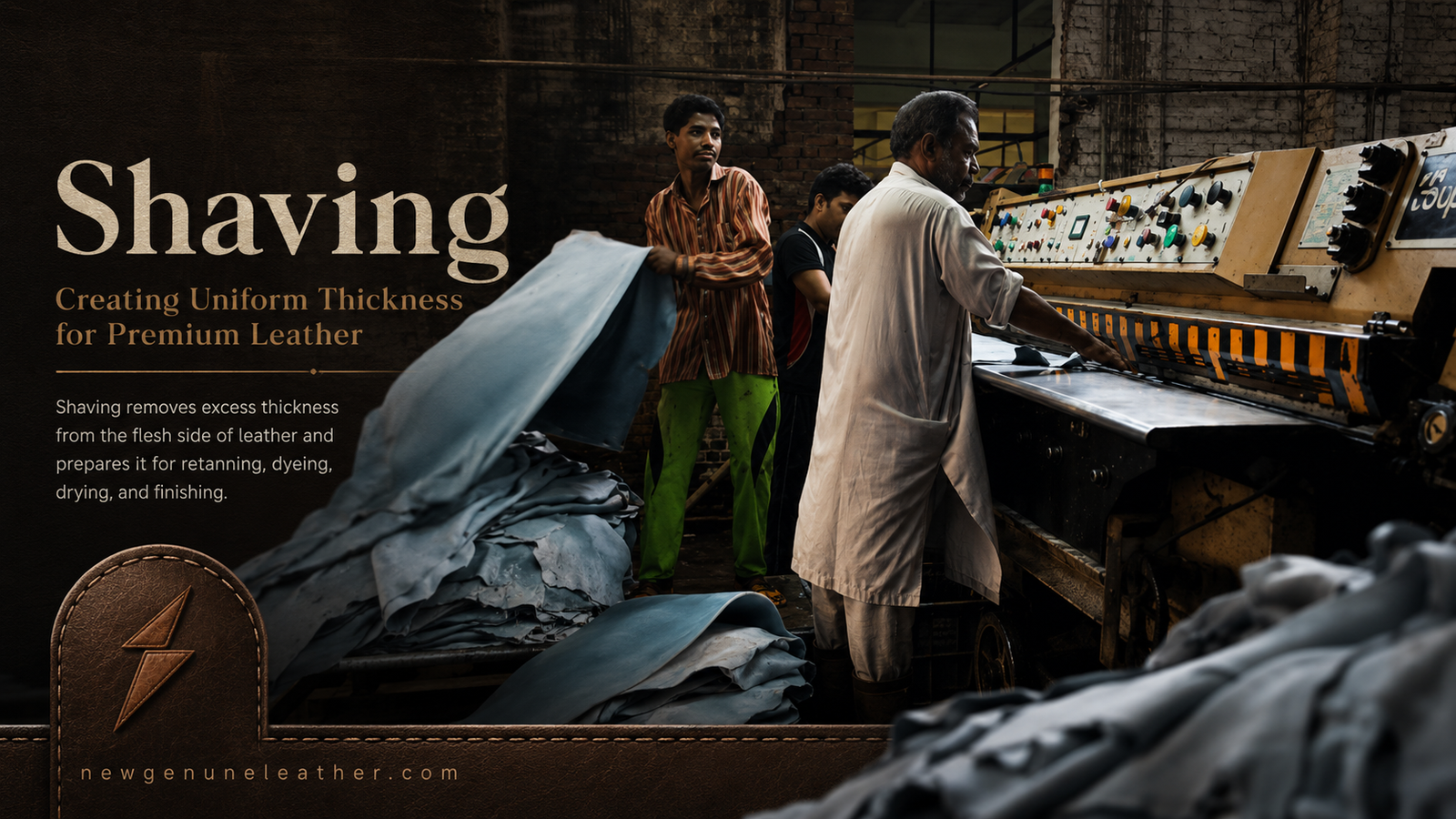
The shaving process in leather is a critical thickness-control stage used after tanning. Natural hides are not equally thick across the neck, shoulder, back, and belly, so shaving creates a more even material before dyeing, finishing, cutting, and stitching.
At New Genuine Leather (NGL), accurate leather preparation supports jackets, lederhosen, gloves, trousers, skirts, bags, and other custom leather goods. For wholesale, OEM, and private-label buyers, understanding the shaving process in leather helps maintain consistency across bulk orders.
What Is the Shaving Process in Leather?
The shaving process in leather removes a controlled amount of material from the flesh side of a tanned hide. A shaving machine uses a rotating cylinder fitted with sharp spiral blades. As the hide passes through the machine, thin fibres are cut away until the leather reaches the required thickness.
Shaving is different from splitting. Splitting separates a thick hide into two layers, usually a grain layer and a split layer. Shaving is a finer adjustment that levels the leather without dividing it into separate sheets.
This stage affects flexibility, weight, drape, seam thickness, and overall feel. Leather for a soft skirt cannot be prepared exactly like leather for a structured bag or traditional lederhosen.
Why Uniform Thickness Matters
Some thickness variation is natural, but excessive variation can create problems. One garment panel may feel heavy while another feels soft, or one seam may become bulky while another lies flat.
A controlled shaving process in leather improves panel consistency during cutting and sewing. It supports cleaner embroidery, balanced garment weight, smoother seams, and more even finishing.
1. Inspecting the Tanned Hide
Before shaving, the hide is inspected for moisture, firmness, scars, holes, and thickness differences. The operator also identifies loose belly areas and firmer shoulder or back sections.
Leather that is too dry may not move smoothly, while overly wet leather can stretch. The intended product is also reviewed because garment leather may need a lighter result while bag leather may require more body.
The shaving process in leather should therefore follow the product specification rather than one general factory setting.
2. Setting the Required Thickness
The target thickness is established from the buyer’s specification and approved sample. A leather thickness gauge is used at several points because one reading cannot represent the whole hide.
The right target depends on leather type, lining, seam construction, embroidery, hardware, and expected use. Gloves need flexibility, while lederhosen must support decorative stitching, buttons, and suspenders.
Measurements should be recorded clearly, particularly for repeat wholesale and OEM orders. This helps the manufacturer reproduce the buyer-approved leather weight and flexibility during later production runs.
3. Adjusting the Shaving Machine
The blade cylinder, feed roller, cutting gap, and pressure must work together. If the setting is too aggressive, too much material may be removed. If it is too light, heavy areas may remain.
Sharp, correctly aligned blades cut cleanly, while dull blades may pull fibres and leave a rough flesh side. An experienced operator checks the machine throughout the shaving process in leather and makes small adjustments when needed.
Machine settings should not be based only on the first hide. Natural hides can vary, so operators must continue measuring and inspecting material throughout the production batch.
4. Feeding the Leather Correctly
The hide is guided through the machine with the flesh side facing the cutting cylinder. The operator keeps it flat and applies steady control without pulling excessively.
The back and shoulder are usually firmer, while belly sections are softer and more elastic. Poor feeding can cause stretch marks, thin spots, uneven shaving, or accidental cuts.
Maintaining a steady feeding direction also helps prevent visible shaving lines. The operator must allow the machine to cut the leather evenly rather than forcing soft or delicate areas through too quickly.
5. Shaving in Controlled Passes
Gradual passes are safer than one heavy cut. Controlled shaving allows the operator to inspect progress, protect the grain structure, and respond to differences across the hide.
During the shaving process in leather, fine curls and fibres are removed from the flesh side. The hide is checked after each pass for thickness balance and surface condition.
Over-shaving can reduce strength, create papery areas, and lower cutting yield. Once too much leather has been removed, it cannot be restored.
Careful shaving also protects the grain side. Although material is removed from the flesh side, excessive cutting can make the whole leather section weak or expose grain imperfections during later processing.
6. Measuring and Inspecting the Result
After shaving, thickness is measured again at multiple points. The objective is to keep the hide within the approved tolerance rather than achieve one correct reading in the centre.
The operator checks whether the flesh side is even, whether the edges are too thin, and whether the grain side remains undamaged. The leather may also be flexed gently to confirm that it bends naturally.
Visual inspection alone is not sufficient. A hide may appear uniform while still containing heavy or thin areas, which is why proper thickness gauges and documented tolerances are important.
Quality-control staff should also compare the shaved leather with the approved reference sample. This helps confirm that the softness, weight, and overall hand feel remain suitable for the intended product.
7. Preparing for the Next Stage
Once shaving is complete, the leather moves to later operations such as retanning, dyeing, fatliquoring, drying, staking, buffing, coating, or embossing.
A uniform cross-section helps these treatments work more consistently. It can support balanced softness, better colour uniformity, and more predictable finishing.
Loose fibres and shavings should also be collected and handled according to the tanning chemistry and applicable environmental requirements.
The leather should remain properly organized by batch, colour, thickness, and product order. Good production tracking prevents differently prepared hides from being mixed before cutting.
Shaving Process in Leather vs Buffing and Sanding
The shaving process in leather controls thickness by cutting material from the flesh side. Buffing and sanding mainly change surface texture by abrading the grain or flesh side.
Shaving is therefore a structural preparation stage, while buffing is mainly a surface-finishing stage. A hide may undergo both, but the processes are not interchangeable.
Sanding may smooth loose fibres or prepare a corrected-grain finish, but it cannot replace accurate thickness control. Likewise, shaving cannot create the soft surface texture associated with suede or nubuck finishing.
Common Shaving Problems
Uneven shaving can result from poor settings, inconsistent moisture, dull blades, or incorrect feeding. Blade marks may appear when the cylinder is damaged or improperly sharpened.
Over-shaving can weaken the leather, while under-shaving can leave heavy spots that create bulky seams. These risks show why the shaving process in leather requires skilled operators, regular maintenance, repeated measurements, and clear specifications.
Another common issue is ignoring the natural difference between firm and loose areas of the hide. Applying identical pressure everywhere may produce acceptable results in the back section but damage the softer belly areas.
A manufacturer should also avoid mixing leather with noticeably different thicknesses in highly visible product panels. Careful cutting and panel matching remain important even after shaving.
Benefits for Wholesale and Private-Label Buyers
Wholesale buyers should approve a leather swatch and finished sample before placing a large order. Thickness, flexibility, colour, finish, and hand feel should be reviewed together.
It is also helpful to confirm whether thickness is measured before or after finishing because coatings and other treatments can affect the final result.
For garments such as jackets and skirts, proper thickness supports comfortable movement and attractive drape. Custom lederhosen require leather strong enough to carry embroidery, buttons, pockets, and suspenders without feeling unnecessarily heavy.
Glove leather needs greater flexibility, while leather used for bags may need additional firmness. The target should always reflect the product’s construction and intended use.
At New Genuine Leather, we support retailers, distributors, rental suppliers, and private-label brands with leather selection, pattern making, sizing, embroidery, labelling, packaging, and quality control.
Responsible Leather Resources
Buyers researching responsible leather production can visit the Leather Working Group for information about leather-manufacturing assessments.
Educational material about leather, durability, and responsible use is also available from Leather Naturally.
Keep at least one external reference as a normal dofollow link in WordPress so Rank Math can recognize a genuine outbound resource.
New Genuine Leather Manufacturing Services
New Genuine Leather (NGL) manufactures leather jackets, lederhosen, gloves, trousers, skirts, bags, and accessories for wholesale, OEM, and private-label buyers worldwide.
The shaving process in leather forms an important part of material preparation before cutting and stitching. Combined with sample approval and in-process inspection, it helps maintain consistent weight, flexibility, and construction across production.
Our customization services include leather colour development, embroidery, branded labels, custom sizing, hardware selection, packaging, and private-label manufacturing.
Contact New Genuine Leather
Website: New Genuine Leather
Instagram: Follow New Genuine Leather
WhatsApp: Discuss Your Wholesale Order
Final Thoughts
The shaving process in leather happens before the finished product takes shape, but its effect can be seen and felt throughout the final item. Accurate shaving improves thickness consistency, sewing performance, flexibility, weight, and overall quality.
For wholesale and private-label buyers, this stage should not be overlooked. A manufacturer that controls moisture, machine settings, blade condition, operator technique, and measurement is better positioned to deliver dependable results.
At New Genuine Leather, careful material preparation supports leather products that meet approved specifications and represent our customers’ brands with confidence.
