Sammying Process in Leather: 7 Powerful Quality Steps

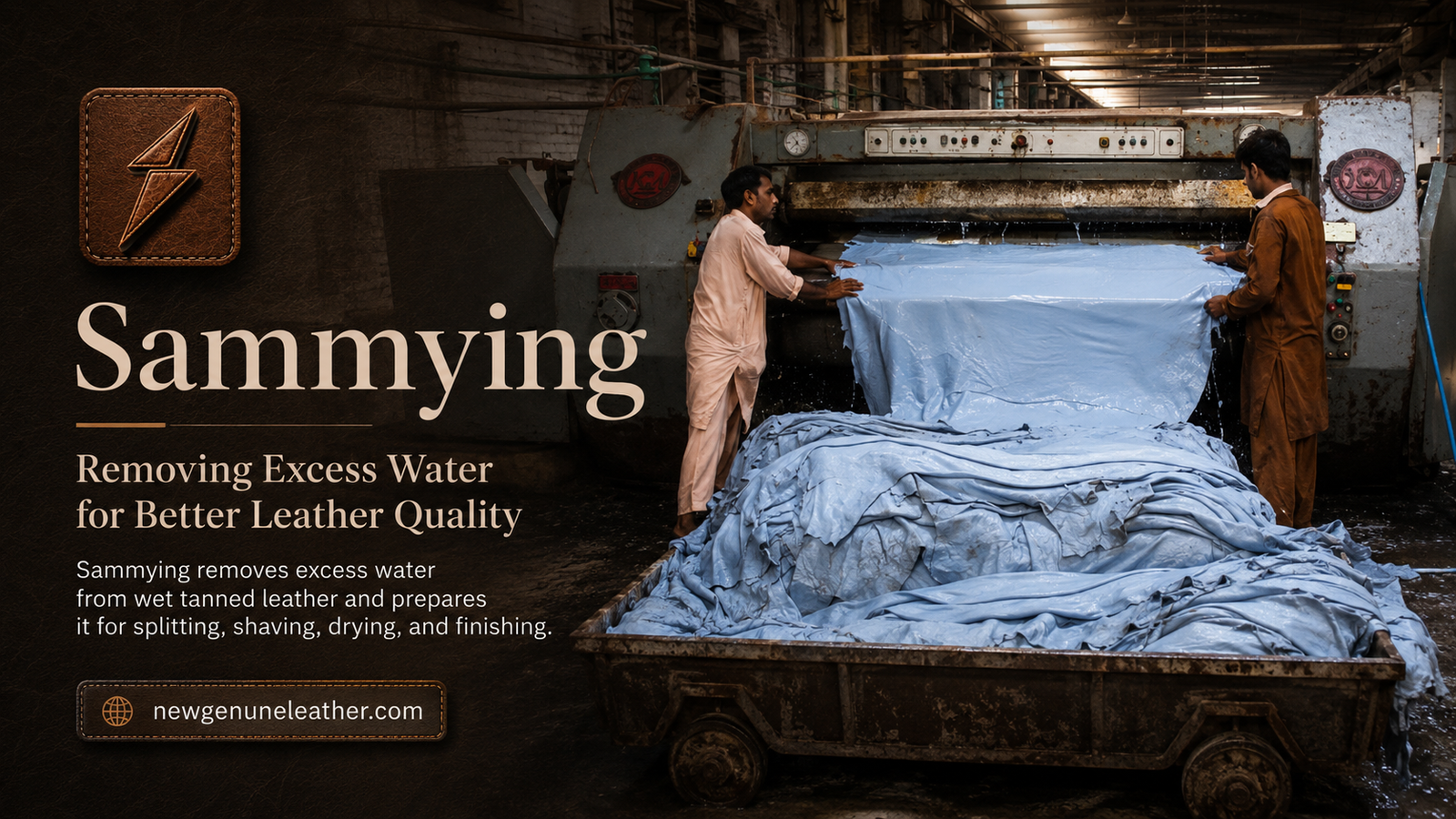
The Sammying Process in Leather is an important mechanical operation performed after tanning to remove excess water from wet hides and prepare them for the next stages of production. Although it may appear to be a simple moisture-removal step, correct sammying directly influences leather thickness, flatness, handling, drying efficiency, and final product consistency.
At New Genuine Leather (NGL), controlled leather preparation supports the manufacture of jackets, gloves, bags, trousers, skirts, lederhosen, and other custom leather products. For wholesale, OEM, and private-label buyers, understanding this stage makes it easier to evaluate material quality and communicate production requirements with a supplier.
What Is the Sammying Process in Leather?
The Sammying Process in Leather uses controlled pressure to remove water from freshly tanned hides or skins. Wet leather is passed through a sammying machine fitted with rollers, pressure systems, and absorbent felt-covered components.
As the leather moves between the rollers, excess moisture is pressed out without fully drying the material. The hide remains damp and flexible enough for splitting, shaving, setting out, dyeing, or other wet-processing operations.
The term is sometimes also written as “samming” in leather-industry discussions. Both terms generally refer to the controlled mechanical removal of water from leather after tanning.
Sammying is different from ordinary drying. Drying removes moisture over time through air, heat, vacuum, or controlled environmental conditions. Sammying removes a significant amount of free water quickly through mechanical pressure while keeping the leather workable.
Why Sammying Is Important in Leather Manufacturing
Freshly tanned leather contains substantial moisture. If this water is not reduced evenly, the leather can become difficult to handle, measure, split, or shave accurately.
Uneven moisture levels may also create differences in thickness and surface tension across a hide. Some areas may remain soft and heavy, while others may react differently during later processing.
Proper sammying helps create a more stable material condition. It improves handling and gives technicians better control during mechanical operations.
The process can contribute to Sammying Process in Leather
- More uniform moisture distribution
- Improved leather flatness
- Easier splitting and shaving
- Better thickness control
- Reduced drying time
- Lower transportation weight within production
- Improved surface inspection
- More consistent dyeing and finishing preparation
The required pressure and machine settings depend on the leather type, tanning method, thickness, condition, and intended final product.
1. Inspecting the Wet Leather Sammying Process in Leather
The first stage of the Sammying Process in Leather is inspection. Before the hide enters the machine, operators check its condition, tanning uniformity, folds, wrinkles, thickness, and visible surface defects.
The leather must be positioned carefully so that it passes evenly between the rollers. Folded edges or overlapping sections may cause uneven water removal or pressure marks.
Heavy hides and lightweight skins require different handling. Leather intended for jackets may need a softer and more flexible result, while leather for belts, bags, or structured accessories may require different pressure control.
Operators also examine whether the tanning process has been completed evenly. Sammying cannot correct poorly tanned areas, so quality problems should be identified before further mechanical processing.
2. Preparing the Sammying Machine Sammying Process in Leather
The machine must be clean, correctly adjusted, and suitable for the leather being processed. Rollers, felts, pressure systems, and feeding components should be inspected before production begins.
Dirty or damaged felt surfaces can transfer marks onto wet leather. Uneven rollers may apply excessive pressure in one area while leaving too much moisture in another.
Machine settings are selected according to the thickness and softness of the hide. Excessive pressure can compress the leather too strongly or create unwanted surface effects. Insufficient pressure may leave the leather too wet for accurate splitting or shaving.
At New Genuine Leather, machine preparation is treated as part of quality control rather than a routine setup task. Consistent production begins with clean equipment and repeatable settings.
3. Feeding the Leather Evenly Sammying Process in Leather
Correct feeding is one of the most important parts of sammying. The hide should enter the machine smoothly, without folds, twisting, or overlapping edges.
Operators commonly spread the wet leather across the feeding area before guiding it toward the rollers. The machine then pulls the hide forward while pressure removes water.
Large hides may require careful positioning to ensure the shoulder, belly, and central sections are treated consistently. These areas naturally differ in fiber structure and thickness.
If the hide is fed unevenly, one section may receive more pressure than another. This can result in moisture variation, stretching, creasing, or inaccurate measurements during the next manufacturing stage.
Experienced operators therefore monitor the leather continuously rather than relying entirely on the machine.
4. Removing Excess Moisture Sammying Process in Leather
The primary function of the Sammying Process in Leather is to press out free water. As the hide passes through the rollers, moisture is transferred away from the leather and absorbed or directed out of the machine.
The goal is not to make the leather dry. It should remain damp, flexible, and suitable for further processing.
The correct moisture level depends on what happens next. Leather that will be split or shaved must be firm enough for accurate cutting but not so dry that it becomes difficult to process.
Uniform moisture removal is more important than maximum water removal. A hide that is evenly damp generally performs better than one containing very wet and relatively dry sections.
This balance helps maintain consistency across production batches, especially when large quantities of leather are being prepared for wholesale orders.
5. Flattening and Opening the Hide Sammying Process in Leather
Sammying does more than remove water. The pressure and movement of the rollers also help flatten and open the hide.
Freshly tanned leather may contain folds or compressed areas caused by handling, drums, storage, or transportation between production stages. Passing the hide through controlled rollers improves its shape and makes the surface easier to inspect.
A flatter hide is easier to measure and position during splitting, shaving, and cutting. It also helps technicians identify scars, grain variations, loose areas, and other natural characteristics.
Flattening supports better material utilization. Pattern pieces for jackets, lederhosen, skirts, gloves, and bags can later be positioned more efficiently when the leather has been processed evenly.
However, sammying should not overstretch the hide. Excessive stretching may distort the natural fiber structure or affect final dimensions.
6. Preparing Leather for Splitting and Shaving
One of the main benefits of sammying is improved preparation for thickness-control operations.
Splitting separates a hide into layers. The grain layer may be used for higher-value leather products, while the lower split can be processed for suede, coated leather, or other applications.
Shaving uses rotating blades to reduce leather thickness more precisely. For shaving to work properly, the leather must have a stable and reasonably uniform moisture condition.
Leather that is too wet can move or compress unpredictably. Leather that is too dry may become harder to process and more vulnerable to mechanical damage.
The Sammying Process in Leather helps produce the controlled condition needed for accurate thickness adjustment. This is especially important for garments where flexibility, panel balance, and comfort depend on consistent leather thickness.
For example, leather jacket panels must drape naturally together. Major thickness differences between sleeves, front panels, and collars can affect the appearance and fit of the finished garment.
7. Final Inspection After Sammying Sammying Process in Leather
After the leather leaves the machine, it should be inspected again. Operators assess moisture consistency, flatness, surface condition, edge treatment, and any visible pressure marks.
The hide may be handled or gently folded to confirm that it remains flexible. Areas that still contain excessive water may require controlled reprocessing, depending on the tannery procedure.
Quality-control staff also check whether the grain surface has remained intact. Pressure should not produce unwanted glazing, crushing, or permanent lines.
Batch consistency is particularly important for OEM production. Leather prepared for one order should react similarly during shaving, dyeing, drying, softening, and finishing.
At New Genuine Leather, inspection continues throughout manufacturing. Material quality is checked before cutting and again during stitching, assembly, and final product inspection.
Sammying Compared with Setting Out Sammying Process in Leather
Sammying and setting out are related but different leather operations.
Sammying mainly removes excess water using pressure. Setting out helps spread, smooth, and stretch the leather while removing wrinkles and some remaining moisture.
Some modern machines combine aspects of both operations. However, the production objective should remain clear.
Sammying focuses on controlled moisture reduction. Setting out focuses more strongly on smoothing the grain, opening the leather, and improving its usable surface area.
Both stages can influence the final appearance and dimensions of leather, so operators must avoid excessive pressure or stretching.
Common Problems During Sammying Process in Leather
Poor machine settings or careless handling can create quality issues.
One common problem is uneven moisture removal. This may happen when the hide is folded, fed incorrectly, or processed using inconsistent roller pressure.
Pressure marks are another concern. Dirty felts, damaged rollers, or foreign particles can leave visible lines on the grain surface.
Overprocessing may compress the leather excessively. This can temporarily change its feel or make some sections appear flatter than intended.
Insufficient sammying leaves too much water in the hide. The leather may then be difficult to split, shave, stack, or transport safely between production stages.
Regular equipment maintenance, operator training, and inspection reduce these risks.
How Sammying Affects Finished Leather Products
The influence of sammying can continue into the finished product.
For leather jackets and skirts, uniform moisture preparation supports consistent thickness and natural drape. For gloves, it helps maintain the softness and flexibility required for hand movement.
Lederhosen require leather that is durable but comfortable. Correct preparation helps the material receive embroidery and stitching without unnecessary variation between panels.
Leather bags and accessories often require structured components with consistent dimensions. Proper sammying supports accurate shaving and cutting, which contributes to better assembly.
The process may not be visible to the final customer, but its results can be seen in product consistency, shape, finish, and long-term performance.
Sammying Process in Leather for Wholesale Buyers
Wholesale buyers do not usually manage tannery machinery directly, but they should understand how early production stages affect their final orders.
When evaluating a supplier, buyers can ask about:
- Leather type and tanning method
- Thickness tolerances
- Moisture control procedures
- Splitting and shaving capabilities
- Surface inspection standards
- Batch-to-batch consistency
- Sample approval procedures
- Testing and quality documentation
A reputable manufacturer should be able to explain how leather is prepared before cutting and production.
Physical samples are especially important. Buyers should compare texture, flexibility, thickness, shade, and surface quality before approving bulk manufacturing.
For guidance on responsible leather manufacturing and tannery assessment, buyers can review information from the Leather Working Group. Educational information about leather production and material properties is also available through Leather Naturally.
New Genuine Leather Manufacturing Services
New Genuine Leather (NGL) manufactures and exports custom leather products for wholesale, OEM, and private-label customers worldwide.
Our product range includes:
- Leather jackets
- Leather skirts and trousers
- Custom lederhosen
- Motorcycle and safety gloves
- Fashion and workwear gloves
- Leather bags and accessories
- Private-label leather apparel
We work with buyers on leather selection, sizing, color development, embroidery, hardware, branding, labels, packaging, and custom product specifications.
Understanding processes such as tanning, sammying, shaving, buffing, dyeing, and finishing allows us to communicate more clearly with production partners and maintain better control over the finished product.
Explore our leather manufacturing and customization services at New Genuine Leather.
Contact New Genuine Leather
Website: New Genuine Leather
Instagram: Follow New Genuine Leather
WhatsApp: Discuss Your Wholesale Order
Frequently Asked Questions
What is the main purpose of sammying?
The main purpose is to remove excess water from wet, tanned leather while keeping it flexible enough for splitting, shaving, setting out, dyeing, and other manufacturing stages.
Does sammying completely dry leather?
No. Sammying mechanically removes free water, but the leather remains damp. Complete drying happens later through controlled drying methods.
Can excessive pressure damage leather?
Yes. Excessive or uneven pressure can create marks, compress the grain, distort the hide, or produce inconsistent moisture levels.
Is sammying necessary for all leather?
The exact process varies according to the leather type, tanning system, thickness, and production method. However, controlled moisture removal is a common and important stage in industrial leather manufacturing.
Why does sammying matter to private-label buyers?
It supports thickness accuracy, surface consistency, efficient cutting, predictable finishing, and better uniformity across a bulk production order.
Final Thoughts
The Sammying Process in Leather is a critical link between tanning and later mechanical or finishing operations. By removing excess water, flattening the hide, and creating a more stable moisture condition, sammying helps prepare leather for accurate splitting, shaving, dyeing, drying, and product manufacturing.
Although customers rarely see this process, it can influence the fit, feel, appearance, and consistency of the finished item.
For wholesale and private-label buyers, choosing a manufacturer that understands leather preparation is essential. New Genuine Leather combines material knowledge, custom development, sample approval, and quality inspection to produce leather goods for international retailers, distributors, brands, and OEM customers.
