Oil Tanning Process: 7 Powerful Steps for Premium Leather

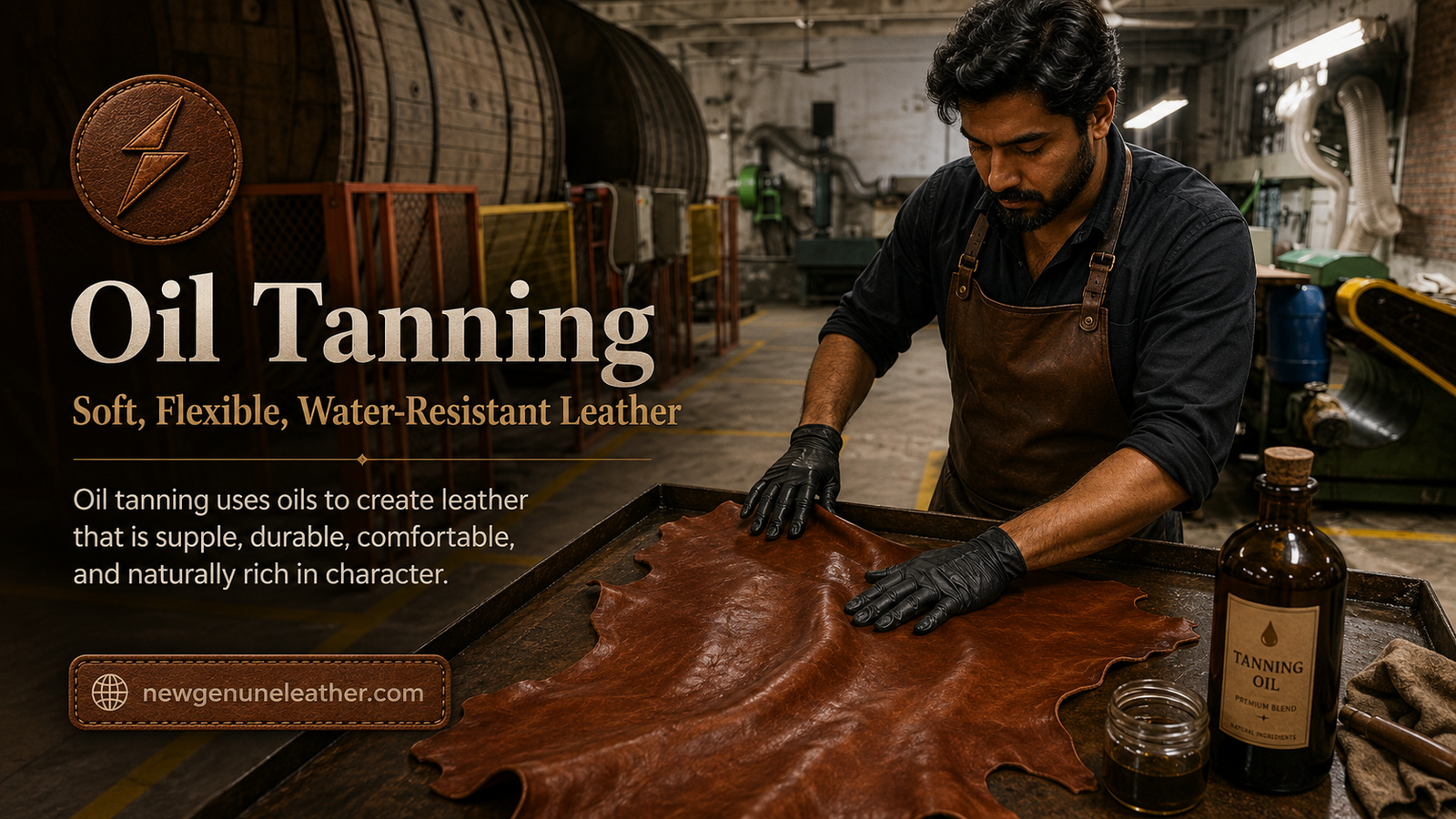
The oil tanning process is used to create leather with a soft handle, flexible structure, rich color, and distinctive surface character. In its strict technical meaning, oil tanning uses oxidizable oils that react during controlled curing and help stabilize the skin.
Traditional oil tanning is particularly associated with chamois leather. However, the commercial term “oil-tanned leather” is also commonly applied to chrome-, vegetable-, or combination-tanned leather that is later treated with oils, waxes, or tallows. These treatments produce the rugged, pull-up appearance found in many jackets, boots, bags, belts, and traditional leather garments.
At New Genuine Leather (NGL), understanding this distinction is essential. One wholesale buyer may require soft chamois-style leather, while another may want heavier oil-finished leather for jackets, gloves, trousers, skirts, bags, or lederhosen.
This guide explains seven important stages of the oil tanning process and the quality points that OEM and private-label buyers should confirm before bulk manufacturing.
What Is the Oil Tanning Process?
Traditional oil tannage introduces oxidizable oils into prepared skins. During exposure to controlled air circulation, the oils oxidize and form compounds that interact with the skin proteins.
Leather Working Group definitions describe full-oil chamois as leather tanned through the oxidation of marine oils within the skin. Combination chamois may first receive an aldehyde treatment before undergoing the oil stage.
This process should not be confused with simply rubbing oil onto already finished leather. Post-tanning oiling, fatliquoring, wax finishing, and hot stuffing lubricate leather fibers and influence softness, color, pull-up, and water resistance. However, oil is not necessarily the primary tanning agent in these cases.
Some commercial combination-tanned leathers use chrome and vegetable tanning before being enriched with oils and waxes. Other heavy leathers are hot-dipped in mixtures of oils, tallows, and waxes to develop their final character.
Why Oil-Based Leather Is Popular Oil Tanning Process
Oil-rich leather is valued for its flexibility, depth of color, and ability to develop character through regular use. Properly applied oils lubricate the internal fiber structure, helping the leather bend without becoming excessively dry or stiff.
Many oil-finished leathers also display a pull-up effect. When the leather is stretched, folded, or pressed, the oils and waxes move within its structure. This movement creates temporarily lighter areas and gives the material a naturally aged appearance.
The amount of oil must be carefully controlled. Too little can leave the material dry and boardy. Too much may cause a greasy surface, color transfer, oil migration, weak adhesive bonding, or inconsistent shades across a production batch.
1. Selecting and Inspecting the Hides Oil Tanning Process
The oil tanning process begins with suitable hides or skins. Technicians inspect the material for thickness, grain condition, fiber strength, preservation quality, visible defects, and intended product use.
Sheep and lamb skins are commonly associated with chamois-style leather, while heavier oil-finished articles may be produced from cattle hides. The selected material must provide the required softness, strength, thickness, and cutting yield.
For wholesale manufacturing, hide selection affects the consistency of the entire order. Leather used for highly visible jacket panels or embroidered lederhosen sections should be carefully matched for surface appearance and thickness.
At New Genuine Leather, the material is evaluated according to the approved product design rather than being selected only by color.
2. Preparing the Material for Tanning
Before oils or tanning materials can penetrate the skin, the hides pass through preparatory stages. These may include soaking, washing, fleshing, cleaning, and hair removal.
These operations remove salt, dirt, excess tissue, natural grease, and unwanted proteins. Correct preparation opens the fiber structure and allows the tanning materials to distribute more evenly.
Poor preparation cannot be corrected by simply adding more oil later. Uneven cleaning may produce greasy patches, hard areas, inconsistent softness, or visible shade differences.
Thickness may also be adjusted according to the intended product. Glove leather requires a different weight and structure from leather used for bags, boots, or traditional Bavarian garments.
3. Selecting and Applying the Oil System
The next stage of the oil tanning process is selecting the appropriate oil formulation.
Traditional full-oil tannage uses oils capable of oxidation inside the prepared skin. Modern oil-tanning research has also examined alternative oils and controlled oxidation methods intended to improve consistency, reduce odor, and shorten processing time.
Combination-tanned leather may instead receive emulsified oils during fatliquoring. Heavier articles can be treated with warm mixtures of oils, waxes, and tallows to create a richer touch and stronger pull-up effect.
Dosage is critical. The manufacturer should work from an approved physical swatch because descriptions such as “dark oily brown,” “vintage pull-up,” or “waxed leather” can be interpreted differently.
A sample provides a clear reference for color, touch, gloss, oil level, and surface movement.
4. Mechanical Working for Even Penetration
Drumming, kneading, stretching, or staking helps distribute the oil through the leather rather than allowing it to remain concentrated on the surface.
Mechanical movement opens and separates the fiber bundles, helping the formulation penetrate more evenly. Time, temperature, drum speed, and load must all be controlled.
Insufficient working may leave the center of the leather dry or under-treated. Excessive movement or heat may affect the handle, surface appearance, or oil distribution.
Uniformity is especially important for garment production. A leather jacket panel, glove palm, skirt section, or lederhosen leg should not feel soft at one edge and rigid at the other.
Consistently processed leather cuts more cleanly, stitches more predictably, and produces a better-matched finished order.
5. Oxidation and Controlled Curing
Oxidation is the defining stage of traditional oil tannage. After the material absorbs the oil, it undergoes controlled exposure to air and repeated working cycles.
As the oils oxidize, they produce reactive compounds that contribute to the tanning effect. The conditions must be carefully monitored because oxidation can also generate heat.
Air circulation, temperature, curing time, and the arrangement of the skins all influence consistency. Poor control can lead to unwanted odor, uneven tanning, hard sections, or excessive heat development.
For commercially oil-finished leather, curing may instead allow oils, waxes, dyes, and other finishing materials to settle into a stable surface.
Wholesale buyers should therefore ask whether “oil tanned” means traditional oil tannage or an oil-rich treatment applied after another tanning method.
6. Washing, Drying, and Softening
After curing, excess or unreacted oil may need to be removed through controlled washing or degreasing. The objective is not to strip all lubrication from the leather but to achieve the correct balance inside the fiber structure.
The material is then dried under controlled conditions. Drying too quickly may make leather stiff, while excessive retained moisture can create problems during storage, finishing, cutting, or packaging.
After drying, staking or milling flexes the leather and separates the fibers, producing a softer handle. Chamois and suede-like articles may also be buffed to develop an even nap.
For pull-up leather, additional oils or waxes can be applied before polishing or plating. The desired result may be a dry waxy touch, a soft oily feel, a matte finish, or a slightly polished surface.
7. Finishing and Final Quality Inspection
The final stage of the oil tanning process includes surface finishing and quality inspection.
Depending on the buyer’s approved specification, the leather may receive additional dye, wax, oil, brushing, polishing, embossing, distressing, or a protective topcoat.
Quality-control staff inspect:
- Thickness and softness
- Color and shade consistency
- Oil distribution and surface touch
- Smell and finishing uniformity
- Flexing and folding performance
- Oil migration or color transfer
- Compatibility with linings and adhesives
- Suitability for printing or embroidery
Oily surfaces can sometimes affect adhesive bonding, printed branding, or light-colored lining materials. These combinations should be tested before bulk production.
Buyers should approve both the leather swatch and a complete pre-production product sample. Natural variation will remain, but an acceptable range should be established before manufacturing begins.
Benefits of the Oil Tanning Process
A professionally controlled oil tanning process can produce leather with flexibility, depth of color, durability, and a distinctive natural character.
Oil-rich leather is commonly considered for:
- Leather jackets and outerwear
- Gloves and workwear products
- Bags, belts, and accessories
- Boots and selected footwear parts
- Lederhosen and Bavarian garments
- Leather trousers and skirts
The material can develop a natural patina instead of maintaining a perfectly uniform factory appearance. This makes it suitable for brands seeking vintage, heritage, outdoor, or traditional product styling.
Oil treatment may improve water resistance, but it does not automatically make a finished product waterproof. Surface finish, seams, stitching, lining, and overall product construction still affect performance.
Oil Tanning vs. Vegetable and Chrome Tanning
Vegetable tanning uses plant-derived tannins and often creates firmer leather suited to carving, molding, embossing, and structured leather goods.
Chrome tanning is widely used for soft and versatile leather that can be produced in many colors. Leather Naturally identifies chrome, vegetable, and chrome-free systems as the main categories used in modern leather production.
Traditional oil tannage is more specialized. Many products marketed as oil-tanned achieve their oily character through fatliquoring, hot stuffing, or wax treatment following a base tanning method.
This explains why two materials carrying the same “oil-tanned leather” description may differ greatly in softness, thickness, water resistance, surface touch, and long-term behavior.
Wholesale and Private-Label Buyer Checklist
Before confirming an oil-leather order, buyers should request:
- The base tanning method
- Leather grade and animal source
- Required thickness and softness
- Oil or wax treatment information
- Pull-up strength and color range
- Surface gloss and touch
- Water-resistance requirements
- A physical swatch and finished sample
Buyers should also check whether oils could transfer onto light-colored linings, labels, packaging tissue, or adjacent materials.
For reliable industry information, buyers can review the Leather Working Group and Leather Naturally. Keep these links as normal dofollow links when adding the article to WordPress so Rank Math recognizes them as outbound resources.
New Genuine Leather Manufacturing Services
New Genuine Leather manufactures leather jackets, lederhosen, gloves, trousers, skirts, bags, and accessories for wholesale, OEM, and private-label buyers.
Based in Sialkot, Pakistan, NGL supports buyers with leather selection, color development, oil and wax effects, custom embroidery, hardware, sizing, private labeling, and export packaging.
Physical samples are prepared before bulk production so buyers can approve the required thickness, shade, softness, pull-up effect, and surface finish.
For manufacturing inquiries, contact New Genuine Leather through WhatsApp or follow NGL on Instagram.
Frequently Asked Questions
Is oil-tanned leather real leather?
Yes. Oil-tanned leather can be genuine animal-hide leather. However, the term describes a tanning or finishing treatment rather than a grade such as full-grain or top-grain.
Is oil-tanned leather waterproof?
Oil treatment may improve water resistance, but it does not guarantee waterproof performance. Construction, seams, stitching, and surface finishing also matter.
Does oil-tanned leather scratch easily?
Pull-up leather may show temporary marks because oils and waxes move when the surface is rubbed or bent. The exact behavior depends on the finishing formulation.
Can oil-finished leather be customized?
Yes. Buyers can customize thickness, shade, pull-up strength, gloss, surface touch, distressing, embroidery, labels, hardware, and garment construction.
Final Thoughts
The oil tanning process is more complex than applying oil to the outside of finished leather. Traditional oil tannage relies on oxidation, while many modern oil-tanned products begin with another tanning method and receive oils or waxes during later production stages.
Contact New Genuine Leather
Website: New Genuine Leather
Instagram: Follow New Genuine Leather
WhatsApp: Discuss Your Wholesale Order
