

Soaking in Leather Processing: Why It Is Important for High-Quality Leather

Introduction socking in leather
Leather production is a careful and technical process that transforms raw animal hides into strong, flexible, and long-lasting leather. Every stage has its own importance, and one of the earliest and most essential steps is soaking. Although it may look simple, soaking plays a major role in restoring the natural condition of the hide before further processing.
At newgenuneleather.com, we believe that premium leather starts with proper preparation. If the soaking process is not done correctly, the final leather may become uneven, weak, stiff, or difficult to process. This is why professional leather manufacturers give special attention to soaking before moving toward liming, tanning, dyeing, and finishing.
What Is Soaking in Leather Processing?
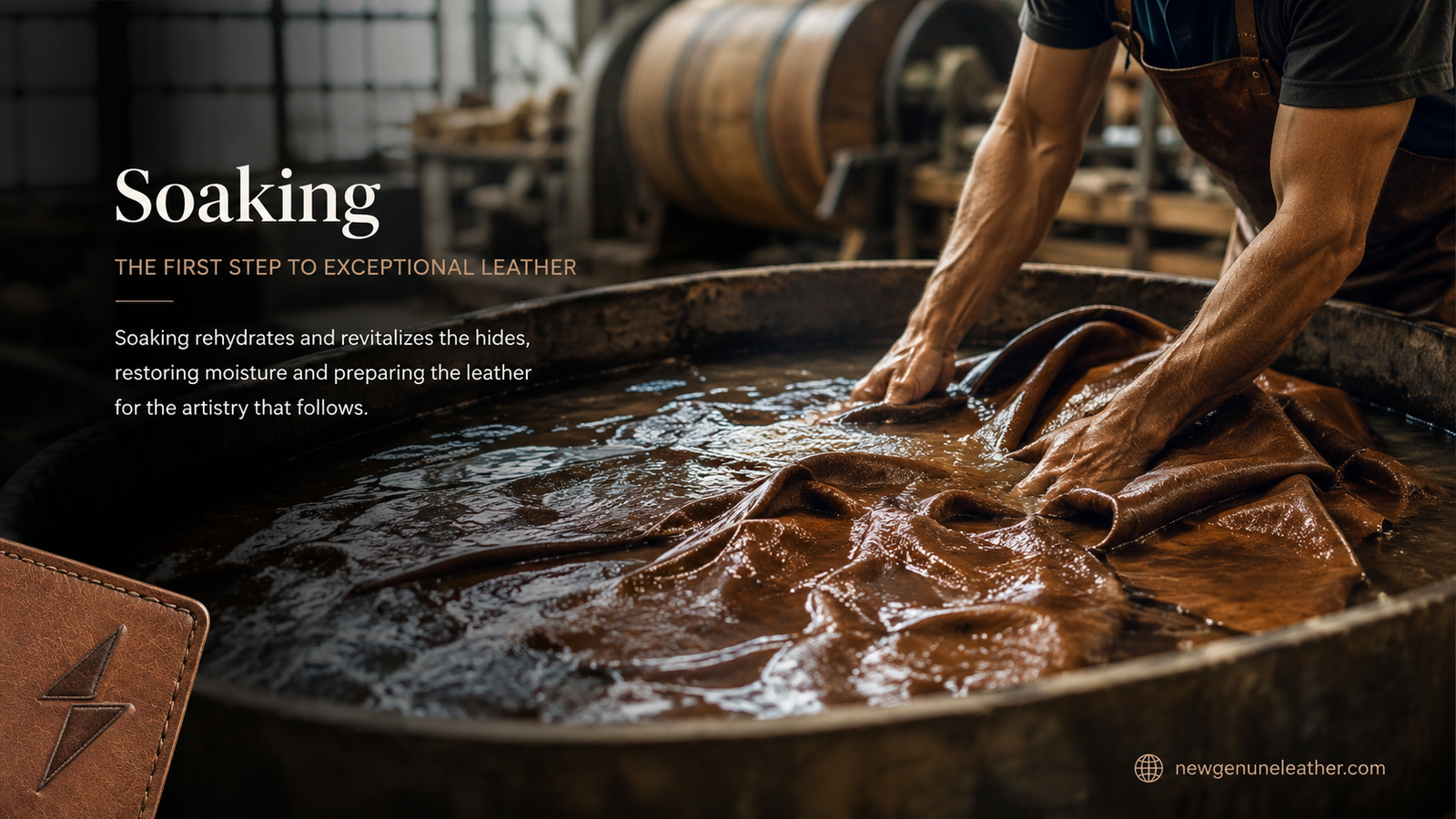
Soaking is the process of placing raw or preserved hides and skins in water to rehydrate them and remove unwanted materials. Most hides are preserved with salt or drying methods before they reach the tannery. This preservation helps prevent decay, but it also removes natural moisture from the hide.
During soaking, the hide absorbs water and returns closer to its original fresh condition. This makes it soft, flexible, and ready for the next stages of leather production.
In simple words, soaking helps bring the hide back to life before it is converted into finished leather.
Why Is Soaking Needed?
1. Restores Moisture in the Hide
After preservation, hides become dry and stiff. Soaking restores moisture and helps the fibers open properly. When the fibers regain water, the hide becomes easier to handle and process.
A well-soaked hide allows chemicals used in later steps to enter evenly. This improves the quality, softness, and durability of the final leather.
2. Removes Salt and Dirt
Salt is commonly used to preserve hides during storage and transport. However, too much salt must be removed before tanning. Soaking helps wash out salt, blood, dirt, dust, and other impurities from the hide surface.
If these materials remain inside the hide, they can affect the tanning process and reduce the quality of the finished leather.
3. Prepares the Hide for Liming
After soaking, the hide usually goes through the liming process. Liming removes hair, opens up the fiber structure, and prepares the hide for tanning. If soaking is incomplete, liming will not work evenly.
Proper soaking ensures that the hide reacts more consistently during the next processing stages.
4. Improves Leather Softness and Flexibility
The softness of leather depends greatly on how well the hide fibers are prepared. Soaking allows the fibers to relax and separate naturally. This helps create leather that is flexible, smooth, and comfortable to use.
For products such as jackets, bags, shoes, gloves, and upholstery, this step is very important because customers expect leather to feel soft yet strong.
5. Helps Produce Even Quality Leather
Uneven soaking can lead to uneven leather. Some parts of the hide may remain hard while others become too soft. This can cause problems during tanning, dyeing, and finishing.
Professional soaking helps create uniform leather quality across the whole hide. This is one reason why brands like newgenuneleather.com focus on careful leather preparation and quality control.
What Happens If Soaking Is Not Done Properly?
Poor soaking can create many problems in leather production. The hide may remain stiff, dirty, or unevenly hydrated. This can lead to poor chemical penetration, weak fiber structure, patchy dyeing, and low-quality finishing.
In some cases, improper soaking may also cause bacterial damage, bad odor, grain defects, or reduced leather strength. Once these problems happen at the early stage, they are difficult to correct later.
That is why soaking is not just a washing step. It is a foundation step for producing high-quality leather.
Key Factors in the Soaking Process
The quality of soaking depends on several important factors:
Water quality: Clean water is necessary to remove salt and impurities effectively.
Soaking time: The hide needs enough time to absorb water properly.
Temperature: Controlled temperature helps improve rehydration without damaging the hide.
Mechanical movement: Gentle movement helps water reach all parts of the hide evenly.
Chemical assistance: In some cases, wetting agents or mild chemicals are used to improve soaking performance.
Each tannery may adjust these conditions depending on the type of hide, preservation method, and final leather product.
Soaking and Premium Leather Quality
Premium leather does not come from finishing alone. It begins from the first preparation steps. Soaking directly affects how the hide behaves during the entire leather-making process.
When soaking is done correctly, the leather becomes cleaner, more uniform, easier to tan, and better in final appearance. It also improves softness, strength, dye absorption, and finishing quality.
At newgenuneleather.com, we understand that every stage of leather processing matters. From soaking to final finishing, each step contributes to the beauty, durability, and natural character of leather.
Conclusion
Soaking is one of the most important early stages in leather processing. It restores moisture, removes salt and dirt, prepares the hide for liming, and supports uniform tanning and finishing. Without proper soaking, the quality of the final leather can be seriously affected.
For anyone interested in genuine leather, understanding the soaking process helps explain why high-quality leather requires skill, patience, and professional handling.
At newgenuneleather.com, quality leather begins with careful processing, and soaking is the first major step toward producing strong, soft, and beautiful leather products.
