

Leather Manufacturing: 7 Stages Behind Every Finished Hide

Leather manufacturing is a far more involved process than most buyers realize. What starts as raw animal hide goes through a series of carefully controlled stages before it becomes the supple, durable material used in jackets, gloves, lederhosen, and countless other goods. Understanding manufacturing helps buyers make more informed sourcing decisions and gives retailers a stronger story to tell their own customers about the products they sell.
This guide walks through every major stage of manufacturing, from raw hide to finished material, and explains why each step matters for quality and durability.
Why Understanding Leather Manufacturing Matters
For wholesale and private label buyers, leather manufacturing knowledge isn’t just academic — it directly affects how you evaluate suppliers, negotiate pricing, and set customer expectations. Buyers who understand the leather manufacturing process can ask more specific, informed questions when vetting a manufacturer, and are far less likely to be misled by vague sourcing claims.
For retailers, this same knowledge translates into stronger product storytelling. Customers increasingly want to know where materials come from and how they’re made — being able to explain the leather manufacturing process behind your products builds trust and differentiates you from competitors selling generic, unexplained “leather” goods.
Stage 1: Raw Hide Collection and Preservation
Leather manufacturing begins with raw animal hides, most commonly sourced as a byproduct of the meat industry — primarily cattle, though goat, sheep, and buffalo hides are also used depending on the intended product. Fresh hides decompose quickly, so they’re salted or chilled immediately after collection to preserve them until they reach a tannery.
This preservation stage is critical to the entire leather manufacturing process. Poorly preserved hides can develop bacterial damage that compromises the final leather’s strength and appearance, no matter how well later stages are executed.
Stage 2: Soaking and Cleaning
Once hides arrive at the tannery, manufacturing continues with soaking — rehydrating the hides and removing salt, dirt, and blood from the preservation and transport process. This stage typically takes several hours to a full day, depending on hide condition and thickness.
Proper soaking ensures the hide is evenly hydrated before moving into the more chemically intensive stages of manufacturing, which helps produce a more consistent final product.
Stage 3: Liming and Hair Removal
This stage of leather manufacturing uses a lime solution to loosen and remove hair, along with any remaining flesh and fat from the underside of the hide. Liming also begins to open up the hide’s fiber structure, preparing it for the tanning stage that follows.
This is a chemically intensive part of leather manufacturing, and responsible tanneries manage this stage carefully to treat and process wastewater appropriately before it leaves the facility.
Stage 4: Splitting
Once cleaned, thick hides are split into layers using specialized splitting machines — a defining stage in manufacturing that determines which leather grade the material will eventually become. The top layer, closest to the animal’s outer skin, retains the natural grain and becomes full-grain or top-grain leather. Layers beneath it become genuine leather after further processing.
This splitting stage is where the leather grading hierarchy is essentially decided, making it one of the most consequential steps in the entire leather manufacturing process.
Stage 5: Tanning
Tanning is arguably the most important stage in leather manufacturing — it’s the chemical process that stabilizes the hide’s collagen fibers and prevents decomposition, transforming raw hide into genuine leather material. Two methods dominate modern manufacturing: chrome tanning, which uses chromium salts and takes about a day, and vegetable tanning, which uses plant-based tannins and takes several weeks.
The tanning method chosen during leather manufacturing significantly affects the final material’s flexibility, water resistance, color range, and how it ages over time — details covered in depth in our chrome vs. vegetable tanning guide.
Stage 6: Dyeing and Finishing
After tanning, manufacturing moves into dyeing and surface finishing. Hides are dyed to achieve consistent color, then treated with finishing coats that affect texture, sheen, and durability. For genuine leather specifically, this stage also includes sanding the surface and applying an artificial grain texture, since this grade is cut from a layer without the natural top-grain pattern.
Finishing is where much of manufacturing’s visual character is established — matte versus glossy finishes, texture patterns, and color depth are all determined at this stage.
Stage 7: Cutting, Stitching, and Quality Control
The final stage of leather manufacturing involves cutting the finished material into pattern pieces and stitching them into the finished product — whether that’s a jacket, glove, lederhosen, or vest. Quality control checks happen throughout this stage, inspecting for consistent color, proper stitching tension, and overall construction integrity before goods are packaged for shipment.
This is also where hand-stitching versus machine-stitching decisions come into play, with hand-stitched leather manufacturing typically reserved for premium product lines due to the additional time and skill required.
Chrome Tanning vs. Vegetable Tanning in Leather Manufacturing
These two tanning approaches produce genuinely different materials within the broader manufacturing process. Chrome-tanned manufacturing is faster, more cost-effective, and produces softer, more water-resistant leather with a wider color range — making it the dominant choice for jackets, gloves, and everyday goods.
Vegetable-tanned leather manufacturing takes considerably longer and costs more, but produces firmer, more structured leather that develops a natural patina over time — a favored choice for belts, structured bags, and premium accessories.
Sustainability in Modern Leather Manufacturing
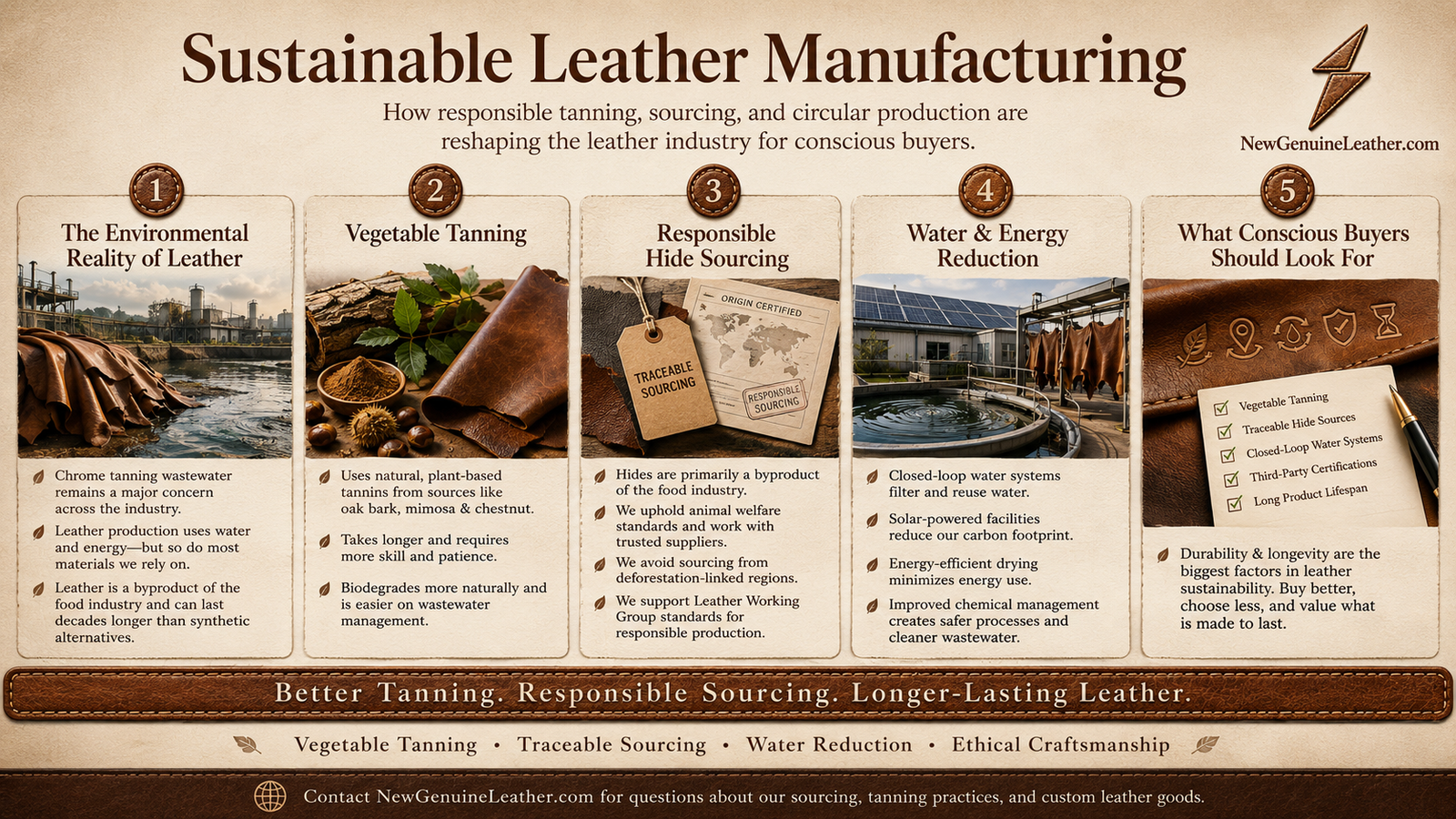
Responsible leather manufacturing increasingly involves wastewater treatment, chemical management, and sourcing transparency. Organizations like the Leather Working Group audit and certify tanneries against environmental and social standards, giving buyers a way to verify sustainable practices when evaluating a manufacturing partner.
Material and process standards maintained by bodies like the International Council of Tanners also offer buyers a useful benchmark for evaluating hide quality and processing practices across the leather manufacturing industry.
Why Sialkot Is a Global Leather Manufacturing Hub
Sialkot, Pakistan has built a global reputation across multiple stages of leather manufacturing, with decades of specialized infrastructure spanning tanneries, cutting facilities, and skilled stitching labor. This concentration of expertise allows Sialkot-based manufacturing operations to offer competitive pricing, faster turnaround on customization requests, and established compliance with international quality standards for buyers across Europe, North America, and Australia.
For wholesale and private label buyers, sourcing from an established manufacturing hub like Sialkot often means working with suppliers who have direct relationships across the entire supply chain — from raw hide sourcing through to finished, stitched goods — rather than coordinating across multiple disconnected vendors.
What Buyers Should Ask About the Leather Manufacturing Process
- Which tanning method is used, and how it affects durability and appearance
- What leather grade the finished product represents — full-grain, top-grain, or genuine leather
- How quality control is handled across cutting, stitching, and finishing stages
- What certifications or standards the manufacturer’s manufacturing process follows
- How wastewater and chemical byproducts are managed during tanning and finishing
Frequently Asked Questions
What are the main stages of leather manufacturing? Leather manufacturing generally includes hide preservation, soaking, liming, splitting, tanning, dyeing and finishing, and finally cutting and stitching into finished goods.
What’s the difference between chrome and vegetable tanning in leather manufacturing? Chrome tanning is faster and produces softer, more water-resistant leather, while vegetable tanning takes longer and produces firmer leather that develops a natural patina over time.
Why does leather grade depend on the manufacturing process? Leather grade is largely determined during the splitting stage of manufacturing — the top layer becomes full-grain or top-grain leather, while lower layers become genuine leather after additional finishing.
Final Thoughts
Leather manufacturing is a multi-stage process where every step — from hide preservation to final stitching — shapes the durability, appearance, and quality of the finished material. Understanding this process gives buyers the knowledge to ask sharper questions when vetting suppliers, and gives retailers a genuine story to share with their own customers about the craftsmanship behind their products.
Looking for a transparent leather manufacturing partner for your wholesale or private label business?
Follow Us
Instagram: https://www.instagram.com/newgenuineleather/
WhatsApp: https://wa.me/+923008758207
