

How to Care for Genuine Leather: Cleaning, Conditioning & Storage Guide

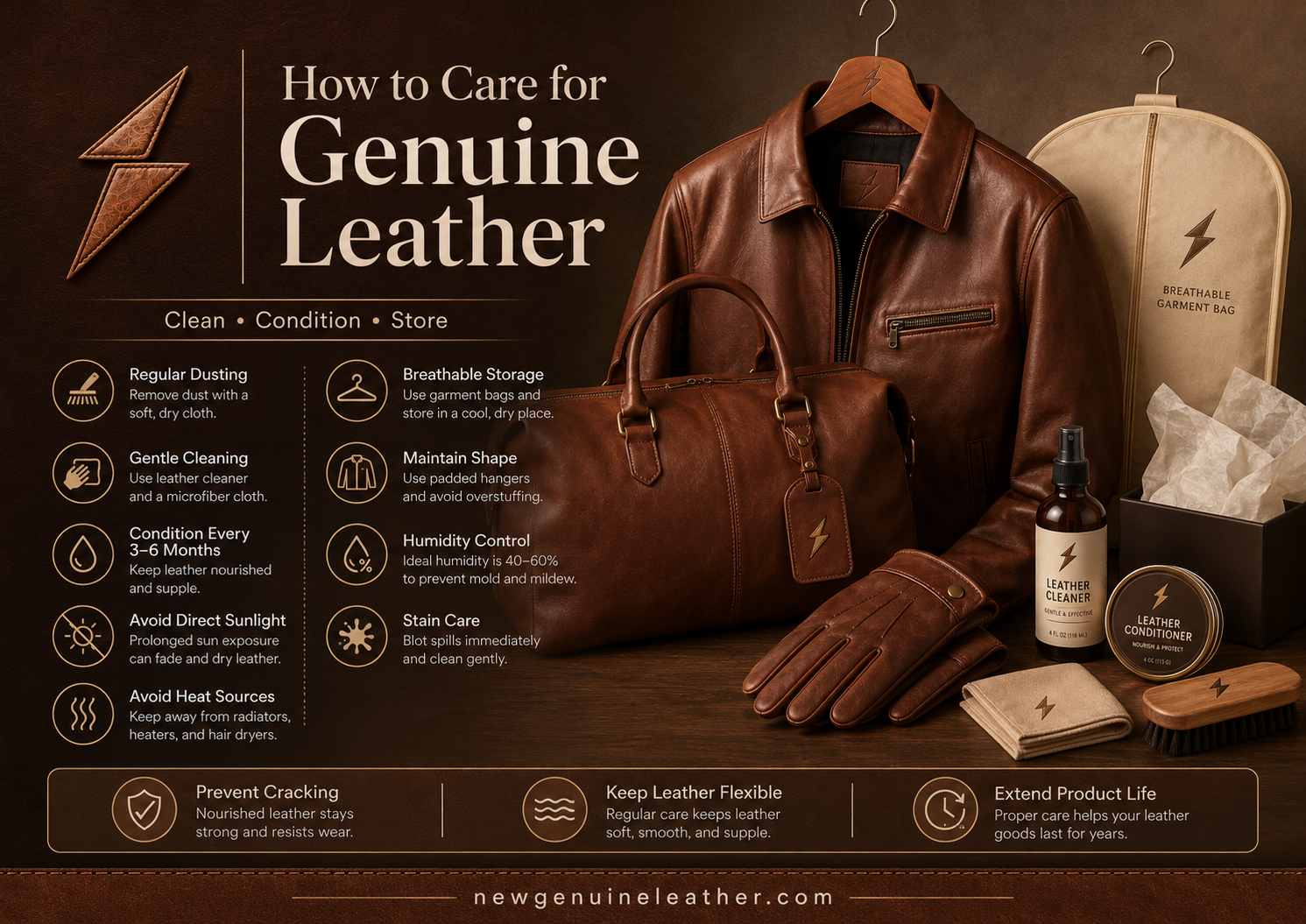
Care for Genuine Leather is durable, but it’s not maintenance-free. Like any natural material, it responds to how it’s treated — proper care can keep a genuine leather jacket, bag, or pair of gloves looking good and functioning well for years, while neglect can lead to cracking, stiffness, and premature wear.
This guide covers everything you need to know to clean, condition, and store genuine leather correctly, whether you’re caring for a single item or managing inventory as a retailer.
Understanding What You’re Caring For Care for Genuine Leather
Care for Genuine Leather is made from real animal hide, cut from a layer beneath the top grain, then sanded and finished with an applied texture and protective coating. This finish makes it somewhat more resistant to surface staining than untreated full-grain leather, but it also means care routines need to respect that finish rather than aggressively stripping it away.
The goal of leather care is simple: keep the material’s natural fibers flexible and hydrated, protect the surface finish, and prevent exposure to conditions that cause cracking, fading, or mold.
Daily and Weekly Care for Genuine Leather
Wipe down regularly. A soft, dry microfiber cloth used weekly removes dust and surface debris before it has a chance to settle into the material’s texture. This simple habit prevents a lot of long-term wear.
Avoid prolonged direct sunlight. UV exposure fades leather’s color and dries out its natural oils over time. If a leather jacket or bag is stored or displayed near a window, rotate its position or keep it away from direct light when not in use.
Keep it away from heat sources. Radiators, heating vents, and car dashboards in direct sun can cause leather to dry out and crack far faster than normal aging would.
Cleaning Genuine Leather Care for Genuine Leather
Step 1: Dust and debris removal Before any liquid touches the leather, wipe the entire surface with a dry, soft cloth to remove loose dirt. Cleaning over dust can grind it into the material and cause micro-scratches. Care for Genuine Leather
Step 2: Spot-test any cleaner Always test a cleaning product on a small, hidden area first — inside a cuff, under a strap, or on an interior seam. Wait a few minutes to check for discoloration or texture changes before applying it more broadly.
Step 3: Use a leather-specific cleaner Avoid household cleaners, baby wipes, or alcohol-based products — these can strip the leather’s finish or dry it out. A pH-balanced leather cleaner, applied with a soft cloth in gentle circular motions, is the safest approach.
Step 4: Dry naturally After cleaning, let the item air dry away from direct heat or sunlight. Never use a hairdryer or heater to speed up drying — rapid heat exposure is one of the most common causes of leather cracking.
For stains:
- Oil-based stains (grease, food) — blot immediately with a dry cloth; don’t rub, which spreads the stain. Apply a small amount of cornstarch or talcum powder to absorb the oil overnight, then brush away.
- Water stains — allow the item to dry naturally, then gently condition the area to even out the texture once fully dry.
- Ink stains — these are the hardest to remove without professional help. For valuable items, it’s worth consulting a leather specialist rather than attempting a DIY fix.
Conditioning Genuine Leather Care for Genuine Leather
Conditioning replaces the natural oils that genuine leather gradually loses through wear, cleaning, and environmental exposure. Without conditioning, leather becomes stiff and is more prone to cracking.
How often to condition: For regularly worn or used items (jackets, bags used daily), conditioning every 3–6 months is generally sufficient. For items in drier climates or with heavy use, more frequent conditioning — every 2–3 months — may be needed.
How to condition: Care for Genuine Leather
- Clean the item first, following the steps above, and let it dry fully.
- Apply a small amount of leather conditioner to a soft cloth — a little goes a long way.
- Work it into the leather in gentle, circular motions, covering the full surface evenly.
- Let it absorb for the time specified on the product (usually 15–30 minutes).
- Buff off any excess with a clean, dry cloth.
Choosing a conditioner: Look for conditioners specifically designed for finished or corrected-grain leather, since genuine leather’s applied surface texture behaves differently from untreated full-grain leather. Avoid conditioners that are too oil-heavy for finished leather, as they can sit on the surface rather than absorbing properly. Care for Genuine Leather
Storing Genuine Leather Correctly Care for Genuine Leather
Use breathable storage. Store leather jackets and bags in breathable garment bags (cotton or specialty leather storage bags) rather than sealed plastic, which traps moisture and can lead to mold or a musty smell over time.
Maintain shape. Use padded or wide hangers for jackets to prevent shoulder creasing, and stuff bags with acid-free tissue paper or a soft insert to help them hold their shape during storage.
Control humidity. Leather does best in moderate humidity. Excess moisture promotes mold growth; overly dry conditions accelerate cracking. If you’re storing leather long-term in a variable climate, a silica gel packet nearby can help regulate moisture without over-drying the material.
Avoid folding. Where possible, hang or lay leather items flat rather than folding them, since sharp folds can create permanent creases in the material over time.
Seasonal Care Checklist Care for Genuine Leather
Before winter storage: Clean, condition, and store away from direct heat sources — winter heating systems are a common cause of unexpected cracking in stored leather.
Before summer storage: Ensure items are fully dry and stored in a cool, dry space away from direct sunlight, which is more intense and prolonged during summer months.
Every seasonal transition: A quick wipe-down and inspection for any early signs of dryness, stiffness, or surface cracking lets you catch issues early, when a simple conditioning treatment can still resolve them.
Common Leather Care Mistakes to Avoid
- Over-conditioning — too much conditioner too often can oversaturate the leather, leading to a soft, sagging feel and a duller finish.
- Using the wrong products — shoe polish, furniture polish, and generic “all-purpose” cleaners are not formulated for leather and can damage the surface finish.
- Ignoring small stains — what starts as a small, easily treatable mark can set in and become permanent if left untreated for too long.
- Storing in direct sunlight — even brief but repeated sunlight exposure adds up over months and years, fading color and drying the material.
Final Thoughts Care for Genuine Leather
Genuine leather rewards routine care with a much longer usable life. Regular dusting, gentle cleaning with the right products, conditioning every few months, and proper breathable storage are the core habits that keep genuine leather looking and performing well for years. None of these steps are complicated — they just need to be consistent.
Whether you’re maintaining a personal wardrobe piece or managing inventory care standards as a retailer, these habits protect the value of genuine leather goods well beyond the point synthetic alternatives would have already broken down.
Follow Us
Instagram: https://www.instagram.com/newgenuineleather/
WhatsApp: https://wa.me/+923008758207
