

Buffing and Sanding in Leather Processing: Smoothing the Surface for Premium Finishing

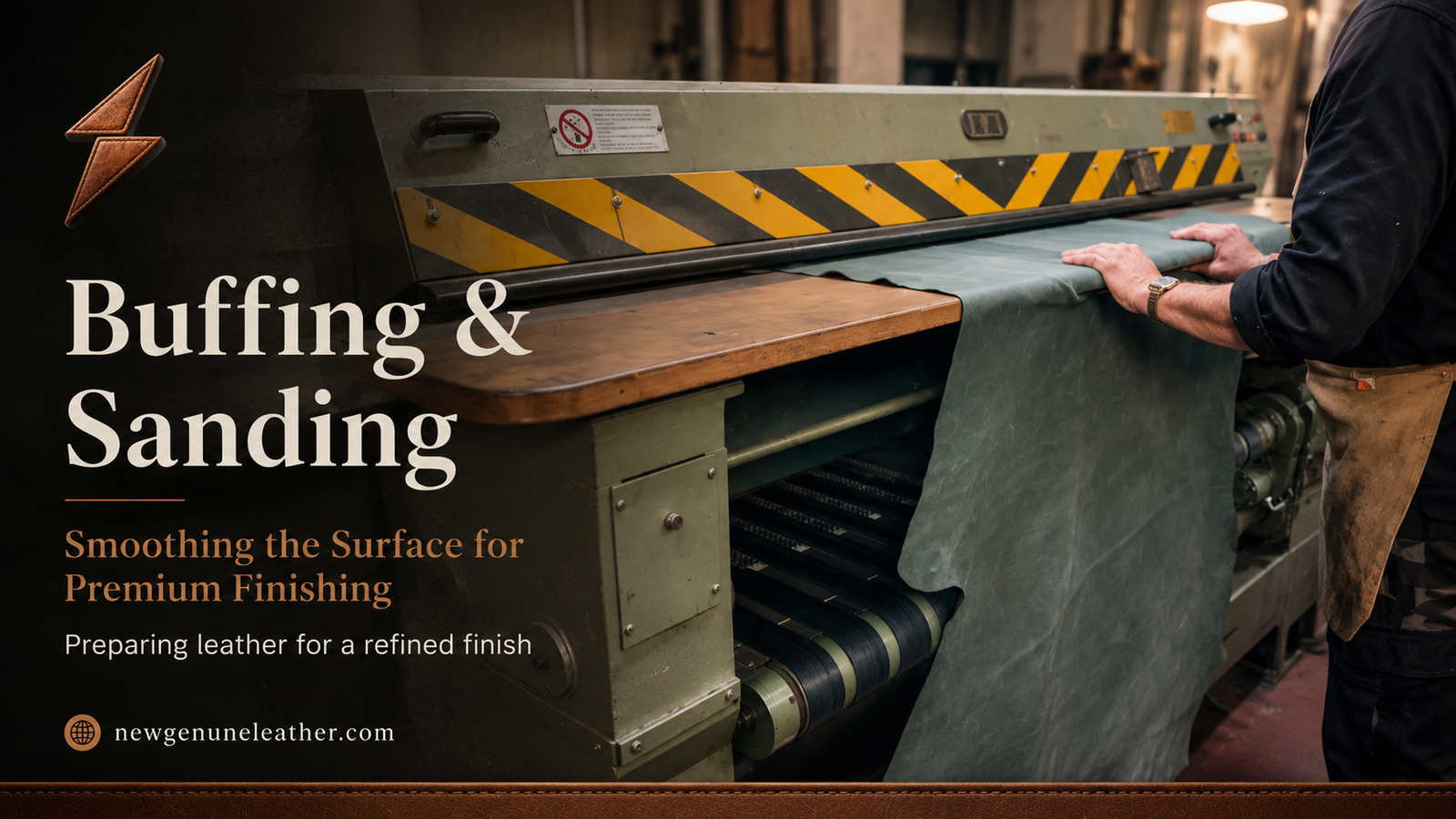
Leather Buffing and Sanding Introduction New Genuine Leather
Leather production includes many stages that improve the strength, softness, thickness, color, and final appearance of leather. After drying and softening, some leather may still have surface marks, roughness, uneven grain, or small defects. Before finishing, the leather may pass through an important surface preparation stage called buffing or sanding.
Buffing and sanding help smooth the leather surface, correct minor imperfections, and prepare the leather for finishing. This step is especially important for nubuck, suede, corrected-grain leather, and other leather types that require a smooth or specially textured surface.
At newgenuneleather.com, we believe premium leather depends on both internal quality and surface refinement. Buffing and sanding help create a cleaner, smoother, and more attractive leather finish.
What Is Buffing in Leather Processing?
Buffing is the process of lightly abrading the leather surface using a buffing machine. The leather passes against an abrasive roller or sanding surface that removes a very thin layer from the grain side or flesh side.
The purpose is to smooth the surface, reduce visible defects, or create a soft nap depending on the leather type.
In simple words, buffing refines the leather surface before finishing.
What Is Sanding in Leather Processing?
Sanding is similar to buffing and is used to smooth or level the leather surface with abrasive materials. It may be done gently or more strongly depending on the final leather requirement.
Sanding can be used to prepare corrected-grain leather, suede, nubuck, or leather that needs a smoother surface before coating and finishing.
In many tanneries, buffing and sanding are closely related because both use controlled abrasion to improve leather surface quality. Leather Buffing and Sanding
Why Is Buffing and Sanding Needed?
1. Smooths the Leather Surface
After drying and softening, leather may have rough areas or slight unevenness. Buffing and sanding help smooth the surface so the leather feels cleaner and more refined.
A smoother surface improves the final look and touch of the leather.
2. Reduces Minor Surface Defects
Natural hides may contain scratches, scars, insect marks, grain defects, or processing marks. Buffing can reduce the appearance of small imperfections by gently removing the top surface layer.
This helps create a more uniform surface before finishing.
3. Prepares Leather for Finishing Leather Buffing and Sanding
Finishing requires a clean and properly prepared surface. If the leather surface is uneven or rough, finishing materials may not spread evenly.
Buffing and sanding help improve finish adhesion, color uniformity, texture, and final appearance.
4. Creates Suede and Nubuck Effects
Buffing is also used to create special surface textures. When the flesh side is buffed, it can produce suede. When the grain side is lightly buffed, it can create nubuck.
These leather types are valued for their soft, velvety feel and premium appearance.
5. Improves Corrected-Grain Leather Leather Buffing and Sanding
Corrected-grain leather is made by buffing or sanding the surface to reduce imperfections, followed by finishing or embossing. This helps create a more consistent and usable leather surface.
This method is useful when natural grain defects need to be minimized.
How Is the Buffing / Sanding Process Done?
In modern leather production, buffing and sanding are done using specialized machines. The leather is passed through a machine fitted with abrasive paper, sanding belts, or buffing rollers.
The operator controls the pressure, speed, and abrasive grade according to the leather type and desired surface effect. Light buffing may only smooth the surface, while stronger sanding may create a corrected grain or suede effect.
The process must be controlled carefully. Too much buffing can damage the grain, weaken the leather, or remove too much material. Too little buffing may leave defects or roughness visible.
When Does Buffing / Sanding Take Place?
Buffing and sanding usually take place after drying, conditioning, and softening. At this stage, the leather is dry enough to be abraded properly and stable enough for surface correction.
A common sequence is:
Drying: Removes moisture and sets the leather shape.
Conditioning: Restores controlled moisture for softening.
Staking / Softening: Improves flexibility and hand feel.
Buffing / Sanding: Smooths or corrects the surface.
Finishing: Adds final color, texture, shine, matte effect, and protection.
Measuring and grading: Checks final quality and value.
This makes buffing and sanding an important preparation step before final finishing.
Types of Leather Made with Buffing Leather Buffing and Sanding
Suede Leather Buffing and Sanding
Suede is usually made by buffing the flesh side of leather. This creates a soft, fuzzy surface that feels smooth and velvety.
Nubuck Leather Buffing and Sanding
Nubuck is made by lightly buffing the grain side of leather. It has a fine, soft surface and a premium feel.
Corrected-Grain Leather
Corrected-grain leather is buffed to reduce grain defects and then finished with coatings, pigments, or embossed textures.
Matte-Finish Leather
Some leather is lightly sanded to create a softer, more natural matte appearance before finishing.
What Happens If Buffing / Sanding Is Not Done Properly?
Poor buffing or sanding can damage leather quality. If the leather is over-buffed, the grain may become weak, loose, or uneven. The leather may lose strength, feel too thin, or show surface damage.
If sanding is uneven, the leather may have patchy texture, inconsistent nap, or poor finishing results. Dust from buffing must also be controlled and removed properly before finishing.
A good buffing process must improve the surface without damaging the leather structure.
Buffing / Sanding and Premium Leather Quality
Premium leather needs a refined surface, controlled texture, and clean finishing base. Buffing and sanding help achieve these qualities by preparing the leather surface for final treatment.
When done correctly, buffing and sanding can improve appearance, reduce minor defects, enhance texture, and support high-quality finishing. This helps create leather that looks smoother, feels better, and performs well in final products.
At newgenuneleather.com, we understand that final beauty depends on careful surface preparation. Buffing and sanding are important steps that help turn processed leather into refined premium material.
Conclusion
Buffing and sanding are essential surface preparation steps in leather processing. They smooth the leather, reduce minor defects, create special textures, and prepare the surface for finishing.
Without proper buffing or sanding, leather may show roughness, uneven texture, poor finishing, or visible defects. With controlled processing, leather becomes smoother, cleaner, and ready for premium finishing.
At newgenuneleather.com, quality leather begins with expert processing, and buffing or sanding is one of the key steps that helps create refined, smooth, and high-quality leather.
Follow Us
Instagram: https://www.instagram.com/newgenuineleather/
WhatsApp: https://wa.me/+923008758207
