
Splitting Process in Leather: 7 Powerful Quality Steps

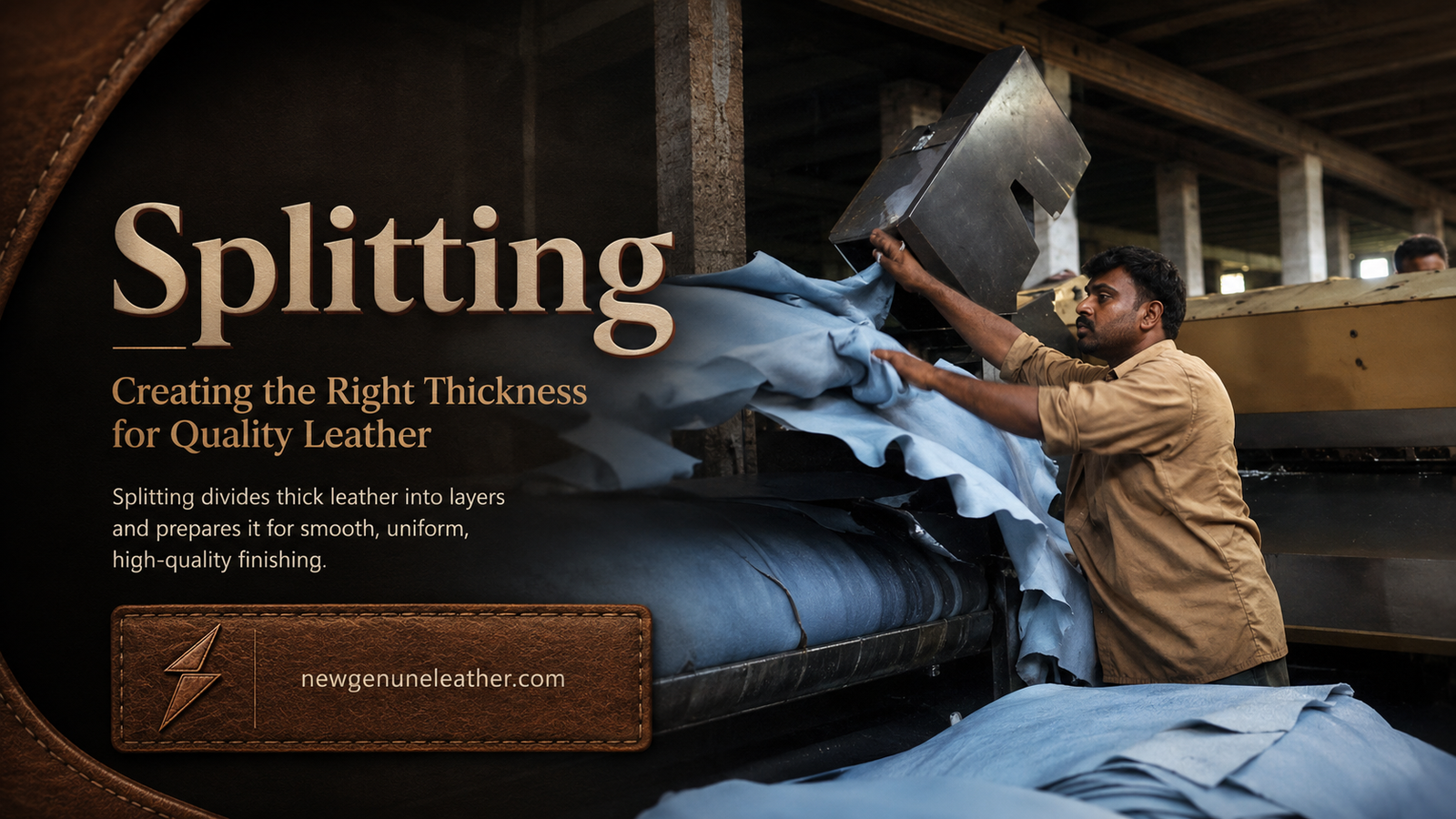
The splitting process in leather is an essential manufacturing stage that separates a thick hide into thinner, usable layers. It helps control thickness, improve material consistency, and prepare leather for products such as jackets, skirts, trousers, gloves, bags, belts, and lederhosen.
A natural hide is not equally thick across its entire surface. The shoulder, belly, and central sections can have different thicknesses and fiber structures. Without proper splitting, manufacturers may struggle to produce garments with consistent weight, flexibility, stitching, and appearance.
At New Genuine Leather (NGL), material thickness and leather structure are carefully considered during sample development and bulk production. For wholesale, OEM, and private-label buyers, understanding how leather is split makes it easier to compare samples, verify material descriptions, and select the right leather for each product.
What Is the Splitting Process in Leather?
The splitting process in leather is the mechanical separation of a hide into two or more horizontal layers. A specialized splitting machine uses a long band knife to cut through the hide while rollers guide the material at a controlled speed.
The upper section is generally called the grain split because it contains the original outer grain surface. The lower section is called the flesh split. Very thick hides may also produce a middle layer known as the middle split.
Split leather is still real leather because it comes from genuine animal hide. However, it does not contain the original outer grain surface. Depending on its quality and intended use, split leather may be converted into suede, coated leather, embossed leather, reinforcement material, or selected accessories.
The final quality depends on the condition of the hide, the accuracy of the machine, the sharpness of the blade, and the experience of the operator.
Why Accurate Leather Splitting Matters
Leather thickness directly affects product performance. A lightweight fashion jacket needs soft and flexible leather, while a motorcycle jacket may require a heavier and more protective construction. Gloves need flexibility and finger movement, whereas bags and belts require greater structure.
Accurate splitting helps manufacturers achieve:
- Consistent thickness across product panels
- Better drape and flexibility
- More even stitching and seam formation
- Controlled product weight
- Improved finishing performance
- Better use of available hide material
- Greater consistency across bulk orders
Poorly split leather may contain thin patches, rough blade marks, weak edges, waves, or irregular sections. These problems can affect cutting, embroidery, stitching, coating, and final product durability.
1. Inspecting and Preparing the Hide
The first stage is a detailed inspection of the hide. Operators check its overall thickness, moisture, fiber structure, wrinkles, scars, loose areas, holes, and natural variations.
The hide should be clean and properly conditioned before entering the splitting machine. Material that is too dry may resist the blade or pass unevenly through the rollers. Excessively wet material may stretch, move, or become distorted during cutting.
Manufacturers also identify the intended use of the leather before selecting the target thickness. A hide intended for a soft leather skirt will require a different specification from leather being prepared for a structured bag.
Some tanneries perform splitting after liming, while others split leather after tanning in a wet-blue or wet-white condition. The selected production stage depends on the tannery’s machinery, process, material type, and required result.
2. Measuring the Required Thickness
Before splitting, the hide is measured at several points using a leather thickness gauge. Multiple readings are necessary because natural hides are rarely uniform from edge to edge.
The required thickness should be determined by the finished product specification. Manufacturers usually work with an acceptable thickness range rather than one exact measurement.
For example, garment leather generally needs enough softness to drape comfortably while retaining sufficient strength around seams and closures. Lederhosen leather must support embroidery, buttons, suspenders, and repeated movement. Glove leather must be flexible enough for hand and finger movement.
At New Genuine Leather, thickness requirements are reviewed during material selection and sample development. This helps private-label buyers approve not only the product’s appearance but also its weight, flexibility, and overall hand feel.
3. Setting the Leather Splitting Machine
The splitting machine must be carefully calibrated before production begins. Operators adjust the band knife, feed rollers, cutting pressure, speed, and target thickness.
The knife must remain sharp, clean, and correctly aligned. A worn blade may pull the material instead of producing a clean cut. It can also create lines, rough fibers, uneven thickness, or damaged sections.
Roller pressure is equally important. The rollers must hold the hide securely without crushing or marking the grain surface.
An experienced operator may test a small area before splitting the complete hide. This confirms that the machine is producing the required layer thickness and that the visible grain surface remains protected.
Correct machine calibration is one of the most important quality controls in the splitting process in leather.
4. Separating the Grain and Flesh Layers
Once the machine is ready, the hide is guided through the rollers. The moving band knife cuts horizontally through the material and separates it into layers.
The upper layer retains the original grain surface. Depending on how it is finished later, this layer may become full-grain, top-grain, corrected-grain, or pigmented leather.
The lower flesh layer has a more open and fibrous structure. It may be used for suede, coated split leather, reinforcement pieces, smaller accessories, linings, or other selected applications.
Very thick hides may also create a middle split. This layer does not contain the original grain and normally requires sanding, coating, embossing, or suede finishing before it can be used.
The hide must remain flat and correctly aligned during the cut. Folding or pulling may reduce the usable area and create sections that fall outside the required thickness range.
5. Sorting and Grading the Split Layers
After separation, each layer is inspected and graded. Technicians evaluate thickness, size, surface condition, fiber strength, loose areas, holes, and overall suitability.
The grain layer is assessed for natural marks, cutting area, strength, and visible surface consistency. Premium areas may be reserved for the most noticeable parts of a jacket, skirt, bag, or pair of trousers.
The flesh layer is examined for weak fibers, loose sections, unevenness, and suitability for suede or coated finishes. Not every split layer has the same strength or value.
Correct sorting allows manufacturers to place product patterns strategically. Large visible panels can be cut from the most consistent areas, while smaller components may be positioned in other usable sections.
This improves material utilization and helps reduce avoidable leather waste.
6. Finishing Grain and Split Leather
After splitting, the layers may continue through shaving, drying, dyeing, buffing, sanding, embossing, coating, conditioning, or protective finishing.
The grain layer may retain much of its natural character or receive surface correction to create a more uniform appearance. Light correction may be used for top-grain leather, while stronger buffing and embossing can create corrected-grain leather.
The flesh split may be sanded to produce a soft suede nap. It can also receive a polymer coating and an embossed grain pattern. This creates coated split leather with a more consistent surface.
Buyers should understand that coated split leather and top-grain leather are different materials. Both may be made from real hide, but their structure, surface, performance, and value are not identical.
For educational information about leather types and manufacturing, buyers can visit Leather Naturally. Information about environmental auditing and responsible leather production is available through the Leather Working Group.
Keep these external links as normal dofollow links in WordPress so Rank Math can detect them properly.
7. Final Thickness and Quality Inspection
The final stage is a complete quality inspection. Thickness is measured again at multiple points to confirm that the material falls within the approved range.
Inspectors also look for:
- Thin or weak patches
- Blade lines and rough cuts
- Waves or uneven surfaces
- Loose fibers
- Holes or damaged edges
- Excessive stretching
- Inconsistent nap or coating
The leather may be folded or handled gently to evaluate flexibility and surface stability. It should perform correctly during cutting, embroidery, stitching, and final assembly.
For wholesale production, the finished material should be compared with the buyer-approved sample. Thickness, color, softness, grain, nap, and finishing must remain consistent throughout the order.
At NGL, inspection continues during pattern placement, cutting, stitching, assembly, and packing. Good splitting provides the foundation, but quality must be maintained through every manufacturing stage.
Main Layers Created During Leather Splitting
Grain Split
The grain split is the upper portion of the hide. It contains the original outer grain surface and usually has the strongest, most compact fiber structure.
Depending on finishing, it may be used to create full-grain, top-grain, corrected-grain, or pigmented leather.
Flesh Split
The flesh split comes from beneath the grain layer. It has a fibrous surface and may be processed into suede or finished with coatings and embossing.
It can also be used for selected accessories, reinforcement components, protective pieces, and less visible product sections.
Middle Split
A middle split may be obtained from a particularly thick hide. It does not contain the natural grain surface and usually needs additional finishing before use.
Understanding these layers helps buyers compare supplier quotations correctly. A product described only as “real leather” does not explain which layer has been used.
Products That Require Accurate Leather Splitting
Leather jackets need controlled thickness so they can move naturally while maintaining seam strength. Uneven leather may cause one section of a jacket to feel heavier or stiffer than another.
Leather skirts and trousers require consistent softness and drape across large panels. Accurate splitting helps prevent uneven hanging, stiffness, and unnecessary bulk.
Gloves need particularly precise thickness because hand movement and comfort are critical. Leather that is too thick can restrict movement, while material that is too thin may wear prematurely.
Bags, belts, and accessories often need thicker or reinforced leather to maintain structure. Custom lederhosen require material strong enough for embroidery, buttons, seams, and suspenders while remaining comfortable during wear.
The splitting process in leather must therefore support the function of the product rather than focusing only on appearance.
Common Leather Splitting Problems
Uneven thickness is one of the most common issues. It may result from poor calibration, incorrect pressure, blade wear, or natural hide variation.
A dull blade can create rough surfaces, blade marks, or pulling. Incorrect roller settings may stretch the material or damage the grain.
Another problem is removing too much from the grain layer. Leather that becomes excessively thin may lose strength and perform poorly around seams.
Material misclassification can also create problems for buyers. Coated split leather should not be supplied when the approved specification requires top-grain leather.
Physical samples, written specifications, and incoming-material inspections help prevent these issues.
What Wholesale Buyers Should Confirm
Before approving bulk production, wholesale and private-label buyers should confirm:
- Leather layer and material classification
- Thickness range and tolerance
- Surface finish and grain pattern
- Required softness and flexibility
- Color and shade standard
- Intended product application
- Sample approval procedure
- Inspection process for bulk production
A physical leather swatch and completed product sample provide a much stronger reference than photographs alone.
The material description should also be written clearly in the purchase specification. This protects the buyer and manufacturer by establishing the approved quality before production starts.
New Genuine Leather Manufacturing Services
New Genuine Leather (NGL) manufactures genuine leather products for wholesale, OEM, and private-label buyers worldwide.
Our product range includes:
- Leather jackets
- Leather skirts and trousers
- Custom lederhosen
- Motorcycle and safety gloves
- Fashion and protective gloves
- Bags and leather accessories
- Customized leather garments
We assist buyers with material selection, thickness requirements, colors, finishes, embroidery, branded labels, sizing, packaging, and sample development.
A controlled splitting process in leather gives our production team a reliable material foundation for accurate cutting, stitching, finishing, and final assembly.
Contact New Genuine Leather
Contact New Genuine Leather
Website: New Genuine Leather
Instagram: Follow New Genuine Leather
WhatsApp: Discuss Your Wholesale Order
Final Thoughts
The splitting process in leather determines how a hide is divided, classified, finished, and used. It separates the grain and flesh layers, controls thickness, and influences the strength, softness, weight, and durability of the finished product.
For retailers, distributors, rental businesses, and private-label buyers, understanding this process makes it easier to compare samples and avoid unclear leather descriptions.
At New Genuine Leather, careful leather selection, controlled preparation, sample approval, and continuous quality inspection support dependable products for international wholesale markets. Every order is developed according to the buyer’s design, branding, performance, and material requirements.
