

Liming in Leather Processing: Why It Is Important for Premium Leather

Introduction Liming Process in Leather
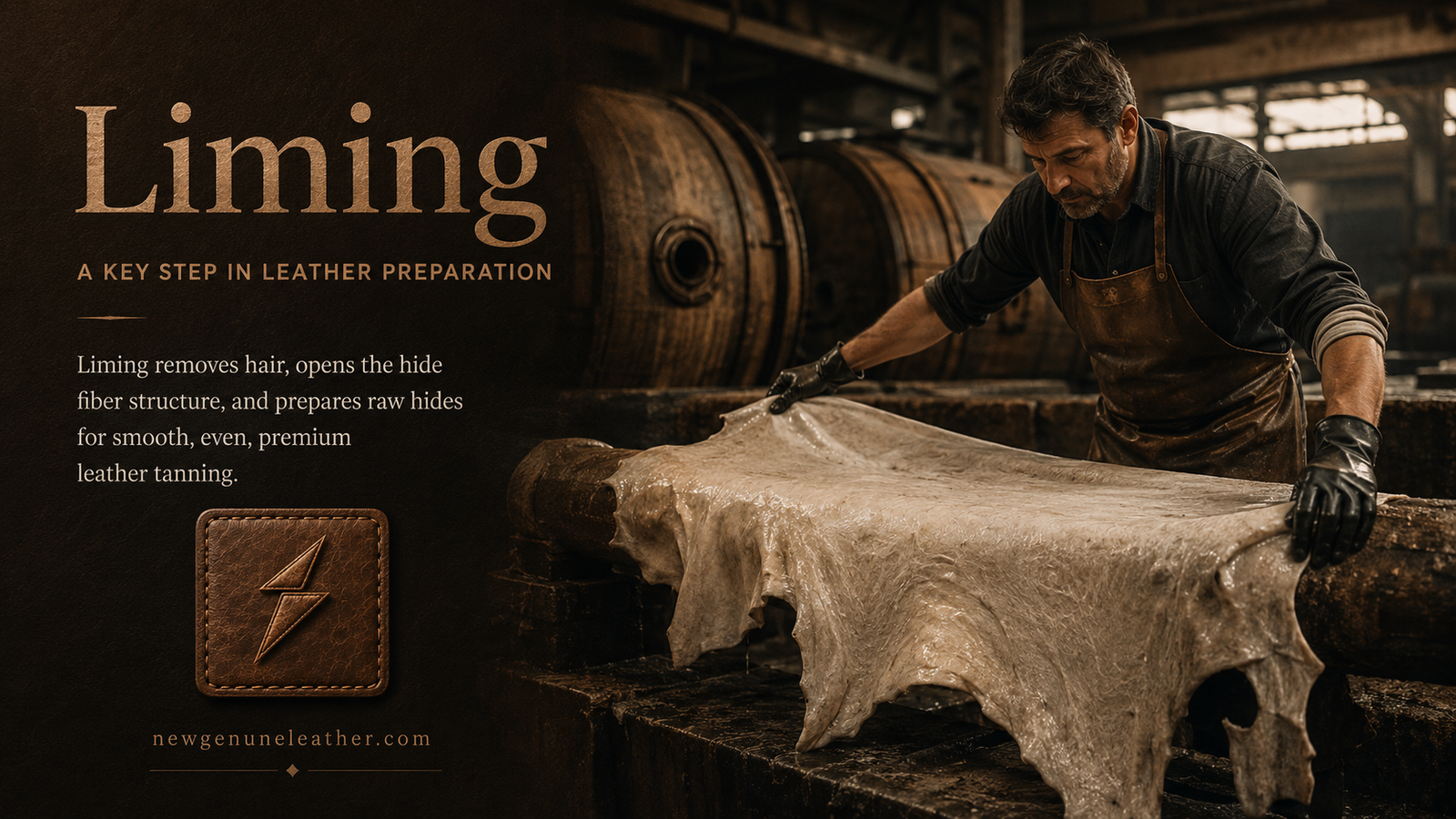
Leather production is a detailed process that converts raw hides into strong, flexible, and long-lasting leather. After soaking and fleshing, one of the most important chemical preparation steps is the liming process. Liming helps remove hair, loosen unwanted proteins, open the fiber structure, and prepare the hide for tanning.
At newgenuneleather.com, we believe that premium leather begins long before the final finishing stage. The quality of leather depends on how carefully the hide is prepared in the early stages. Liming is one of those essential steps that directly affects softness, strength, smoothness, and final leather quality.
What Is Liming in Leather Processing?
Liming is the process of treating hides and skins with an alkaline solution, usually containing lime and other assisting chemicals. The purpose of this step is to remove hair and epidermis, break down unwanted proteins, and open the collagen fiber structure of the hide.
During liming, the hide swells and becomes more open. This allows later chemicals to penetrate more evenly during deliming, bating, pickling, and tanning.
In simple words, liming prepares the hide by cleaning, loosening, and opening its natural structure before it becomes leather.
Why Is Liming Needed?
1. Removes Hair from the Hide
One of the main purposes of liming is hair removal. Raw hides naturally contain hair, roots, and surface layers that must be removed before tanning. Liming weakens the hair roots and helps separate the hair from the hide.
If hair is not removed properly, it can create roughness, uneven grain, and defects in the final leather surface.
2. Opens the Fiber Structure
Leather quality depends strongly on the collagen fiber network inside the hide. Liming opens this fiber structure and makes the hide more receptive to later processing.
When the fibers are properly opened, tanning agents can enter more evenly. This helps produce leather that is soft, flexible, and consistent in quality.
3. Removes Unwanted Natural Proteins
Raw hides contain non-leather-forming proteins and other unwanted materials. Liming helps loosen and remove many of these substances. This improves the cleanliness and stability of the hide.
A cleaner hide produces better leather because the tanning process becomes more controlled and uniform.
4. Helps Control Leather Softness
The liming process influences how soft or firm the final leather will be. Proper liming allows the fiber structure to relax and separate. This helps create leather that is more flexible and comfortable.
For leather products such as jackets, gloves, shoes, bags, and upholstery, softness and flexibility are very important. Poor liming can make leather stiff, uneven, or weak.
5. Prepares the Hide for Tanning
Tanning is the stage where the hide is converted into leather. However, tanning cannot work properly if the hide has not been prepared correctly. Liming prepares the hide by removing hair and opening the fibers.
A well-limed hide absorbs tanning agents more evenly and produces stronger, smoother, and more durable leather.
How Is the Liming Process Done?
In modern leather production, hides are placed in drums or processing vessels with water, lime, and other liming agents. The hides are rotated or moved gently so the chemicals can reach all parts evenly.
The liming time depends on the type of hide, thickness, leather product requirements, and tannery method. Skilled leather technicians carefully control the process because both under-liming and over-liming can damage leather quality.
Under-liming may leave hair roots, unwanted proteins, or closed fibers. Over-liming may weaken the collagen structure and reduce leather strength. This is why controlled liming is essential for premium leather production.
What Happens After Liming?
After liming, the hide usually goes through several important steps:
Unhairing: Remaining hair and loosened surface material are removed.
Deliming: Excess lime is removed and the hide pH is gradually lowered.
Bating: Enzymes help clean and soften the hide further.
Pickling: The hide is prepared for tanning by adjusting acidity.
Tanning: The hide is converted into stable leather.
Each step depends on the success of the previous one. If liming is not done properly, the later stages may not produce the desired quality.
What Happens If Liming Is Not Done Properly?
Poor liming can create serious leather defects. If liming is incomplete, hair roots may remain in the hide, the fiber structure may stay closed, and tanning chemicals may not penetrate evenly. This can lead to hard spots, uneven softness, poor dyeing, and rough surface quality.
If liming is too strong or too long, the hide fibers may become damaged. This can reduce strength and create loose, weak, or poor-quality leather.
A good liming process must remove unwanted material while protecting the valuable collagen structure of the hide.
Liming and Premium Leather Quality
Premium leather is not made by appearance alone. It is created through careful control of each processing stage. Liming is especially important because it prepares the hide for deep and even tanning.
When liming is done correctly, the leather becomes cleaner, more uniform, easier to tan, and better in final appearance. It also improves softness, flexibility, and finishing quality.
At newgenuneleather.com, we understand that the beauty of genuine leather starts from the hidden preparation stages. Liming may happen early in the process, but its effect can be seen in the final strength, touch, and appearance of the leather.
Conclusion
Liming is an essential stage in leather processing. It removes hair, opens the fiber structure, loosens unwanted proteins, and prepares the hide for tanning. Without proper liming, the final leather may become uneven, stiff, weak, or difficult to finish.
For anyone who wants to understand genuine leather production, the liming process shows how technical and careful leather making really is.
At newgenuneleather.com, quality leather begins with professional preparation, and liming is one of the key steps that helps transform raw hides into premium leather.
