

Fleshing in Leather Processing: Why It Is Important for Quality Leather

Introduction Fleshing Process in Leather
Leather making is a step-by-step process where every stage affects the strength, softness, cleanliness, and final appearance of the leather. After soaking, one of the most important preparation steps is the fleshing process. This stage removes unwanted flesh, fat, tissue, and remaining material from the inner side of the hide.
At newgenuneleather.com, we believe that high-quality leather begins with proper hide preparation. Fleshing may not be the most decorative part of leather production, but it is one of the most necessary steps for producing clean, smooth, and durable leather.
What Is Fleshing in Leather Processing?
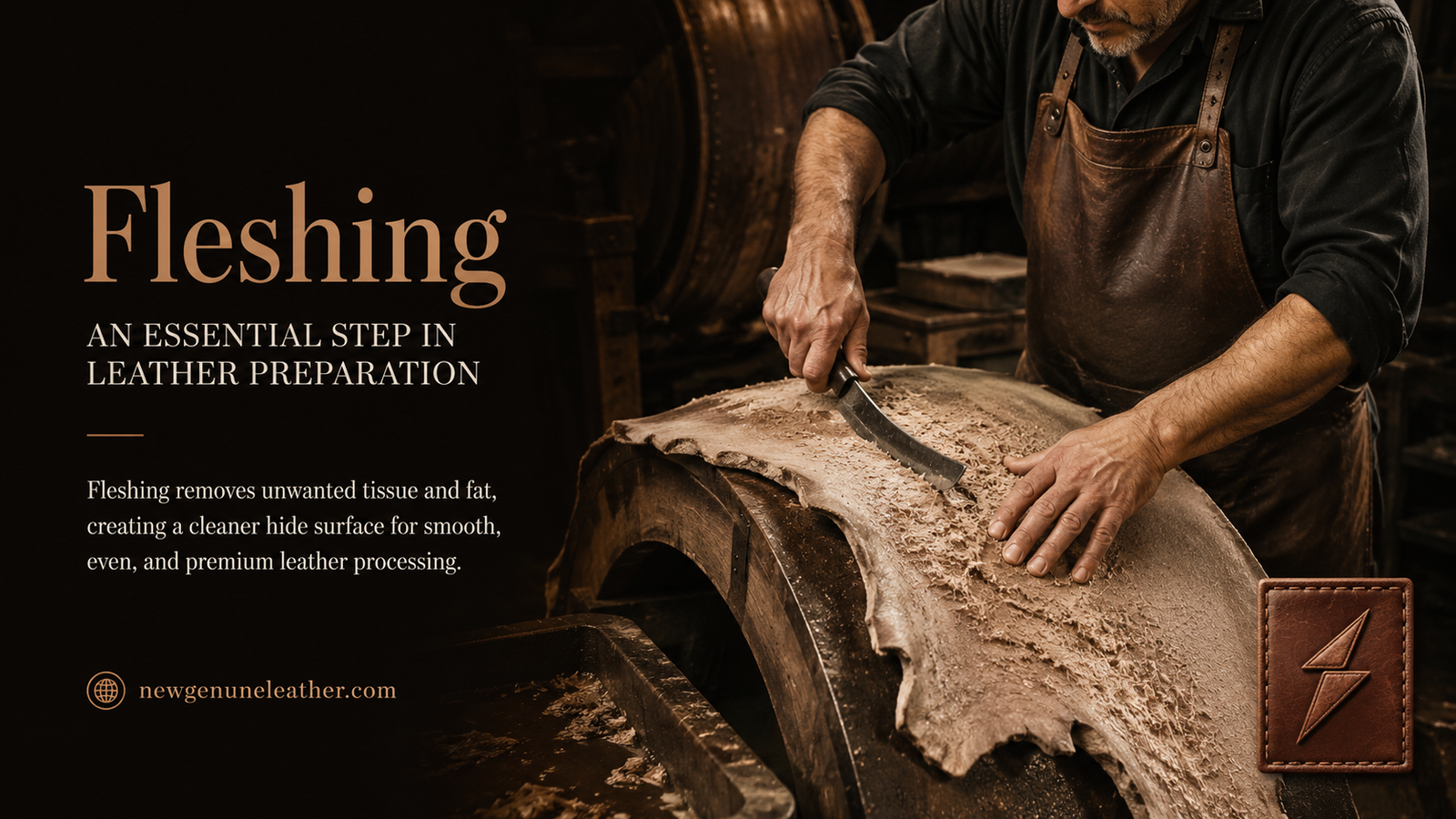
Fleshing is the process of removing excess flesh, fat, and connective tissue from the flesh side of animal hides and skins. The flesh side is the inner side of the hide that was attached to the animal body. Before tanning, this side must be cleaned properly so that the hide can absorb chemicals evenly.
The process is usually done with a fleshing machine in modern tanneries, while traditional leather makers may use hand tools. The goal is to create a clean and even surface without damaging the natural fiber structure of the hide.
In simple words, fleshing cleans the back side of the hide and prepares it for the next leather-making stages.
Why Is the Fleshing Process Needed?
1. Removes Unwanted Flesh and Fat
Raw hides often contain pieces of flesh, fat, and tissue after skinning. If these materials are not removed, they can interfere with tanning and cause quality problems. Fleshing clears away these unwanted layers and helps create a cleaner hide surface.
This is important because leather must be free from excess organic matter before further processing.
2. Improves Chemical Penetration
During leather production, hides pass through several chemical treatments, including liming, deliming, bating, pickling, and tanning. If flesh or fat remains on the hide, these chemicals cannot enter the fiber structure evenly.
Proper fleshing allows water and processing chemicals to move more uniformly through the hide. This improves tanning quality and helps produce leather with better strength, softness, and consistency.
3. Prevents Bad Odor and Bacterial Problems
Remaining flesh and fat can decay if they are not removed properly. This may cause bad odor, bacterial growth, and damage to the hide. Fleshing reduces this risk by removing materials that can decompose during processing.
A clean hide is easier to preserve, process, and transform into premium leather.
4. Creates a More Even Leather Surface
Uneven flesh layers can create thickness variation in the hide. This can affect the smoothness and quality of the final leather. Fleshing helps make the flesh side more uniform and easier to handle in later steps.
For leather products such as jackets, bags, shoes, gloves, and upholstery, uniform thickness and clean finishing are very important.
5. Reduces Processing Defects
If fleshing is done poorly, the leather may develop defects during tanning and finishing. These may include uneven softness, poor dye absorption, greasy patches, weak areas, and an irregular back surface.
Proper fleshing supports better leather quality from the inside out.
How Is Fleshing Done?
In modern leather production, fleshing is commonly performed using a fleshing machine. The hide is passed through rollers, and sharp blades remove the unwanted flesh and fat from the inner side. Skilled operators control the pressure and movement to avoid cutting too deeply into the hide.
In smaller workshops or traditional leather processing, fleshing may be done manually using a fleshing knife or curved blade. This requires experience because too much pressure can damage the hide, while too little pressure may leave unwanted material behind.
Whether done by machine or by hand, fleshing must be controlled carefully to protect the natural grain and fiber structure of the hide.
When Does Fleshing Take Place?
Fleshing is usually done after soaking because soaking restores moisture and softens the hide. A soft and rehydrated hide is easier to clean and flesh properly. In some leather processing systems, fleshing may also be done after liming, depending on the tannery method and hide condition.
The exact timing can vary, but the purpose remains the same: to remove unwanted material and prepare the hide for cleaner and more even processing.
What Happens If Fleshing Is Not Done Properly?
Poor fleshing can cause serious problems in leather production. If flesh and fat remain attached, the hide may not absorb chemicals evenly. This can lead to uneven tanning, bad smell, poor softness, and weak leather quality.
On the other hand, over-fleshing can damage the hide fibers and reduce the strength of the leather. This is why fleshing requires proper tools, trained handling, and careful control.
A good fleshing process removes only the unwanted material while protecting the valuable leather structure.
Fleshing and Premium Leather Quality
Premium leather is not created only at the finishing stage. It begins with careful preparation of the raw hide. Fleshing plays a major role in this preparation because it helps create a clean, stable, and workable hide surface.
When fleshing is done correctly, the leather becomes easier to tan, easier to dye, and easier to finish. It also helps improve the final appearance, durability, and overall feel of the leather.
At newgenuneleather.com, we understand that every hidden step in leather production affects the final product. Fleshing may happen early in the process, but its impact can be seen in the quality of the finished leather.
Conclusion
Fleshing is an essential stage in leather processing. It removes unwanted flesh, fat, and tissue from the hide, improves chemical penetration, prevents bacterial problems, and supports even leather quality. Without proper fleshing, the final leather may become uneven, weak, or difficult to finish.
For anyone who wants to understand genuine leather production, the fleshing process shows how much skill and care are required before leather becomes a finished product.
At newgenuneleather.com, quality leather starts with proper preparation, and fleshing is one of the key steps that helps create clean, durable, and premium leather.
